
Reptile
Meller's Chameleon
Trioceros melleriAlso known as Giant One-Horned Chameleon, Meller's Giant Chameleon
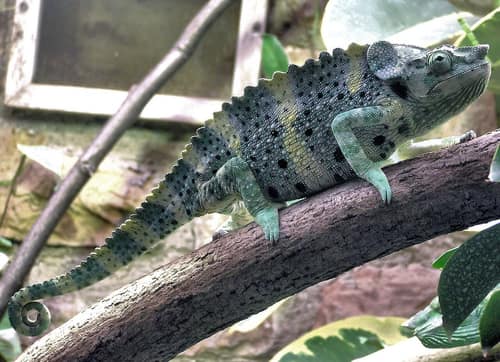
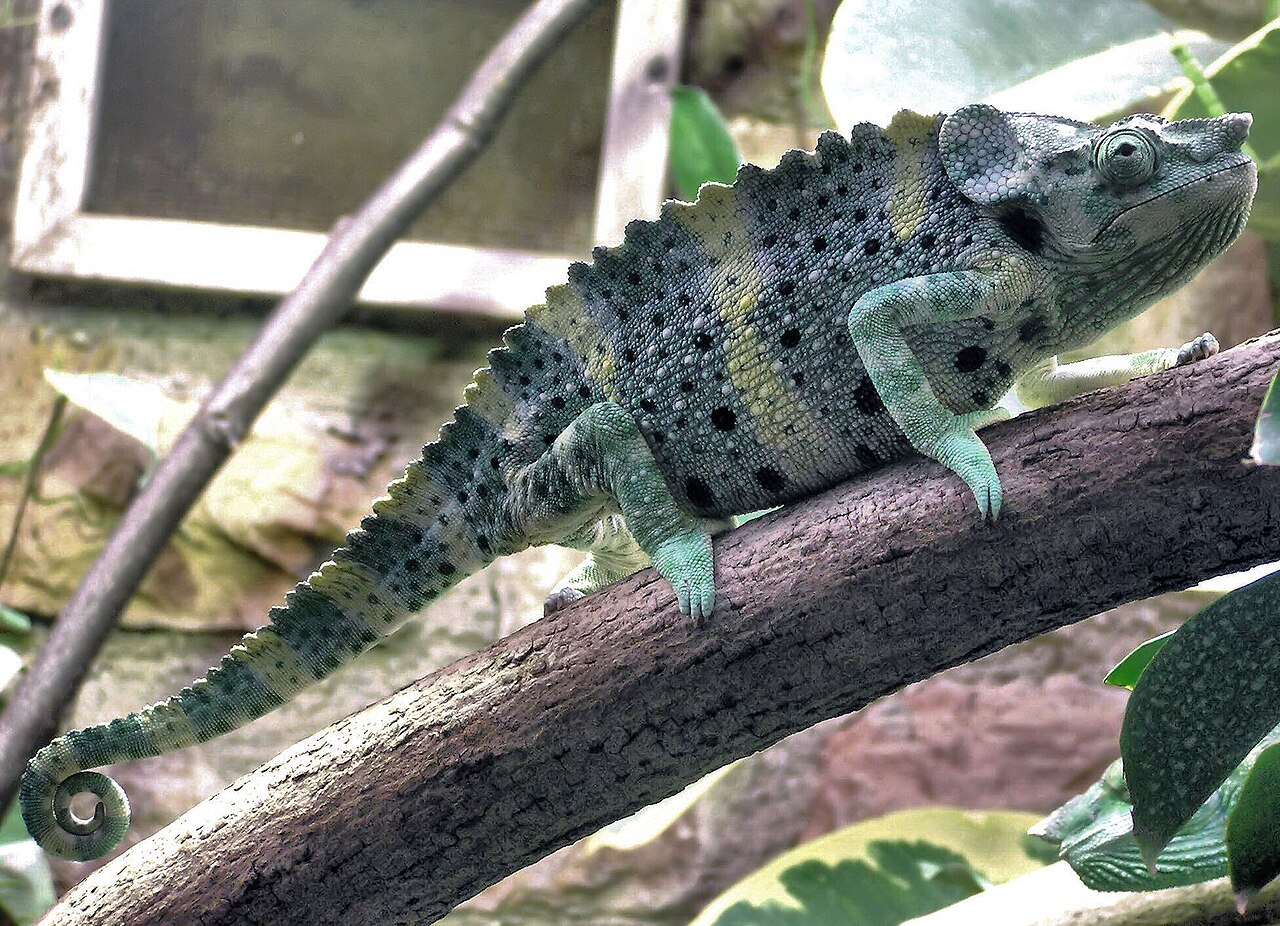
Meller's chameleons dominate the East African canopy as the largest chameleons found outside of Madagascar, sporting a leaf-like green body accented by yellow stripes and a single stubby horn on the snout. These solitary giants spend their days high in the treetops, moving with slow, deliberate steps that mimic swaying foliage while scanning for prey with independently mobile eyes. Unlike many smaller relatives, they can be highly territorial and will aggressively defend their feeding perches from rivals.
ArborealCamouflagedSolitary
—observations
—countries
—peak records
Least ConcernConservation statusIUCN Red List categoriesLCNTVUENCREWEXLeast ConcernRed List categories, explained →
Diet & preyInsects, Small lizards, Spiders
Predators
- Birds of prey
- Snakes
- Larger monkeys
ThreatsHabitat loss, deforestation, and unsustainable collection for the pet trade
HabitatsSavannas, woodlands, and tall trees of East Africa
Life span10 to 12 years
Classification
- FamilyChamaeleonidae
- SpeciesTrioceros melleri
Range data is not available yet.
Interaction riskLow
- Low
- Moderate
- High
- Very high
- Why interaction risk is low
- Capable of delivering a painful bite if cornered; observe from a respectful distance.
- Why it is dangerous
- Possesses strong jaws capable of delivering a painful, skin-breaking bite when threatened.
- How to recognize a risky encounter
- Recognizable by its massive size, single small horn on the snout, and scalloped occipital lobes.
- What to do
- Do not attempt to handle wild individuals; give them space to retreat up into the branches.
- What to notice
- Look for a very large, green and yellow striped chameleon with a single stubby horn.
- Support conservation
- Never collect wild individuals and support conservation efforts that protect their native woodland habitats.
Responsible observation
- Spotting in the canopy: Scan the upper branches of tall trees where their leaf-like bodies blend seamlessly with foliage.
- Watch for color shifts: Observe how their green and yellow patterns darken or brighten in response to temperature and mood.
- Maintain distance: Avoid crowding or cornering them, as they easily stress and may hiss or gape defensively.
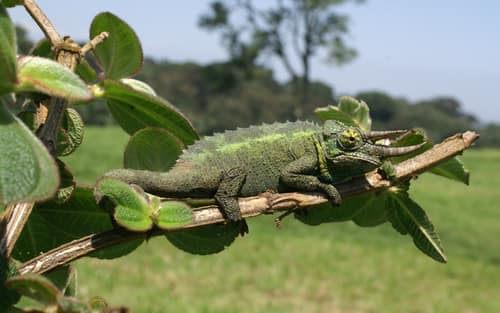
Close Relative Patrick Gijsbers / CC BY-SA 4.0 · cc-by-sa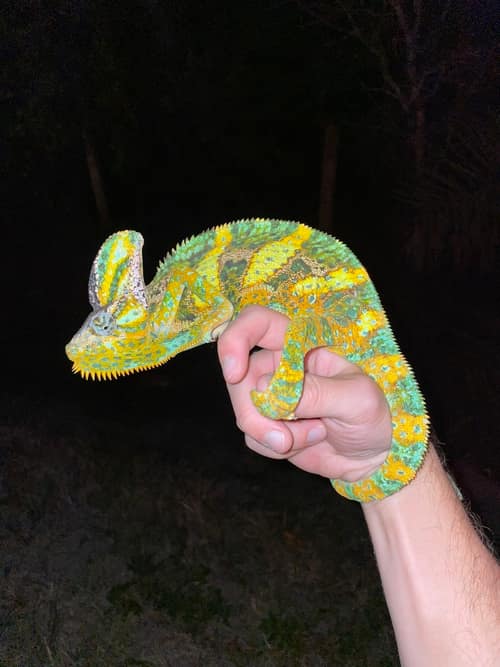
Co-Family Member (c) Daily Anole, some rights reserved (CC BY) · cc-by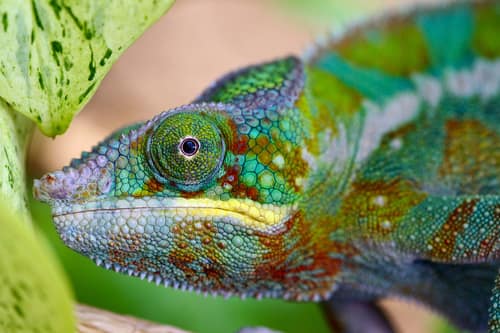
Co-Family Member (c) McBeul, some rights reserved (CC BY) · cc-by
Help improve the field guideSomething wrong?
Checking your Fauna account…Report a name, category, or profile issue for review.