
Keyhole Sand Dollar
Mellita tenuisAlso known as Five-slotted Keyhole Urchin, Southern Keyhole Urchin
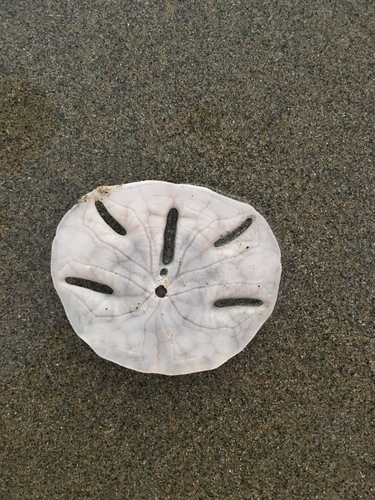
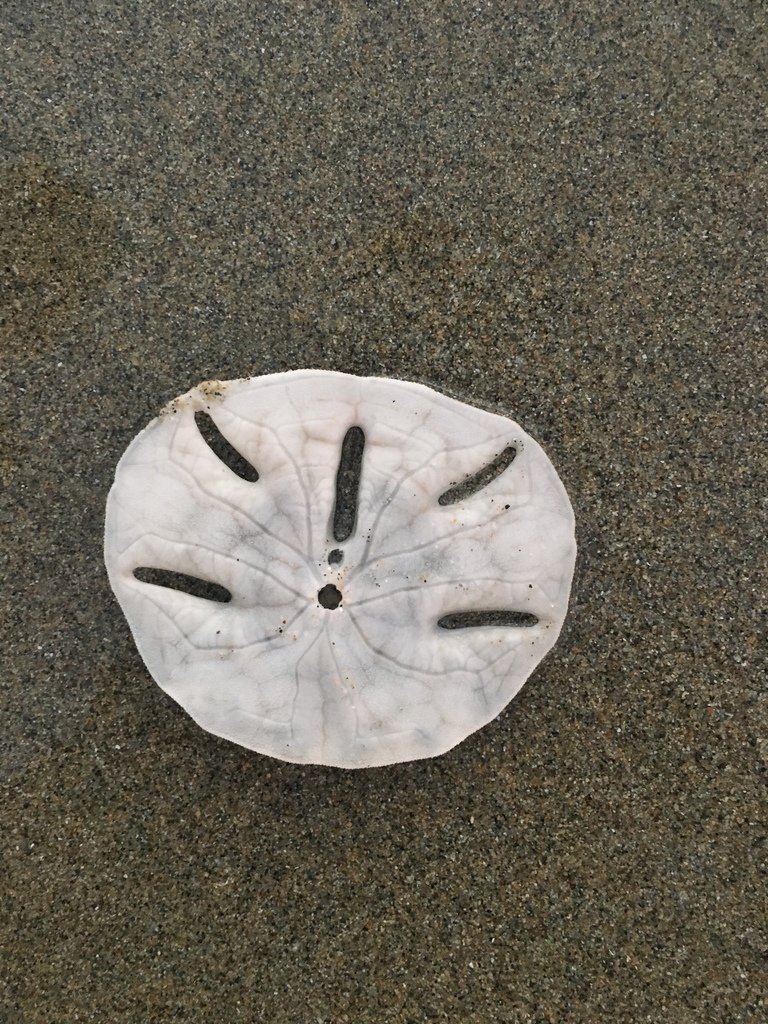
Keyhole sand dollars use five elongated slots, called lunules, to anchor themselves against shifting tidal currents and prevent being swept away by breaking surf. Living individuals are coated in thousands of tiny, velvet-like spines that shovel fine sediment and sweep micro-particles along mucus pathways toward a central underside mouth. While dead specimens wash ashore as bright white tests prized by beachcombers, live animals remain camouflaged in muted shades of tan, olive, or grey just under the sand.
- Striped sea star
- Sheepshead
- Bonnethead shark
- OrderEchinolampadacea
- FamilyMellitidae
- GenusMellita
- SpeciesMellita tenuis
- Low
- Moderate
- High
- Very high
- Why interaction risk is low
- Safe to observe at a normal distance.
- Check for Life: Look closely at the surface for moving, felt-like spines before collecting; if brown or grey, it is alive.
- Leave Live Animals: Return live individuals gently to wet sand below the low tide line so they can rebury.
- Collect White Tests Only: Gather only smooth, sun-bleached white skeletons found completely dry on the beach.
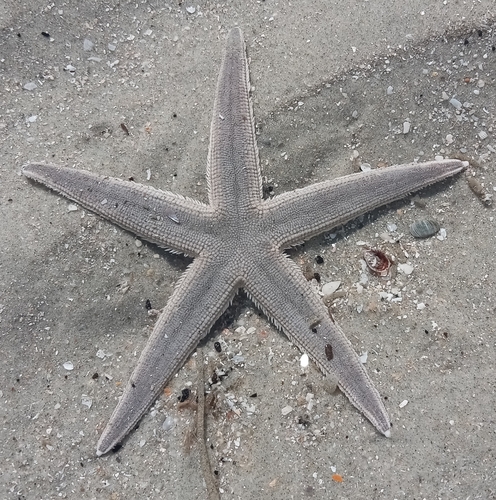
Predator (c) Steven Joyner, some rights reserved (CC BY), uploaded by Steven Joyner · cc-by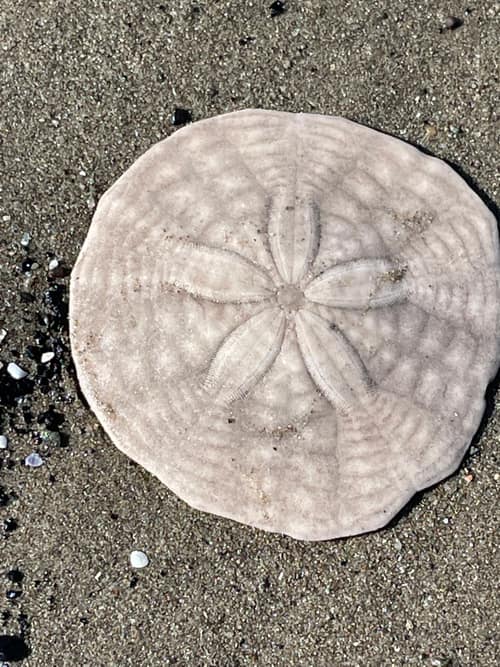
Cold-water Cousin "common sand dollar, common sand dollar sea urchin, oursin plat, плоский щитообразный (обыкновенный) еж" by Cassidy Best is licensed under CC BY 4.0. To view a copy of this license, visit http://creativecommons.org/licenses/by/4.0/. · cc-by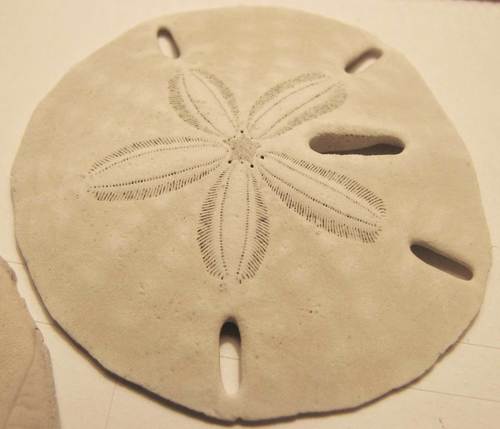
Close Relative (c) Sharon Mooney (see User:Edwardtbabinski), some rights reserved (CC BY) · cc-by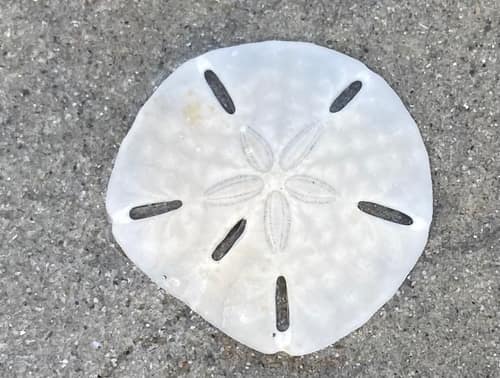
Close Relative "sand dollar, six-holed keyhole urchin" by Tim Hirsch is licensed under CC BY 4.0. To view a copy of this license, visit http://creativecommons.org/licenses/by/4.0/. · cc-by
Found in Collections
Coral Currents
Keyhole Sand Dollar is found in this collection. Identify it in Fauna to fill this slot and continue your progress.
Unlock to track progress
Shore Life
Keyhole Sand Dollar is found in this collection. Identify it in Fauna to fill this slot and continue your progress.
Unlock to track progress
Report a name, category, or profile issue for review.