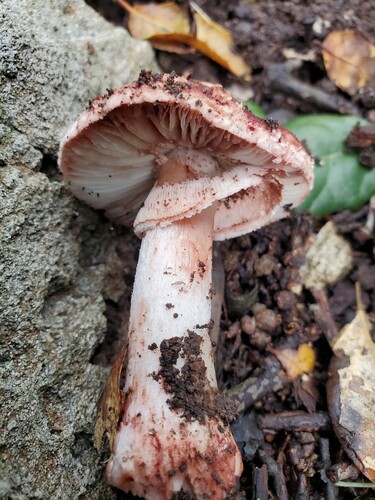
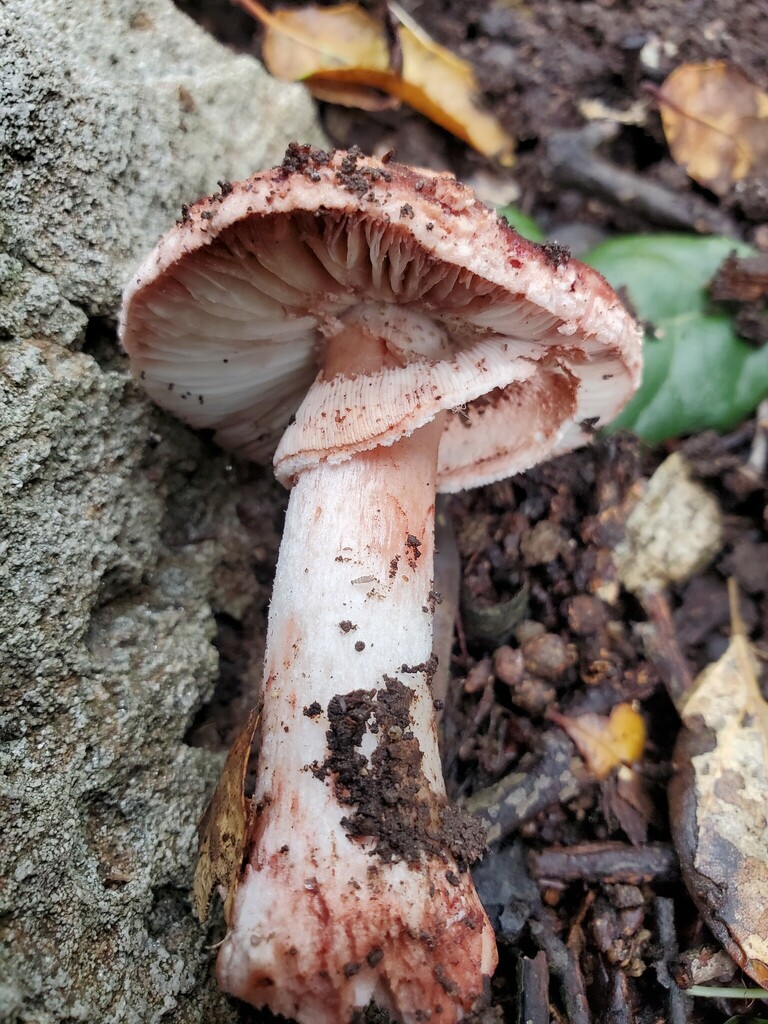
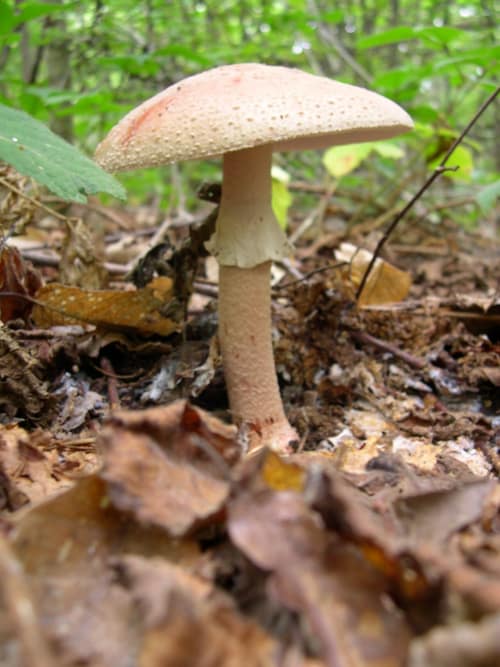
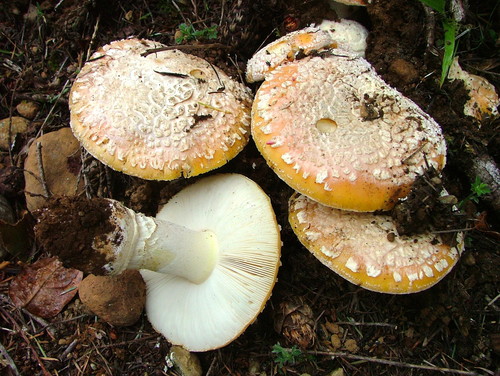
Blushing Bride Amanita emerges in coastal and montane forests across western North America, forming beneficial mycorrhizal associations with oaks, pines, and Douglas firs. Its pale cream to brownish cap gradually develops reddish-pink spots with age, while damaged flesh slowly stains a distinctive bruised pink color. A broad ribbed ring hangs from the upper stem above a swollen base decorated with fragile, powdery cup remnants.
Life spanPerennial mycelium; fruiting body lasts 1–2 weeks
Classification
FamilyAmanitaceae
SpeciesAmanita novinupta
Range & activity
Range data is not available yet.
Safe observation
Interaction riskHigh
Low
Moderate
High
Very high
Why interaction risk is high
Many edible mushrooms have toxic look-alikes; never eat wild fungi based on app identification alone.
Why it is dangerous
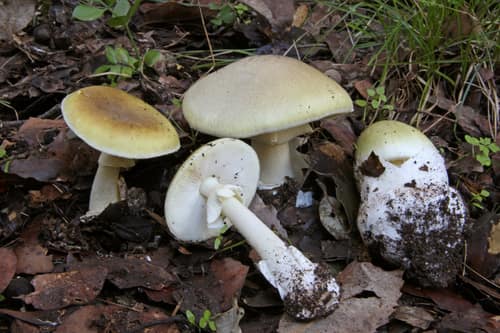
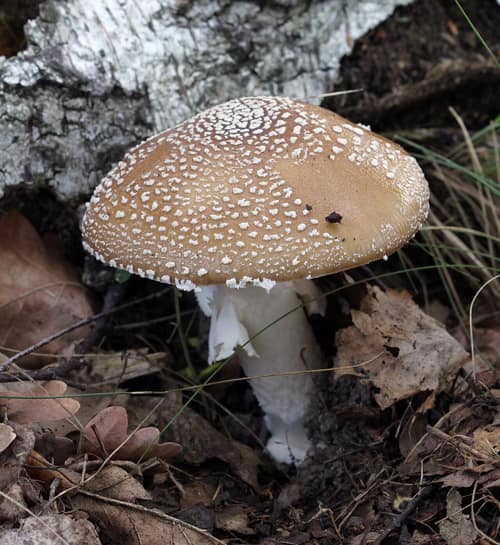
Raw tissues contain heat-sensitive toxins that cause gastrointestinal distress, and confusion with deadly neurotoxic Amanita species poses extreme danger.
How to recognize a risky encounter
Look for pale brownish caps that blush pinkish-red where bruised, paired with a ribbed upper stem ring.
What to do
Never consume wild fungi based on field identification, and avoid disturbing the fungal underground network.
Responsible observation
Observe bruising: Gently scratch the stem or gills to watch for the slow reddish-pink color change.
Check the stem ring: Look for the delicate, skirt-like ribbed veil attached high on the stem.
Leave intact: Allow the mature cap to shed spores into the soil to support the forest network.