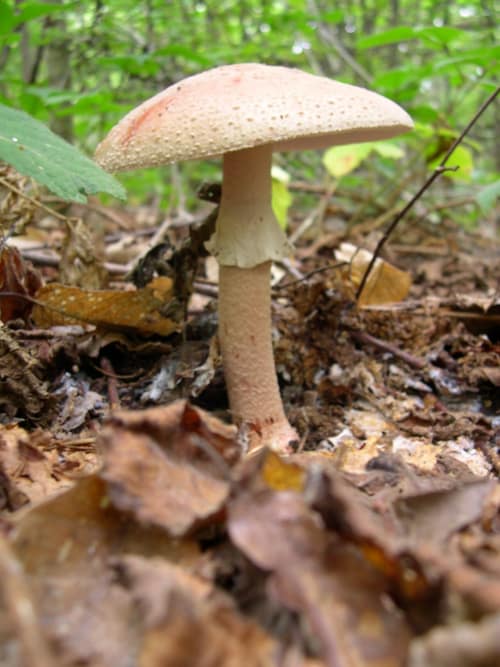
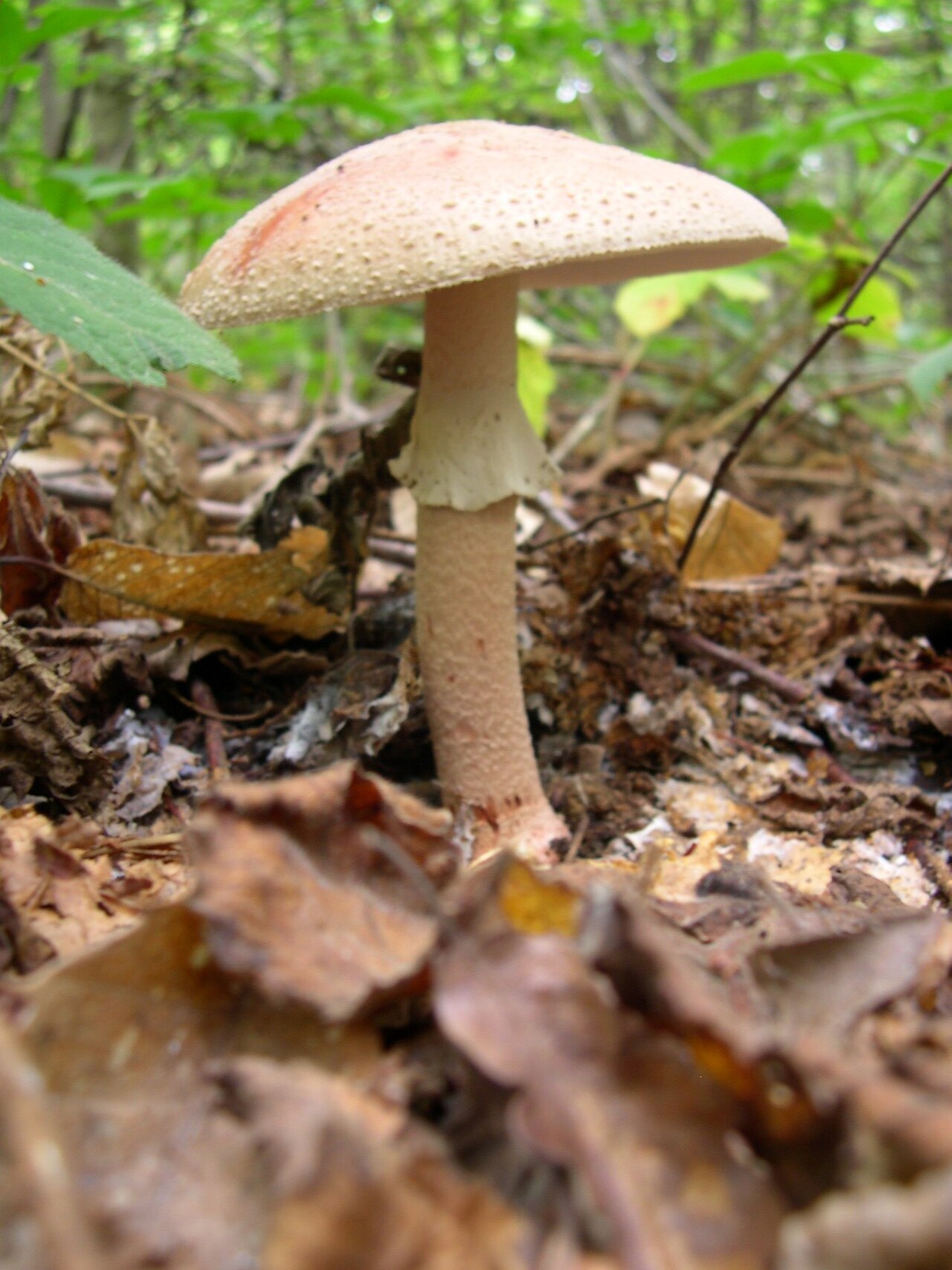
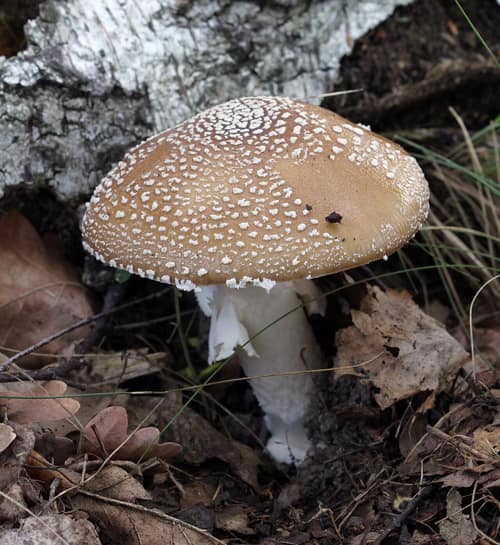
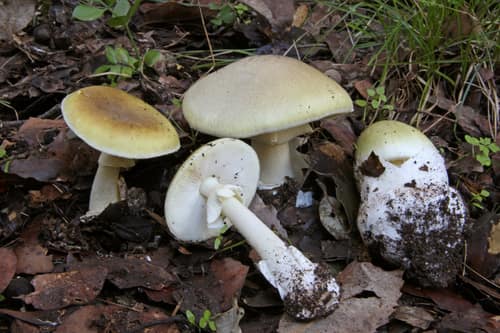
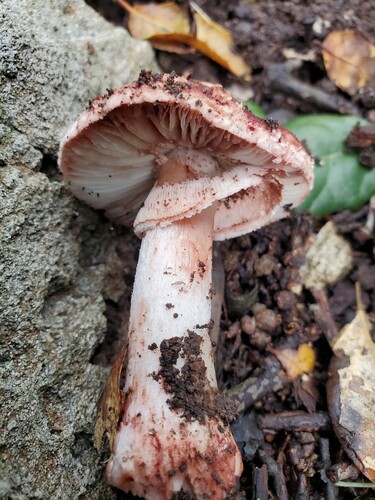
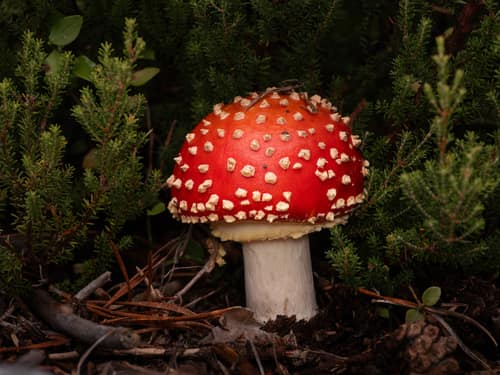
Blushing amanitas emerge across temperate woodlands in summer and autumn, forming vital mycorrhizal partnerships with broadleaf trees like oak and birch as well as various conifers. Their broad caps feature soft, dirty-pink to greyish scales, but their defining characteristic is the slow reddish or vinous bruising that appears wherever the stem or flesh is damaged. A delicate, distinctly striated skirt hangs near the top of the stem above a swollen, bulbous base.
Not EvaluatedConservation statusIUCN Red List categoriesLCNTVUENCREWEXNot Evaluated — not placed on the risk ladderRed List categories, explained →
Key facts
Diet & prey
Mycorrhizal (Symbiotic)
Predators
Fungus Gnats
Slugs
Squirrels
ThreatsHabitat loss, Soil pollution
HabitatsDeciduous and Coniferous Forests
Life spanPerennial mycelium; fruiting bodies last 1–2 weeks
Size / weightNot available
Classification
OrderAgaricales
FamilyAmanitaceae
GenusAmanita
SpeciesAmanita rubescens
Range & activity
Range data is not available yet.
Safe observation
Interaction riskHigh
Low
Moderate
High
Very high
Why interaction risk is high
Raw flesh contains hemolytic toxins, and many wild mushrooms have toxic look-alikes; never eat wild fungi based on app identification alone.
Why it is dangerous
Raw specimens contain rubescenslysin, a hemolytic toxin that destroys red blood cells, and this species closely resembles dangerous amanitas like the Panther Cap.
How to recognize a risky encounter
Look for flesh that slowly bruises reddish-pink when broken, along with a distinctly striated upper ring on the stem.
What to do
Never handle wild fungi intended for consumption; observe and photograph specimens intact in their natural habitat.
Responsible observation
Observation: Gently cut or scratch the stem base to observe the characteristic slow reddening response.
Identification: Examine the upper ring on the stem, which should feature distinct vertical striations.
Photography: Capture the reddish-brown cap scales and the bulbous stem base to document key field marks.