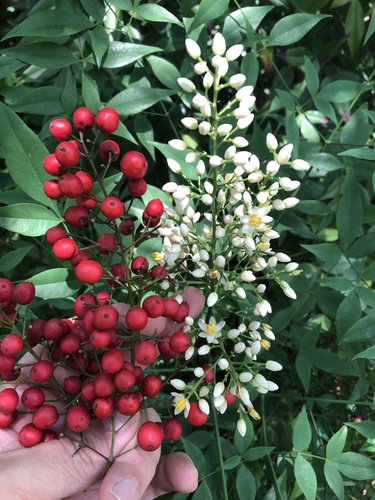
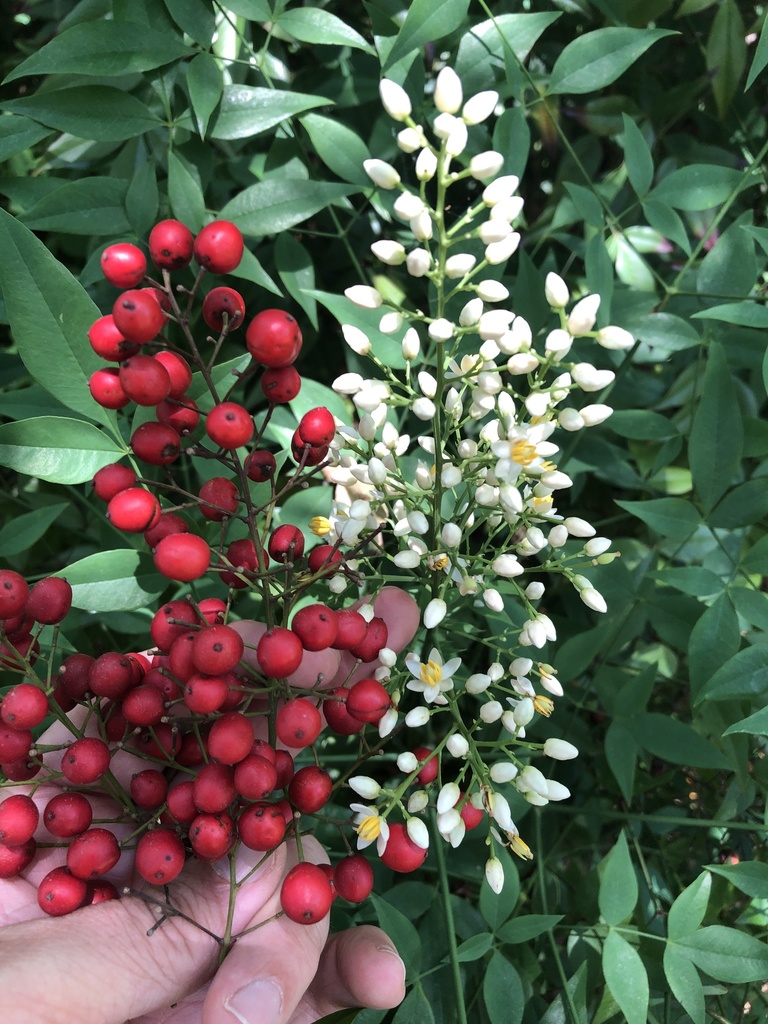
Heavenly bamboo is an upright, cane-like evergreen shrub adorned with finely divided lacy foliage that flushes copper-pink in spring and shifts to deep crimson during cold autumn and winter months. In late spring, erect panicles of small white blossoms give way to heavy clusters of glossy scarlet berries that persist well into the following year. Widely cultivated for its resilient, season-spanning color, it readily escapes cultivation in warm temperate climates to form dense thickets that suppress native forest understory plants.
ThreatsHabitat clearance in native range; managed as an invasive pest elsewhere
HabitatsWoodland borders, forest understories, ravines, and managed landscapes
Life span20–50 years
Classification
OrderRanunculales
FamilyBerberidaceae
GenusNandina
SpeciesNandina domestica
Range & activity
Range data is not available yet.
Safe observation
Interaction riskHigh
Low
Moderate
High
Very high
Why interaction risk is high
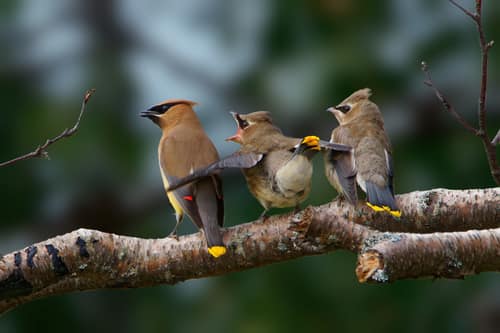
All parts contain cyanogenic glycosides; toxic to humans, pets, and songbirds if ingested.
Why it is dangerous
Leaves and berries contain cyanogenic glycosides that break down into lethal hydrogen cyanide, causing vomiting, respiratory failure, and sudden death in wildlife and domestic animals.
How to recognize a risky encounter
Recognized by multi-stemmed bamboo-like canes, tri-pinnate leaflets turning bronze-red in winter, and terminal sprays of pea-sized red berries.
What to do
Do not consume any part of the plant, clip berry clusters to safeguard local birds, and wear gardening gloves during removal.
Responsible observation
Identification: Look for cane-like stems without nodes, tripinnately compound leaves, and persistent clusters of bright red fruit.
Pet safety: Rake up and dispose of fallen red berries in yards frequented by curious dogs or grazing pets.
Landscape management: Snip off spent flower heads before fruit sets to prevent birds from distributing seeds into native woodlands.