Also known as White Angel's Trumpet, Floripondio, Tree Datura, Cornucopia
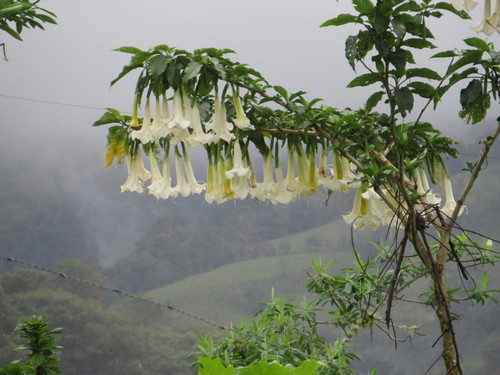
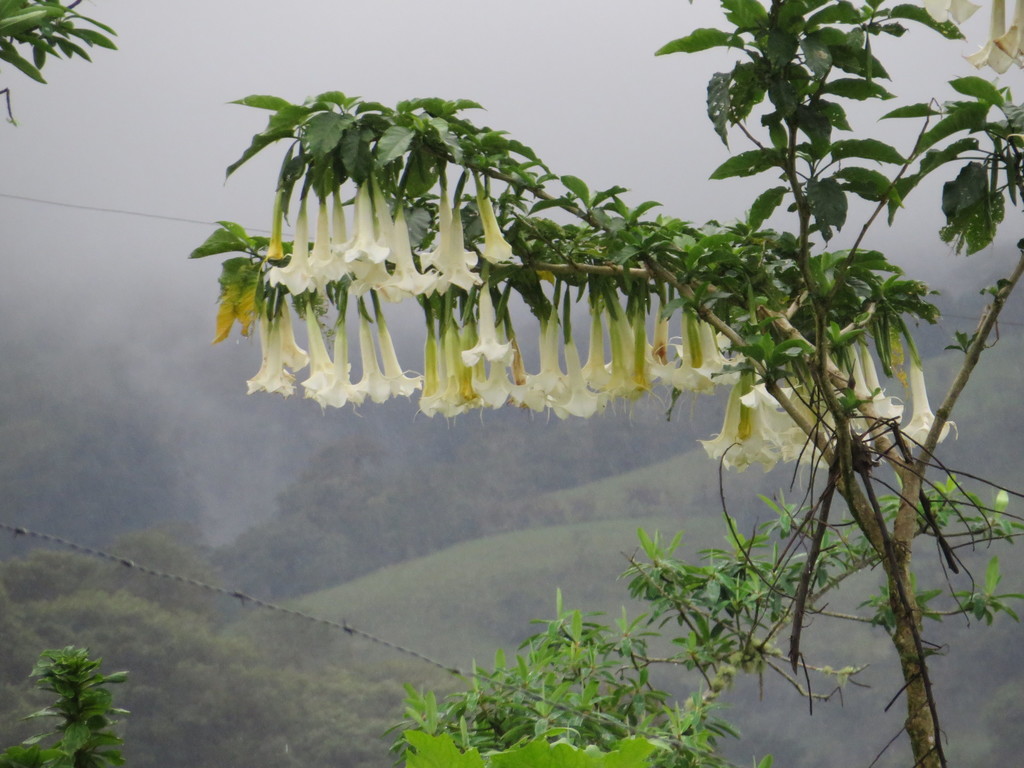
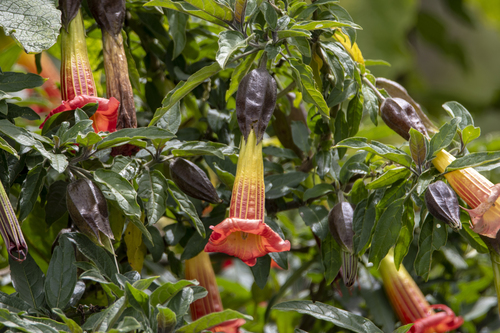
Angel's trumpet produces dramatic, downward-hanging floral trumpets that release a heady, musk-like fragrance as dusk settles. Native to the high Andean river valleys, this woody shrub evolved alongside specialized long-tongued hawk moths that pollinate its pale blooms under cover of darkness. Although wiped out across its indigenous wild range, human fascination with its beauty and traditional ritual importance has ensured its vigorous survival in gardens across the globe.
ThreatsHabitat loss and the extinction of native mammalian seed dispersers
HabitatsAndean valleys and moist ravines (historically); gardens and cultivation
Life span15–30 years
Classification
FamilySolanaceae
SpeciesBrugmansia arborea
Range & activity
Range data is not available yet.
Safe observation
Interaction riskHigh
Low
Moderate
High
Very high
Why interaction risk is high
All parts contain dangerous tropane alkaloids; never ingest and wash hands thoroughly after contact.
Why it is dangerous
Contains potent anticholinergic tropane alkaloids, primarily scopolamine and hyoscyamine, which cause extreme confusion, hallucinations, elevated body temperature, paralysis, and fatal cardiac failure if chewed or ingested.
How to recognize a risky encounter
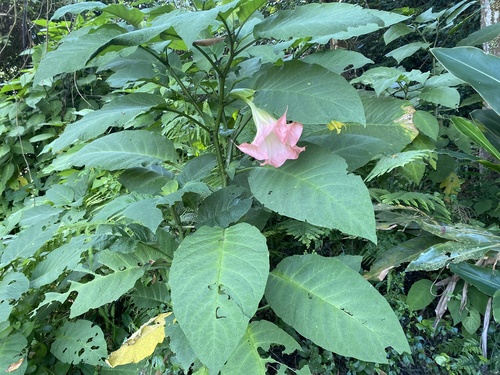
Recognized by its soft, velvety foliage and large, nodding trumpet flowers that measure up to 17 centimeters long and hang entirely upside down.
What to do
Do not touch eyes or mucous membranes after contact, keep clippings away from children and pets, and never consume any part of the plant.
What to notice
Distinguished by its compact pendulous white flowers featuring a spathe-like calyx and densely pubescent leaves compared to other cultivated trumpets.
Support conservation
Maintain cultivated specimens carefully to preserve genetic heritage, and source nursery stock only from established domestic growers.
Responsible observation
Pruning: Wear protective gloves and wash hands promptly, as contact with sap can transfer alkaloids to the eyes and dilate pupils.
Evening viewing: Visit the shrub at twilight when the pendulous flowers open completely and diffuse their sweetest scent.