
Plant · GBIF taxon 5341758
Night Bells
Brugmansia suaveolensAlso known as Brazil's White Angel Trumpet, Angel's Tears, Snowy Angel's Trumpet
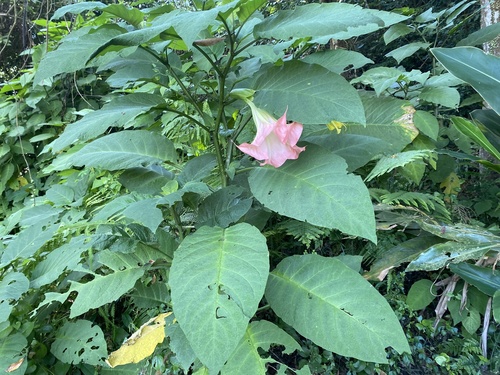
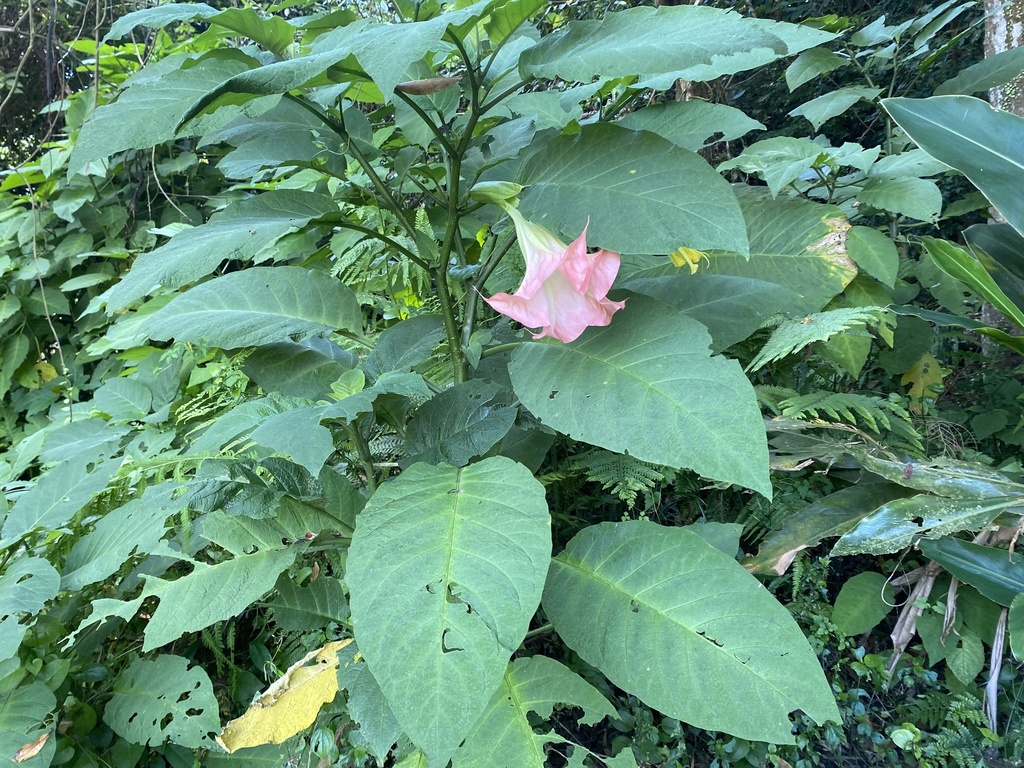
Pendulous, sweet-scented trumpet flowers open fully at dusk to attract night-flying hawkmoths for pollination. All parts of this lush, semi-evergreen shrub contain potent tropane alkaloids that deter herbivores in its introduced ranges. Though completely extinct in its native Brazilian rainforests, human cultivation has preserved this species in gardens and botanical collections worldwide.
FragrantToxicNight Blooming
—observations
—countries
—peak records
Extinct in the WildConservation statusIUCN Red List categoriesLCNTVUENCREWEXExtinct in the WildRed List categories, explained →
Diet & prey
- Photosynthetic
Predators
- Hornworms
- Slugs and Snails
- Spider Mites
ThreatsExtinction of natural seed dispersers and native forest habitat loss
HabitatsCultivated gardens, moist tropical and subtropical forest margins
Life span10–30 years
Classification
- OrderSolanales
- FamilySolanaceae
- GenusBrugmansia
- SpeciesBrugmansia suaveolens
Range data is not available yet.
Interaction riskHigh
- Low
- Moderate
- High
- Very high
- Why interaction risk is high
- All parts contain lethal tropane alkaloids; keep away from children and pets and avoid any ingestion.
- Why it is dangerous
- Contains deadly tropane alkaloids like scopolamine and hyoscyamine, causing severe anticholinergic poisoning, delirium, and cardiac arrest.
- How to recognize a risky encounter
- Look for massive, downward-hanging trumpet flowers up to 30 centimeters long paired with large velvet-textured oval leaves.
- What to do
- Wear protective gloves when pruning branches, wash skin exposed to sap, and never consume any portion of the plant.
- What to notice
- Distinguished as a tender woody shrub bearing fragrant, pendulous bell flowers with flared tips.
- Support conservation
- Care for garden specimens responsibly and support botanical garden conservation collections.
Responsible observation
- Evening Viewing: Visit cultivated plants after dusk when the heavy perfume peaks to attract nocturnal pollinators.
- Safe Pruning: Wear gloves when cutting back stems or branches to avoid direct skin contact with sap.
- Container Growth: Keep in large pots in colder climates to move indoors before the first winter frost.
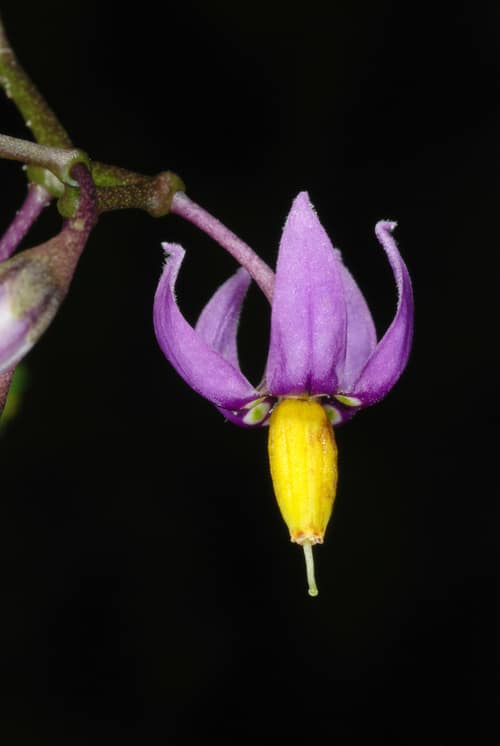
Solanaceae Kin (c) Douglas Goldman, some rights reserved (CC BY-SA), uploaded by Douglas Goldman · cc-by-sa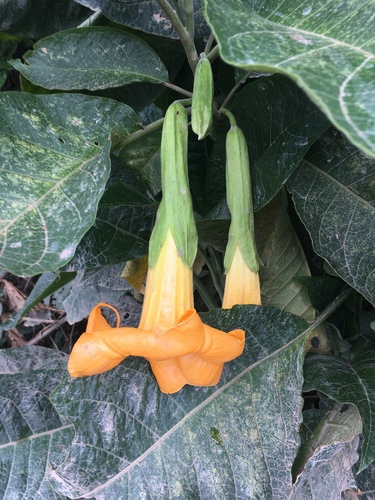
Close Relative no rights reserved · cc0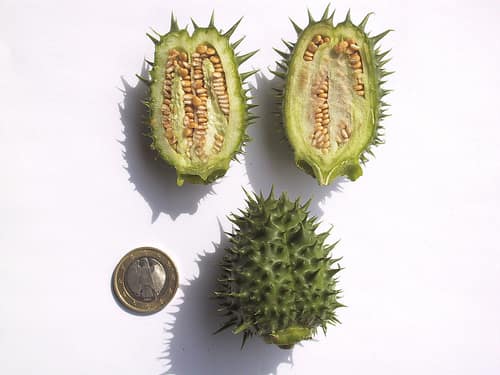
Toxic Relative (c) Gero Brandenburg, some rights reserved (CC BY-SA) · cc-by-sa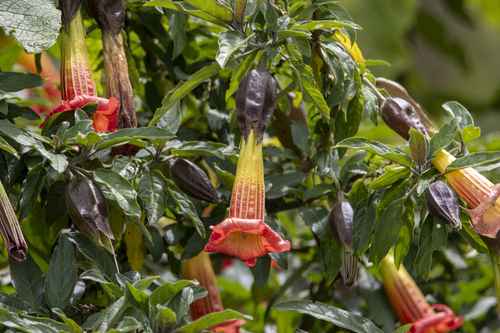
Close Relative (c) David F. Belmonte, some rights reserved (CC BY), uploaded by David F. Belmonte · cc-by
Help improve the field guideSomething wrong?
Checking your Fauna account…Report a name, category, or profile issue for review.