
Plant
Morrow's Honeysuckle
Lonicera morrowiiAlso known as Morrow Honeysuckle, Bush Honeysuckle
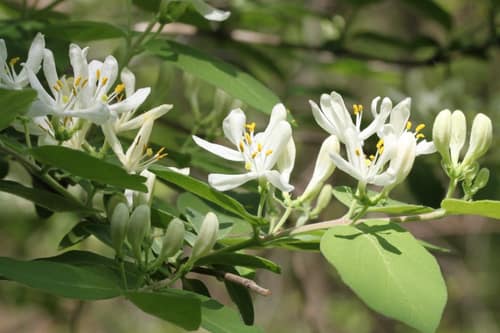
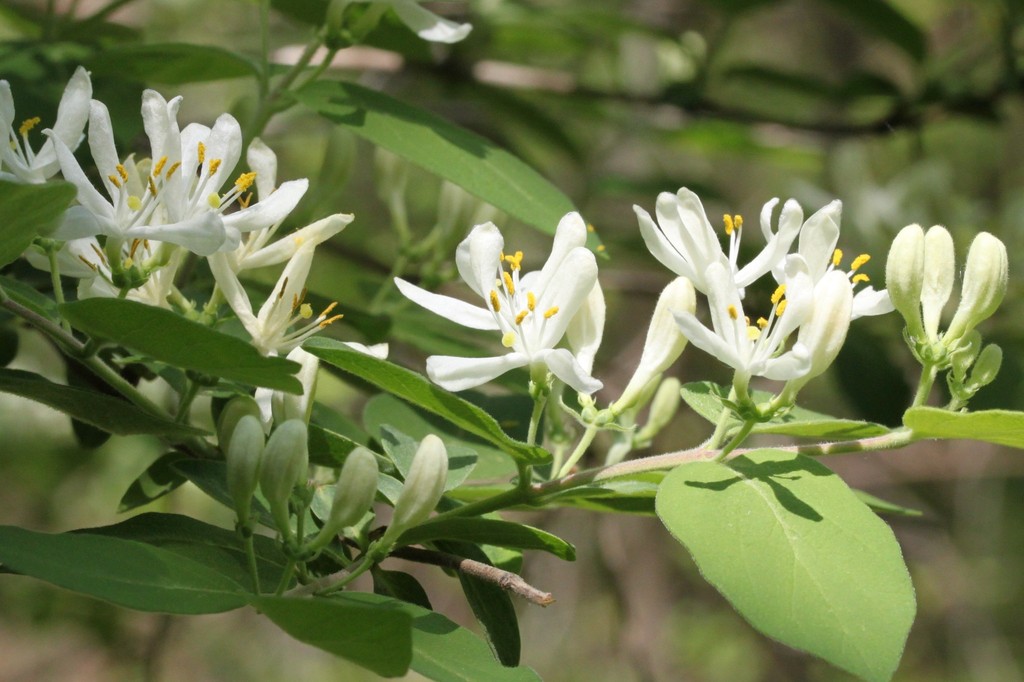
Morrow's honeysuckle leafs out earlier in spring and retains its foliage longer into autumn than most native deciduous shrubs, effectively shading out spring ephemerals and forest regeneration. Its paired flowers shift from crisp white to dull yellow as they age, emitting a light fragrance that draws bees and other small pollinators. The bright red paired berries offer carbohydrate-rich but lipid-poor forage for migrating birds, which subsequently spread the seeds across roadsides, forest edges, and abandoned fields.
InvasiveDeciduousFlowering
—observations
—countries
—peak records
Not EvaluatedConservation statusIUCN Red List categoriesLCNTVUENCREWEXNot Evaluated — not placed on the risk ladderRed List categories, explained →
Diet & preyAutotroph (Photosynthesis)
Predators
- White-tailed Deer
- Honeysuckle Aphid
ThreatsHerbicide treatments, mechanical uprooting, targeted cutting, prescribed burning
HabitatsOpen woodlands, forest edges, old fields, roadsides, riparian borders
Life span20–30 years
Classification
- OrderDipsacales
- FamilyCaprifoliaceae
- GenusLonicera
- SpeciesLonicera morrowii
Range data is not available yet.
Interaction riskHigh
- Low
- Moderate
- High
- Very high
- Why interaction risk is high
- Berries contain toxic saponins; never consume wild berries based on app identification alone.
- Why it is dangerous
- Contains toxic saponins that cause mild to moderate gastrointestinal distress, vomiting, diarrhea, and lethargy if ingested by humans or pets.
- How to recognize a risky encounter
- Recognized by opposite leaves with hairy undersides, paired white-to-yellow tubular flowers, and hollow older twigs bearing glossy red paired berries.
- What to do
- Wear work gloves when cutting or uprooting shrubs to prevent skin scrapes, and ensure children and pets do not consume the berries.
Responsible observation
- Pith Inspection: Snap an older woody stem to confirm identification; invasive bush honeysuckles display a hollow brown center.
- Early Removal: Uproot young seedlings in early spring while soil is moist to prevent deep root crowns from establishing.
- Foliage Clue: Look for densely pubescent, grayish-green undersides on mature oval leaves to separate it from smooth relatives.
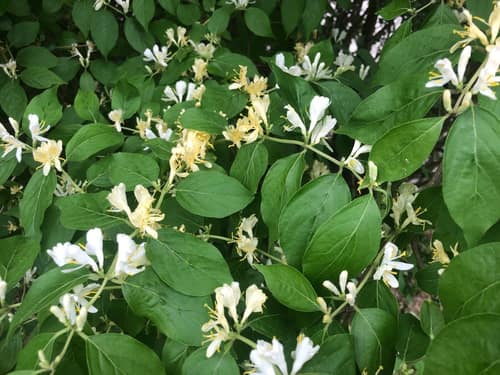
Competitor (c) Andrew Conboy, some rights reserved (CC BY), uploaded by Andrew Conboy · cc-by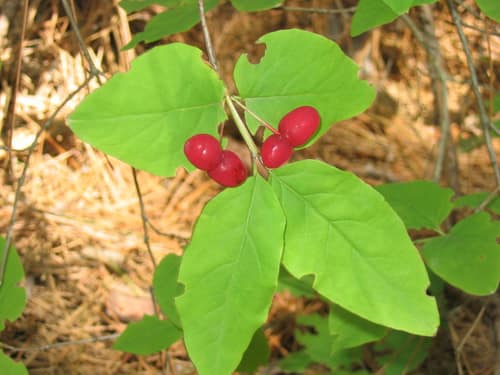
Native Look-alike (c) Superior National Forest, some rights reserved (CC BY) · cc-by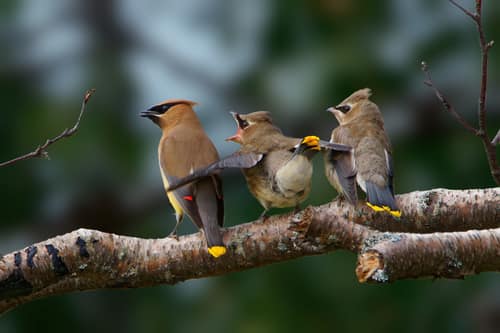
Seed Disperser (c) Christian Back, some rights reserved (CC BY), uploaded by Christian Back · cc-by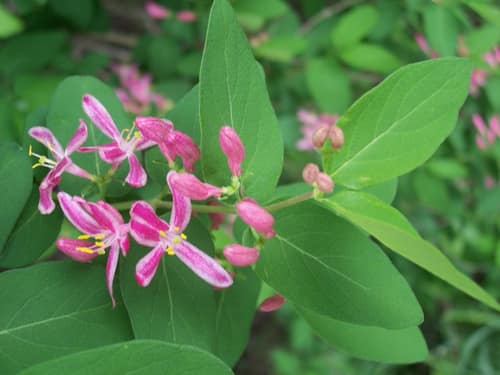
Close Relative no rights reserved, uploaded by Dave Behm · cc0
Help improve the field guideSomething wrong?
Checking your Fauna account…Report a name, category, or profile issue for review.