
Plant
Amur Honeysuckle
Lonicera maackiiAlso known as Bush Honeysuckle, Maack's Honeysuckle
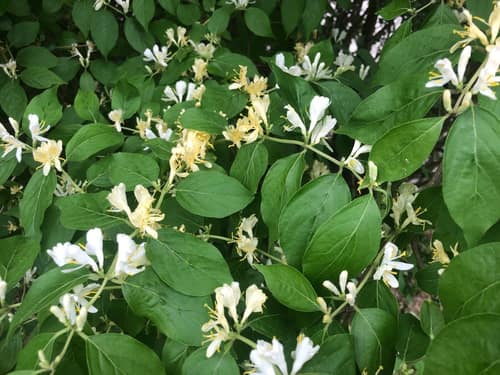
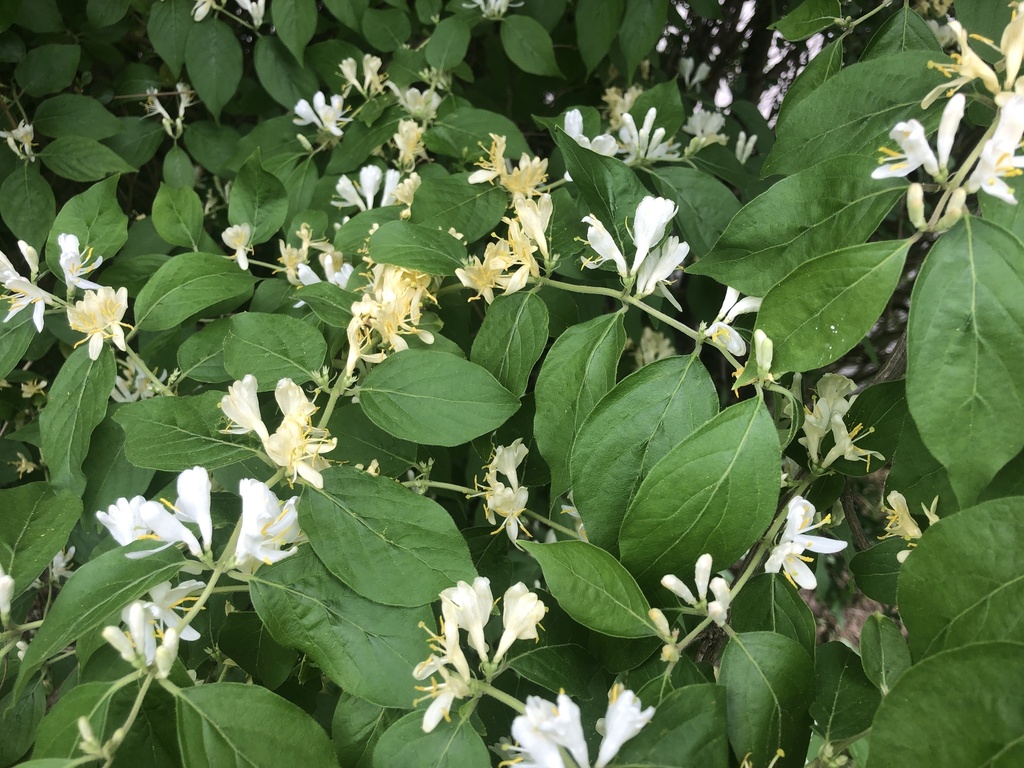
Amur honeysuckle forms dense, arching thickets that leaf out earlier in spring and retain foliage later into autumn than surrounding native vegetation. Paired white fragrant blossoms bloom along the stems in late spring before ripening into abundant red berries by early fall. Released widely for erosion control and ornament, it now displaces native plant communities across eastern North America.
Invasive ShrubDeciduousFragrant
—observations
—countries
—peak records
Not EvaluatedConservation statusIUCN Red List categoriesLCNTVUENCREWEXNot Evaluated — not placed on the risk ladderRed List categories, explained →
Diet & preyAutotrophic (Photosynthesis)
Predators
- White-tailed Deer
- American Robin
- Cedar Waxwing
ThreatsTargeted eradication via mechanical clearing and targeted systemic herbicide application
HabitatsDeciduous woodlands, forest edges, pastures, and disturbed urban green spaces
Life span30–50 years
Classification
- OrderDipsacales
- FamilyCaprifoliaceae
- GenusLonicera
- SpeciesLonicera maackii
Range data is not available yet.
Interaction riskHigh
- Low
- Moderate
- High
- Very high
- Why interaction risk is high
- Berries are mildly toxic to humans and pets; wild berries have toxic look-alikes, so never eat based on app identification alone.
- Why it is dangerous
- Contains saponins that cause abdominal pain, nausea, and gastrointestinal distress if ingested in moderate quantities.
- How to recognize a risky encounter
- Look for opposite, egg-shaped leaves with pointed tips, paired red berries, and hollow stem centers.
- What to do
- Keep pets and young children from consuming berries, and wear gardening gloves during mechanical removal.
Responsible observation
- Identification: Cut open a stem to check for a brown hollow pith, which distinguishes invasive bush honeysuckles from native species.
- Management: Pull young seedlings by hand when soil is moist or cut mature trunks and treat the stump to prevent resprouting.
- Wildlife Context: Observe how birds consume berries in winter, unintentionally dispersing seeds to neighboring woodlands.
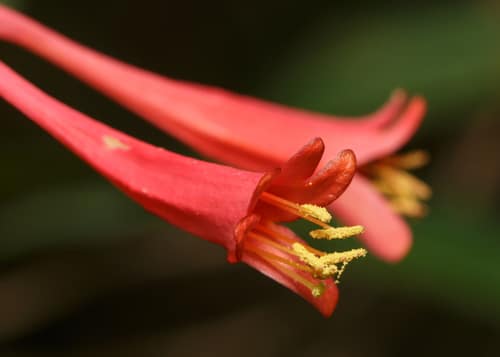
Native Alternative (c) Meghan Cassidy, some rights reserved (CC BY-SA), uploaded by Meghan Cassidy · cc-by-sa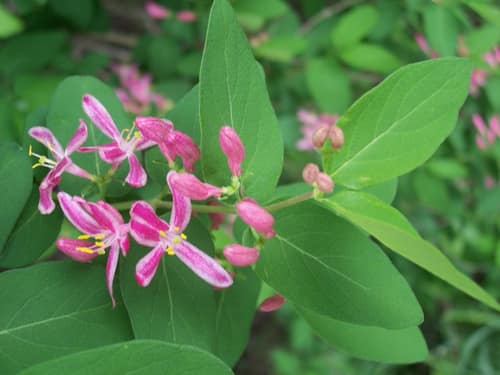
Close Relative no rights reserved, uploaded by Dave Behm · cc0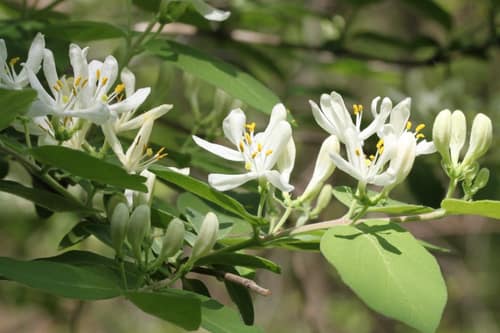
Close Relative (c) Fluff Berger, some rights reserved (CC BY-SA), uploaded by Fluff Berger · cc-by-sa
Help improve the field guideSomething wrong?
Checking your Fauna account…Report a name, category, or profile issue for review.