
Fungus
Green-spored Parasol
Chlorophyllum molybditesAlso known as Green-Gill Parasol, False Parasol, Green-Spored Lepiota, Vomiter
Green-spored parasols form prominent fairy rings across suburban lawns and grassy fields following warm seasonal rains. Young fruiting bodies emerge as white buttons before expanding into broad caps patterned with coarse brown scales. Maturing gills turn a pale olive-green as millions of spores develop, driving its role as an energetic decomposer of grass thatch.
ToxicFairy RingsLawn Fungus
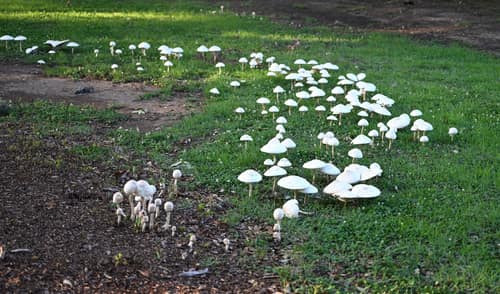
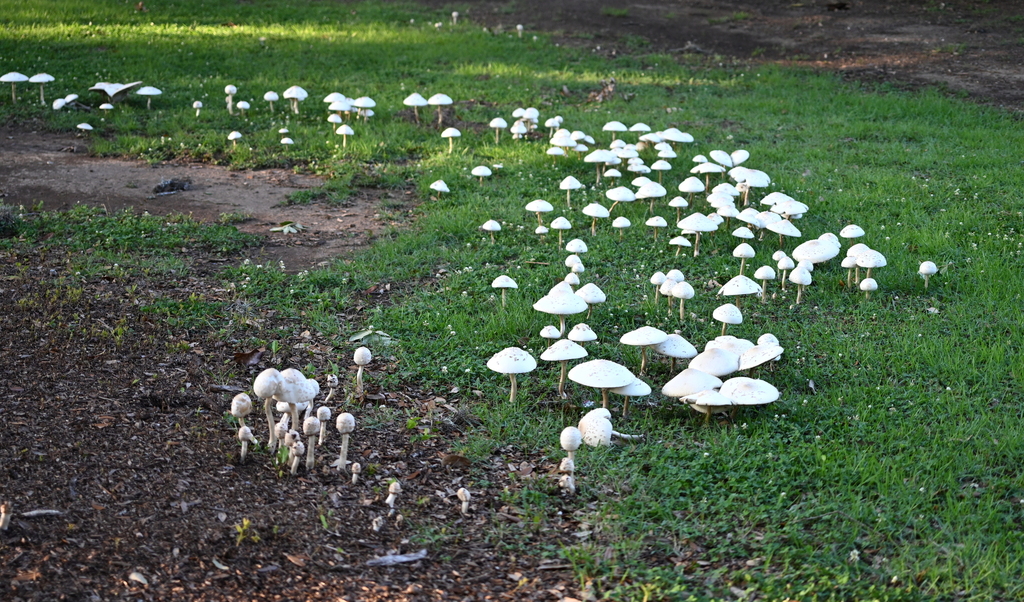
—observations
—countries
—peak records
Not EvaluatedConservation statusIUCN Red List categoriesLCNTVUENCREWEXNot Evaluated — not placed on the risk ladderRed List categories, explained →
Diet & preyDecaying grass roots, Lawn thatch, Soil organic matter
Predators
- Slugs
- Fungus gnats
- Rove beetles
ThreatsLawn mower destruction and chemical fungicide application
HabitatsLawns, pastures, parks, and suburban yards
Life spanFruiting body lasts 3–7 days; mycelium persists indefinitely
Classification
- OrderAgaricales
- FamilyAgaricaceae
- GenusChlorophyllum
- SpeciesChlorophyllum molybdites
Range data is not available yet.
Interaction riskHigh
- Low
- Moderate
- High
- Very high
- Why interaction risk is high
- Causes severe gastrointestinal illness if eaten; wild mushrooms have toxic look-alikes, so never ingest.
- Why it is dangerous
- Contains gastrointestinal toxins that cause violent vomiting, severe cramps, and dehydration when consumed.
- How to recognize a risky encounter
- Look for broad white caps with brownish scales and gills that mature from white to olive-green.
- What to do
- Never ingest wild mushrooms; wash hands thoroughly if handling fruiting bodies to examine spores print testing for green spore prints.
Responsible observation
- Spore printing: Place cap gill-side down on white paper overnight to verify the olive-green spore print.
- Pet safety: Remove fruiting bodies from yards where pets or children play to prevent accidental consumption.
- Lawn care: Leave underground mycelial networks intact, as they enrich lawn soil naturally.
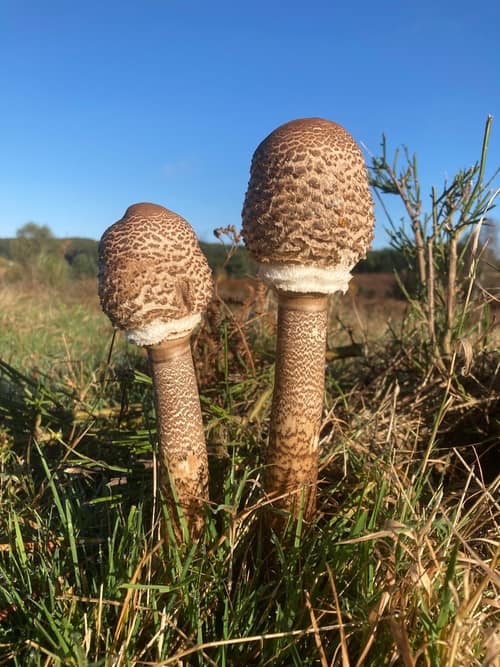
Look-Alike (c) Lucian Clanet, some rights reserved (CC BY), uploaded by Lucian Clanet · cc-by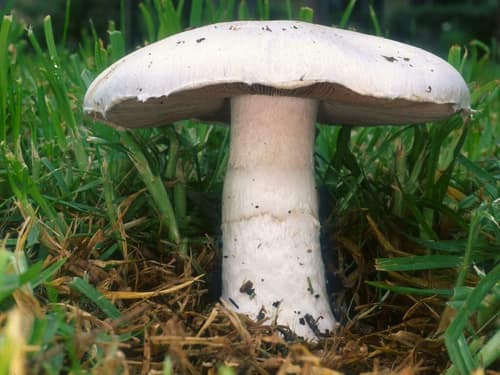
Grassland Competitor (c) anonymous, some rights reserved (CC BY-SA) · cc-by-sa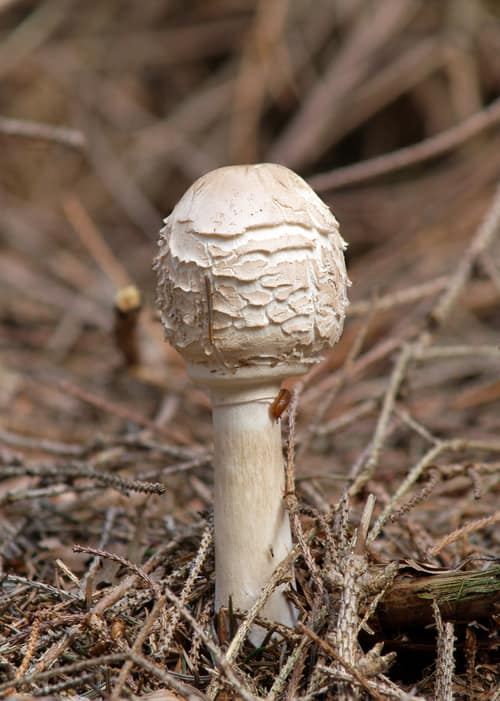
Close Relative (c) Jörg Hempel, some rights reserved (CC BY-SA) · cc-by-sa
Help improve the field guideSomething wrong?
Checking your Fauna account…Report a name, category, or profile issue for review.