
Bird
House Sparrow
Passer domesticusAlso known as English Sparrow, Indian Sparrow
House Sparrows thrive alongside humans, nesting in wall cavities, light fixtures, and eaves across urban and rural environments globally. Males display bold black bibs that expand in size with age, signaling social dominance to flock mates during energetic disputes. Highly social year-round, these vocal birds gather in chirping communal roosts and forage together on seeds, grain, and food scraps.
UrbanSocialAdaptable
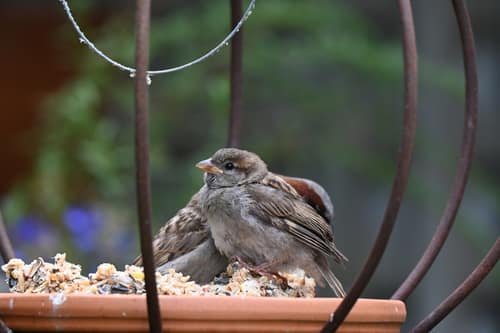
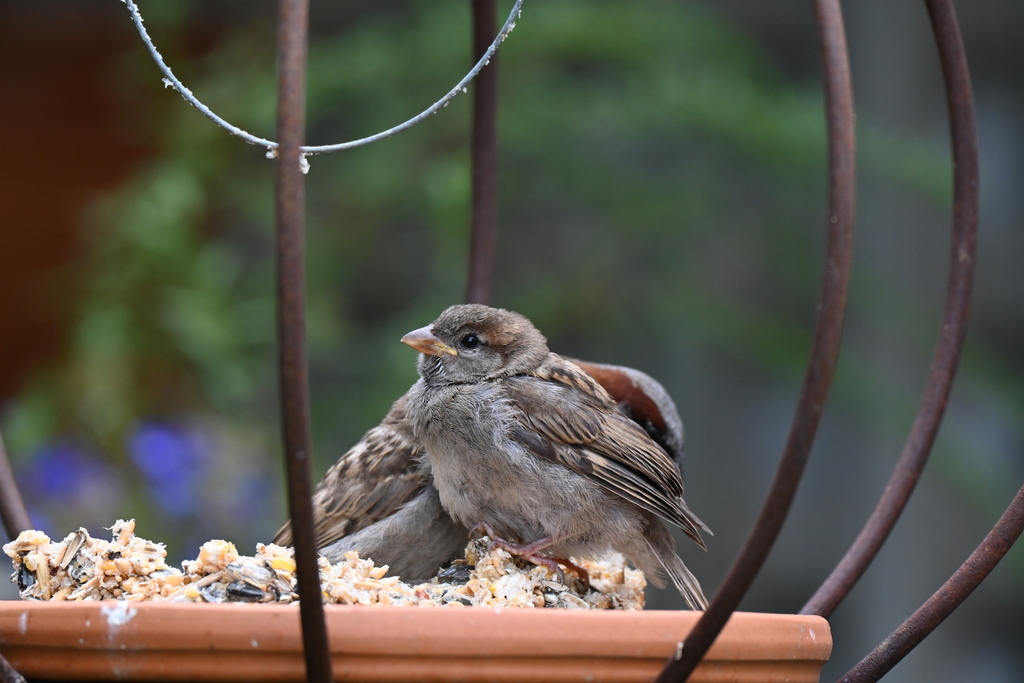
—observations
—countries
—peak records
Least ConcernConservation statusIUCN Red List categoriesLCNTVUENCREWEXLeast ConcernRed List categories, explained →
Diet & preyGrains and Seeds, Insects, Food Scraps
Predators
- Domestic Cat
- Cooper's Hawk
- American Kestrel
ThreatsModern building design reducing nest cavities, pesticides, and domestic cats
HabitatsCities, suburbs, farmland, and human settlements
Life span3–5 years in the wild
Classification
- OrderPasseriformes
- FamilyPasseridae
- GenusPasser
- SpeciesPasser domesticus
Range data is not available yet.
Interaction riskLow
- Low
- Moderate
- High
- Very high
- Why interaction risk is low
- Safe to observe at a normal distance.
Responsible observation
- Feeders: Offer cracked corn, millet, or sunflower seeds in platform or hopper feeders.
- Observation: Watch dense hedge bushes where flocks gather to socialize and preen together.
- Nesting: Check eaves and building nooks in spring to observe active nest construction.
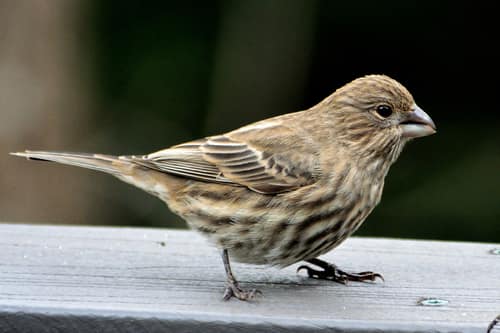
Competitor (c) MostlyDross, some rights reserved (CC BY) · cc-by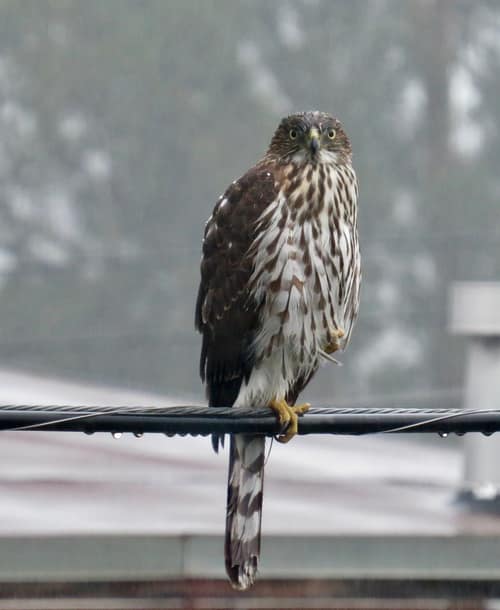
Predator "Cooper's Hawk - immature" by Kaaren Perry is licensed under CC BY 2.0. To view a copy of this license, visit https://creativecommons.org/licenses/by/2.0/. · cc-by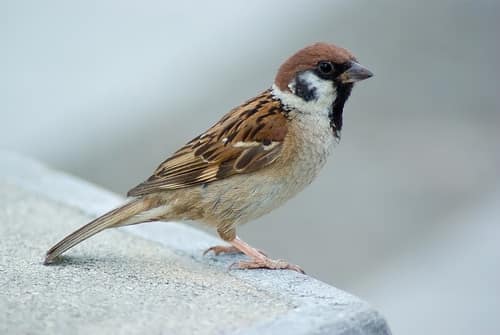
Close Relative Laitche / Public domain · cc0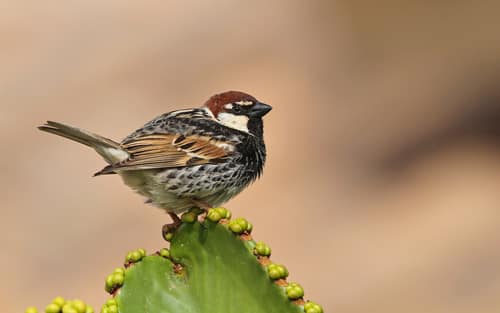
Close Relative (c) Christoph Moning, some rights reserved (CC BY), uploaded by Christoph Moning · cc-by
Keep collecting in Fauna
Found in Collections
Species set Pro
Backyard Birds
House Sparrow is found in this collection. Identify it in Fauna to fill this slot and continue your progress.
Unlock to track progress
Help improve the field guideSomething wrong?
Checking your Fauna account…Report a name, category, or profile issue for review.