
Bird
Wandering Albatross
Diomedea exulansAlso known as Snowy Albatross, White-Winged Albatross, Goonie
Wandering albatrosses boast the longest wingspan of any living bird, allowing them to glide for thousands of kilometers across tempestuous southern seas without flapping a single feather. Pairs mate for life after complex courtships involving elaborate bowings, bill-clappering, and sky-pointing displays on remote sub-Antarctic islands. Single chicks take nearly a full year to fledge, leading adults to breed only every second year.
OceanicPelagicLong-winged
—observations
—countries
—peak records
VulnerableConservation statusIUCN Red List categoriesLCNTVUENCREWEXVulnerableRed List categories, explained →
Diet & preySquid, Fish, Krill
Predators
- Southern giant petrel (chicks)
- Feral cat (chicks)
- House mouse (chicks)
ThreatsLongline fishing, plastic pollution, climate change, and introduced nest predators
HabitatsOpen ocean (pelagic) and remote sub-Antarctic islands
Life span50–60 years
Classification
- FamilyDiomedeidae
- SpeciesDiomedea exulans
Range data is not available yet.
Interaction riskLow
- Low
- Moderate
- High
- Very high
- Why interaction risk is low
- Nesting birds will defend territory with powerful bill strikes: maintain distance on breeding islands.
- What to notice
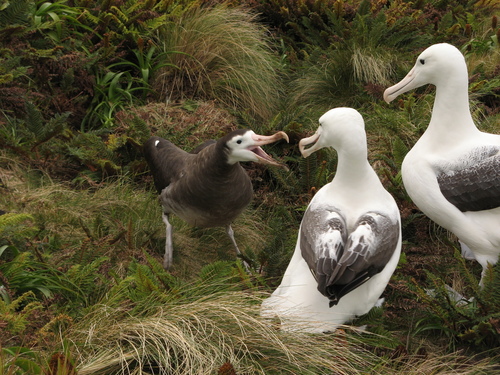
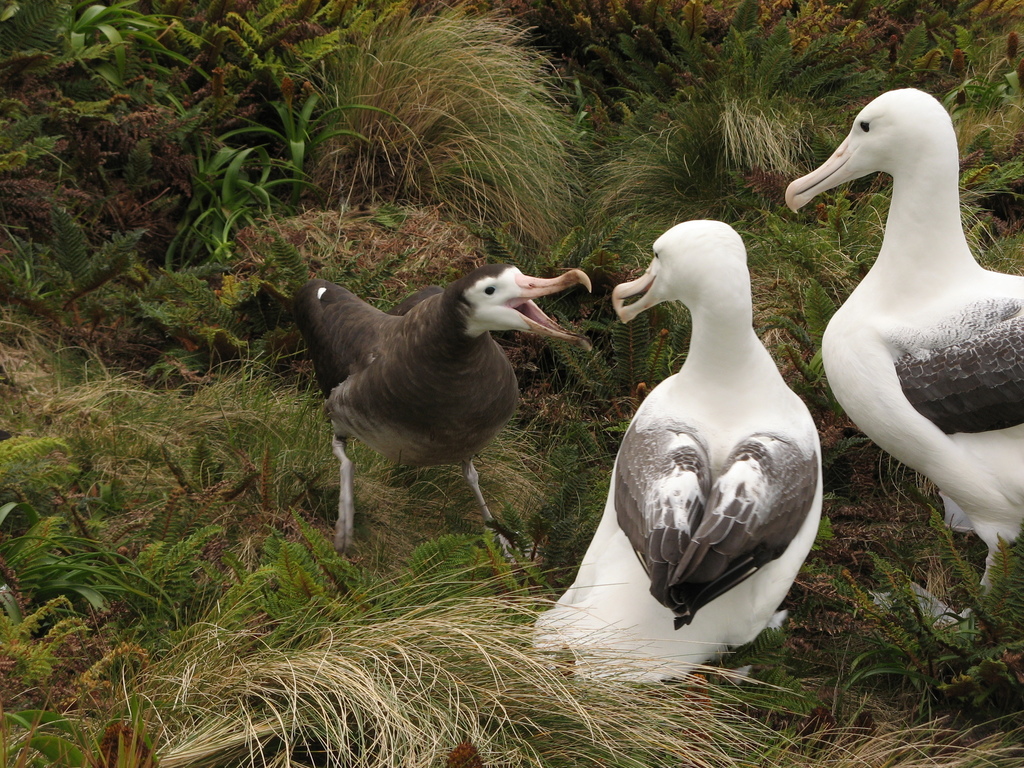
- Recognized by an enormous three-meter wingspan, largely white body, and bright pink bill.
- Support conservation
- Never approach nesting colonies without official permits and strictly observe biosecurity rules.
Responsible observation
- Pelagic Spotting: Scan the horizon behind ocean vessels where birds ride wind updrafts.
- Observe Distantly: Maintain strict buffers around nesting colonies on protected islands.
- Gale Watching: Look for them dynamic soaring during strong winds and turbulent oceanic conditions.
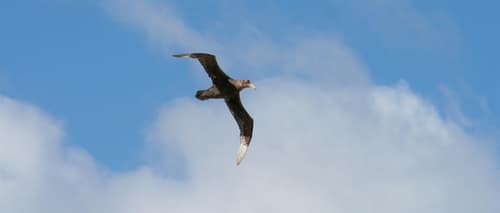
Competitor (c) Richard Giddins, some rights reserved (CC BY) · cc-by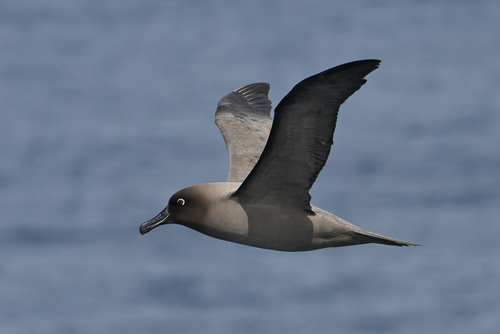
Oceanic Companion (c) Christopher Stephens, some rights reserved (CC BY-SA), uploaded by Christopher Stephens · cc-by-sa Image unavailable
Close Relative 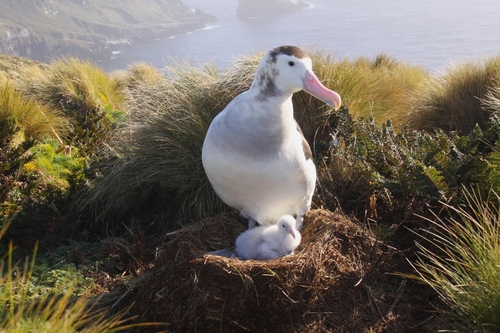
Close Relative no rights reserved, uploaded by Mark Fraser · cc0
Help improve the field guideSomething wrong?
Checking your Fauna account…Report a name, category, or profile issue for review.