
Mammal · GBIF taxon 5220112
Javan Rhinoceros
Rhinoceros sondaicusAlso known as Sunda Rhinoceros, Lesser One-Horned Rhinoceros, Javan Rhino
Javan rhinoceroses are solitary, forest-dwelling browsers that spend much of their day wallowing in mud pools to cool down and protect their sensitive skin from insects. They communicate through a complex system of scent marking, scraping soil with their feet, and leaving piles of dung along established trails. Once widespread across Southeast Asia, these elusive mammals are now restricted to a single national park on the western tip of Java.
SolitaryRainforest
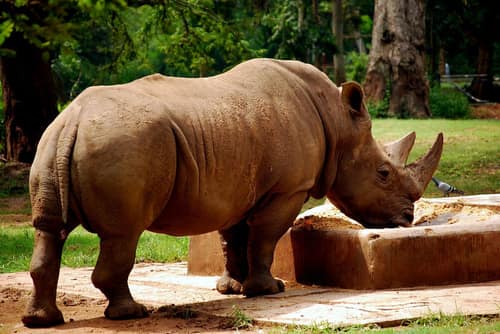
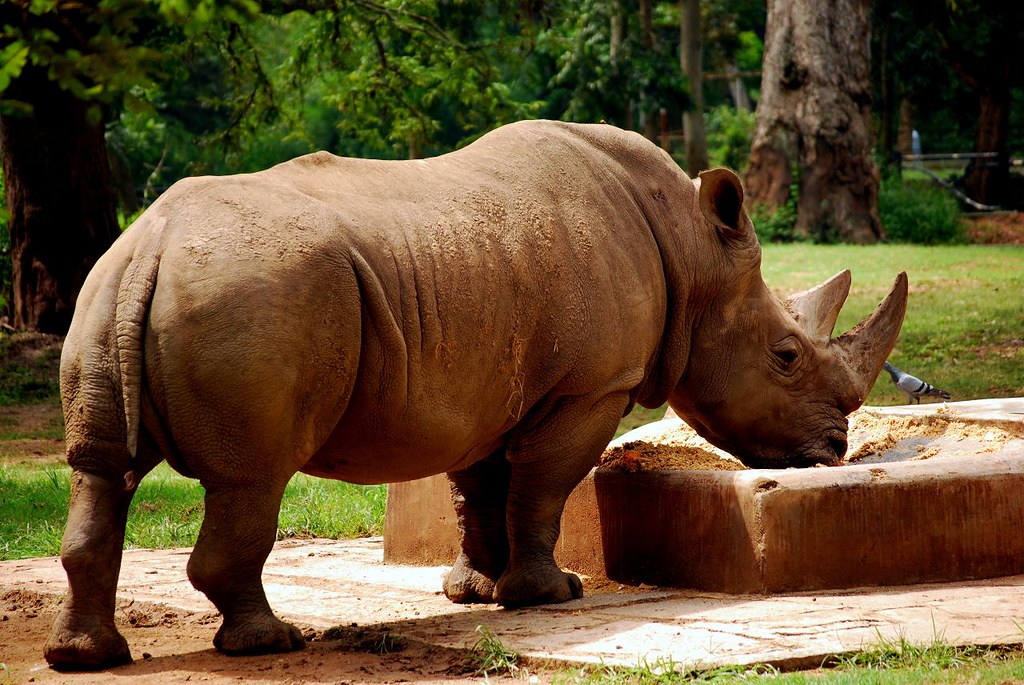
—observations
—countries
—peak records
Critically EndangeredConservation statusIUCN Red List categoriesLCNTVUENCREWEXCritically EndangeredRed List categories, explained →
Diet & prey
- Fallen fruit
- Tree twigs
- Foliage
Predators
- Humans
- Javan Leopard
ThreatsPoaching, habitat loss, disease, natural disasters, and extremely small population size
HabitatsTropical rainforests, lowlands, and muddy wallows
Life span35 to 45 years
Size / weightNot available
Classification
- FamilyRhinocerotidae
- SpeciesRhinoceros sondaicus
Native
Interaction riskHigh
- Low
- Moderate
- High
- Very high
- Why interaction risk is high
- Extremely rare and potentially dangerous if cornered; keep a safe distance.
- Why it is dangerous
- Weighing up to two tons, these animals can charge at high speeds and inflict severe injuries with their sharp incisors or sheer bulk if startled.
- How to recognize a risky encounter
- Look for a single small horn, armor-like skin folds, and a prehensile upper lip used for browsing.
- What to do
- Never attempt to track or approach wild rhinoceroses; remain in designated safe vehicles or viewing areas if authorized.
- What to notice
- Recognizable by its single horn, mosaic-patterned skin folds, and restricted range in western Java.
- Support conservation
- Avoid entering protected habitat zones and support official conservation initiatives from a distance.
Responsible observation
- Do not seek out: The remaining population is strictly protected within Ujung Kulon National Park and closed to the public.
- Look for signs: Researchers identify their presence via mud wallows, footprint tracks, and scraped bark.
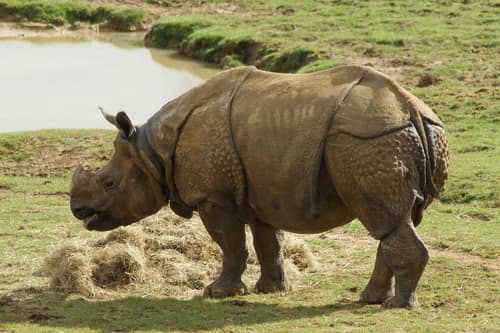
Close Relative "Indian Rhinoceros (Rhinoceros unicornis), ZSL Whipsnade Zoo" by spencer77 is licensed under CC BY 2.0. To view a copy of this license, visit https://creativecommons.org/licenses/by/2.0/. · cc-by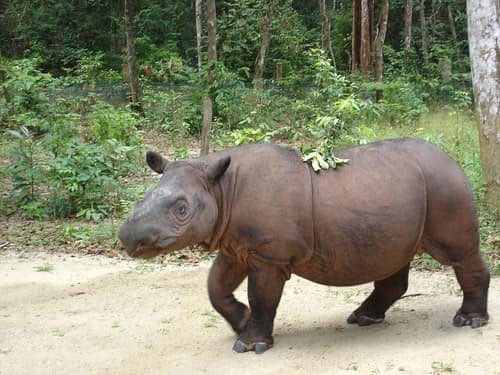
Close Relative 26Isabella / CC BY-SA 3.0 · cc-by-sa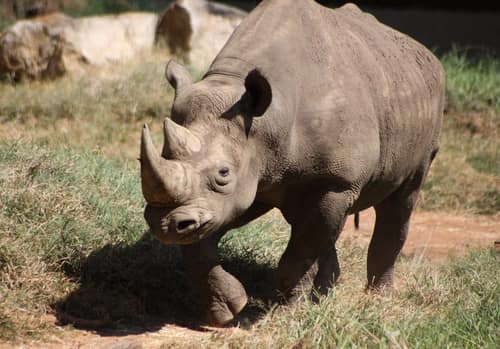
Distant Relative Derek Keats from Johannesburg, South Africa / CC BY 2.0 · cc-by
Help improve the field guideSomething wrong?
Checking your Fauna account…Report a name, category, or profile issue for review.