
Western Gray Squirrel
Sciurus griseusAlso known as Silver-gray Squirrel, California Gray Squirrel, Oregon Gray Squirrel, Columbian Gray Squirrel
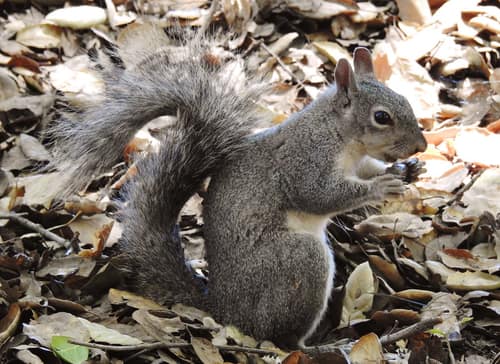
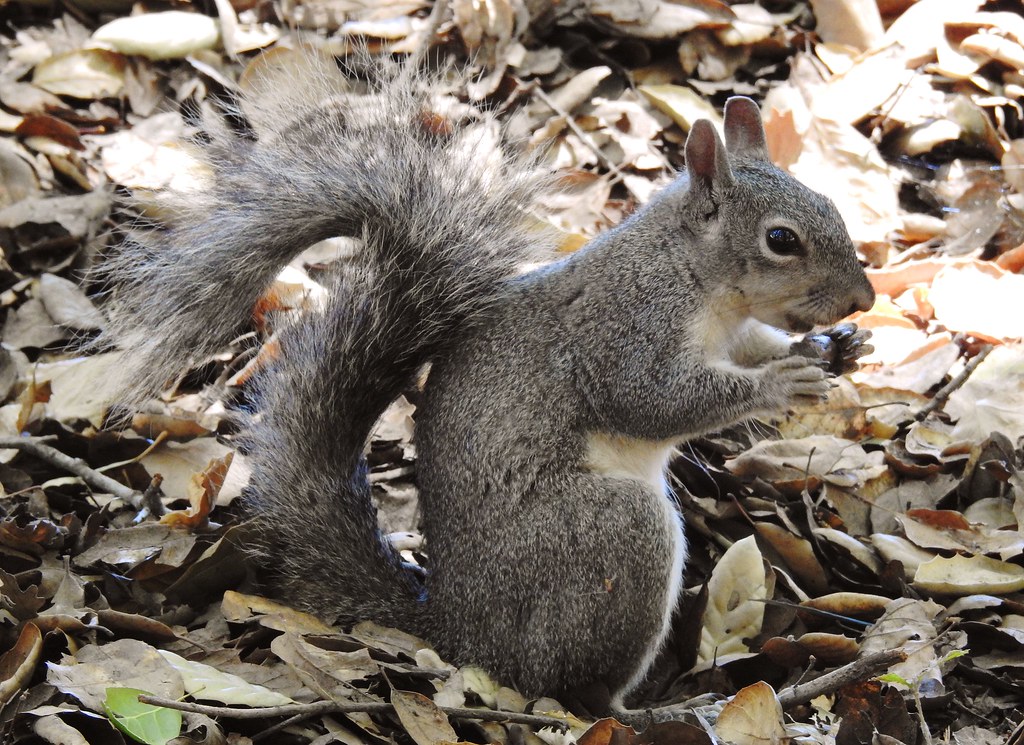
Western gray squirrels navigate the mixed conifer and oak canopies of Pacific coastal forests, utilizing their immense, silver-frosted tails for balance and communication. Unlike non-native competitors, they rely heavily on subterranean fungi and hypogeous mycorrhizal truffles, playing a vital ecological role in forest health through spore dispersal. They construct large, spherical stick nests called dreys high in mature trees, where females rear a single litter of pups each spring.
- Hypogeous truffles
- Acorns
- Pine seeds
- Red-tailed Hawk
- Bobcat
- Coyote
- OrderRodentia
- FamilySciuridae
- GenusSciurus
- SpeciesSciurus griseus
- Low
- Moderate
- High
- Very high
- Why interaction risk is low
- Can inflict a sharp defensive bite if cornered or handled; observe quietly from a distance.
- Why it is dangerous
- Possesses formidable incisors built for cracking tough nutshells that can deliver deep puncture wounds.
- How to recognize a risky encounter
- Recognizable by uniform gunmetal-gray fur, crisp white underparts, and an exceptionally long, silver-frosted tail.
- What to do
- Do not attempt to touch, feed by hand, or corner; keep a respectful distance and let the animal retreat.
- Quiet approach: Move slowly through oak groves in early morning to catch them foraging on the ground.
- Look up: Search the upper canopy of mature trees for bulky stick dreys lined with shredded bark.
- Listen for alarms: Listen for a sharp, hollow barking call that warns of approaching ground predators.
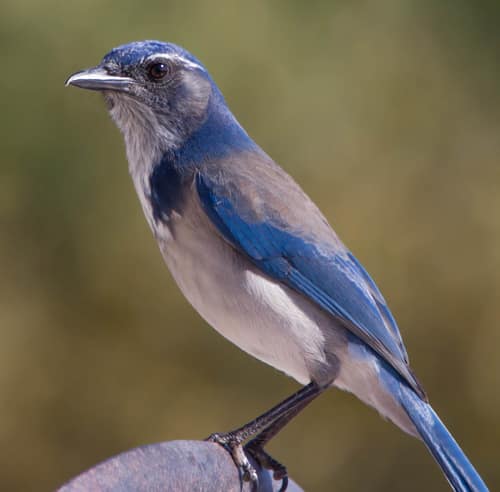
Competitor (c) Dawn Beattie, some rights reserved (CC BY) · cc-by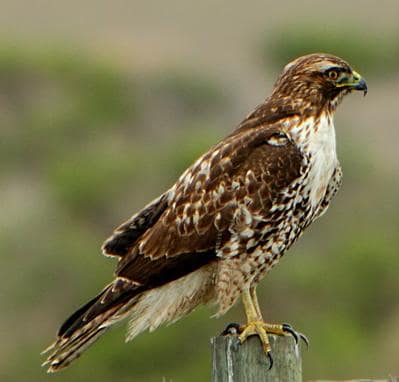
Predator Buteo_jamaicensis_1.jpg: Alan Vernon derivative work: Berichard (talk) / CC BY 2.0 · cc-by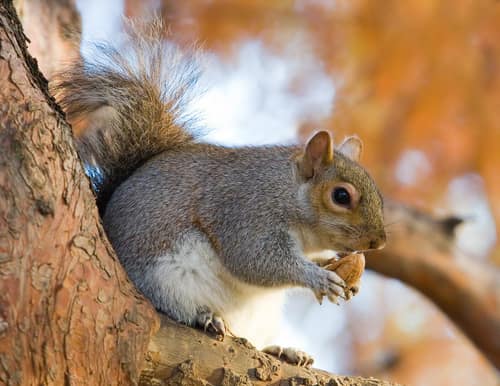
Close Relative (c) Diliff, some rights reserved (CC BY-SA) · cc-by-sa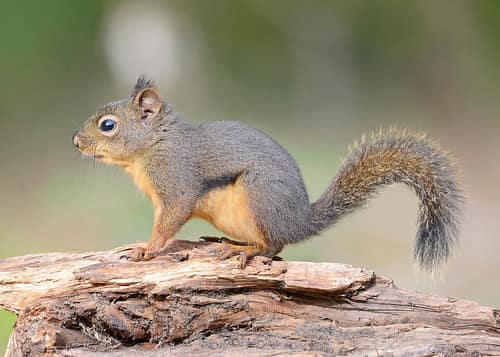
Sympatric Relative VJAnderson / CC BY-SA 4.0 · cc-by-sa
Found in Collections
Urban Dwellers
Western Gray Squirrel is found in this collection. Identify it in Fauna to fill this slot and continue your progress.
Report a name, category, or profile issue for review.