
Plant · GBIF taxon 3172574
African Tulip Tree
Spathodea campanulataAlso known as Nandi Flame, Fountain Tree, Squirt Tree, Flame of the Forest
African tulip trees command attention with massive clusters of fiery orange-red, cup-shaped flowers that bloom atop dense evergreen canopies. The unopened velvety flower buds swell with watery fluid, earning the species playful nicknames like fountain tree across tropical regions. Outside its native African range, windborne papery seeds allow this fast-growing pioneer to aggressively colonize native forests and agricultural landscapes.
InvasiveFlowering TreeTropical
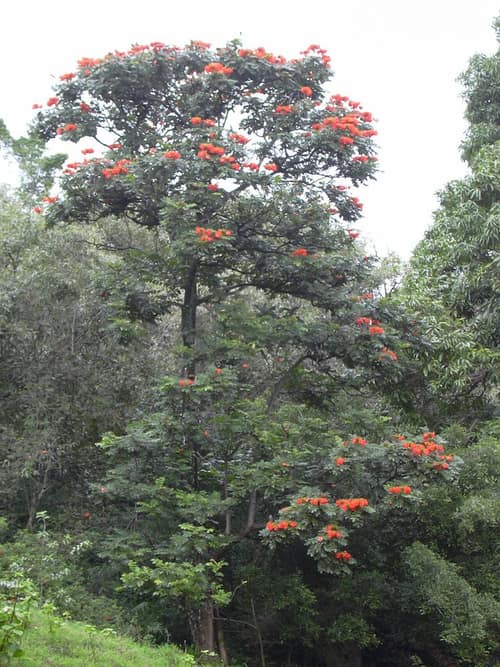
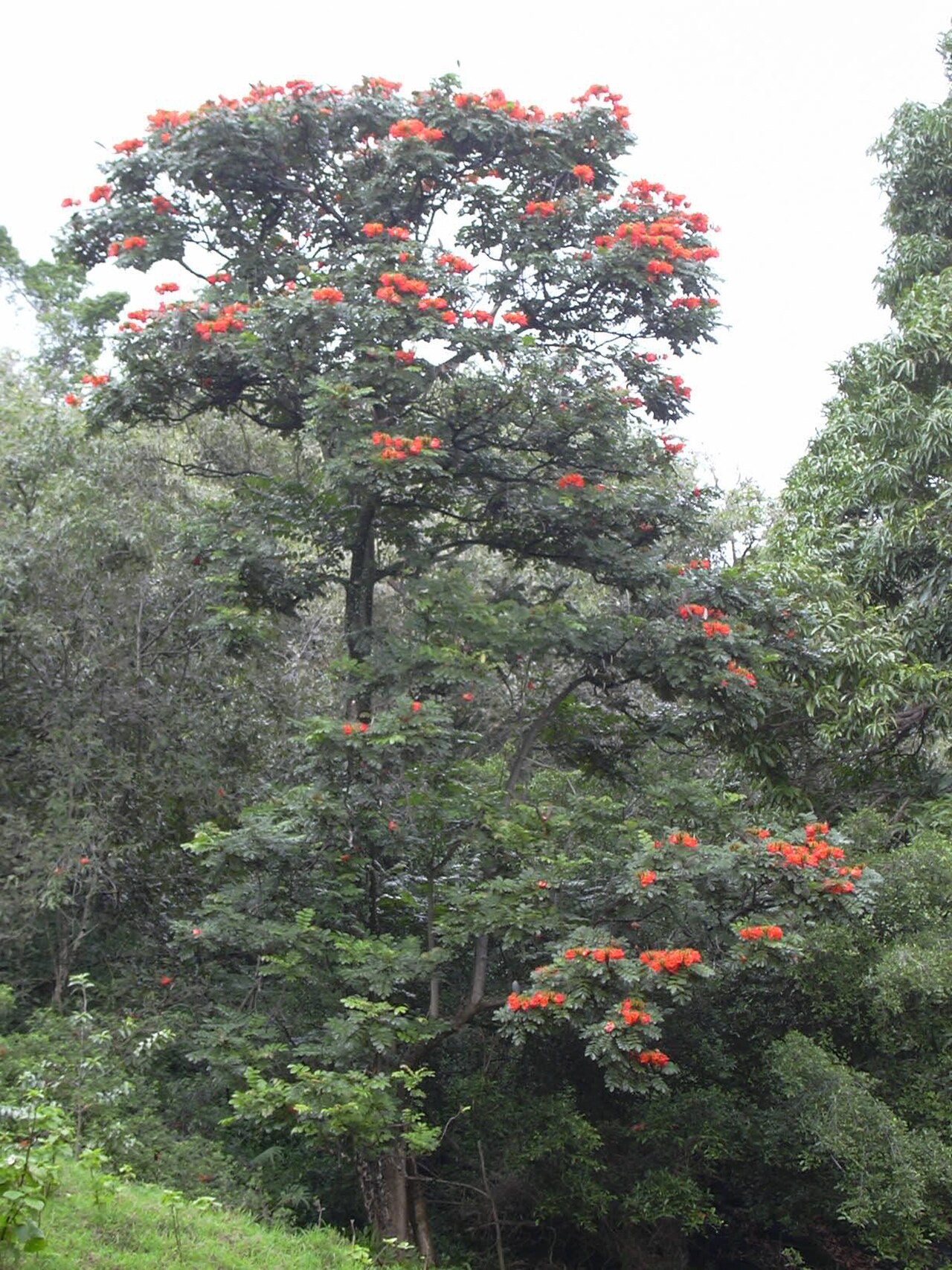
—observations
—countries
—peak records
Least ConcernConservation statusIUCN Red List categoriesLCNTVUENCREWEXLeast ConcernRed List categories, explained →
Diet & prey
- Autotrophic (Photosynthesis)
Predators
- Caterpillars
- Wood-boring beetles
- Scale insects
ThreatsHabitat loss in native range; invasive competition with native flora elsewhere
HabitatsTropical dry forests, rainforest margins, disturbed land, agricultural areas
Life span50–100 years
Size / weightNot available
Classification
- OrderLamiales
- FamilyBignoniaceae
- GenusSpathodea
- SpeciesSpathodea campanulata
Range data is not available yet.
Interaction riskLow
- Low
- Moderate
- High
- Very high
- Why interaction risk is low
- Safe to observe at a normal distance.
Responsible observation
- Watch for nectar robbers: Observe how sunbirds and insects pierce the base of the cup-shaped flowers to harvest nectar without pollinating.
- Inspect closed buds: Press unopened flower buds gently to release the trapped fluid that gives the tree its squirt tree nickname.
- Identify invasive spread: Look for wind-dispersed papery winged seeds drifting far from urban plantings into native woodland edges.
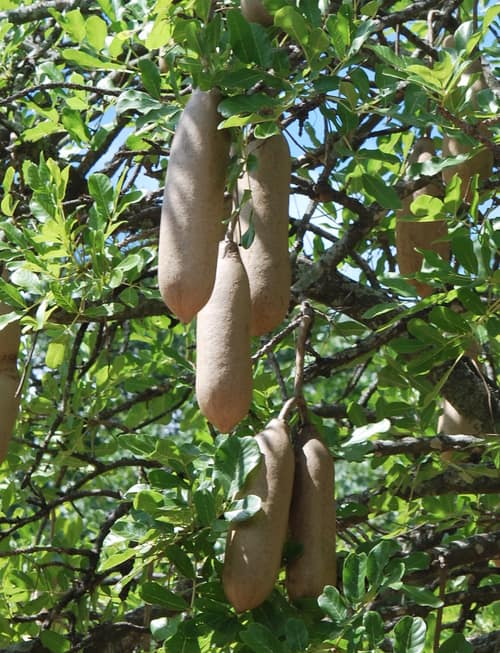
Native Co-Occurring (c) Charles Stirton, some rights reserved (CC BY-SA), uploaded by Charles Stirton · cc-by-sa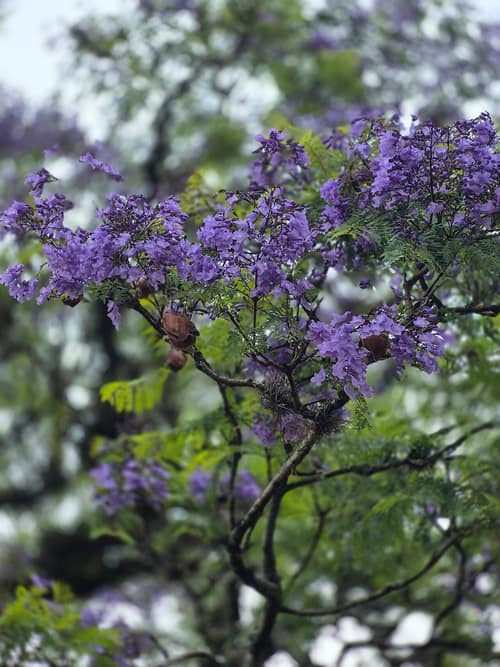
Close Relative O Tupinólogo / CC BY 4.0 · cc-by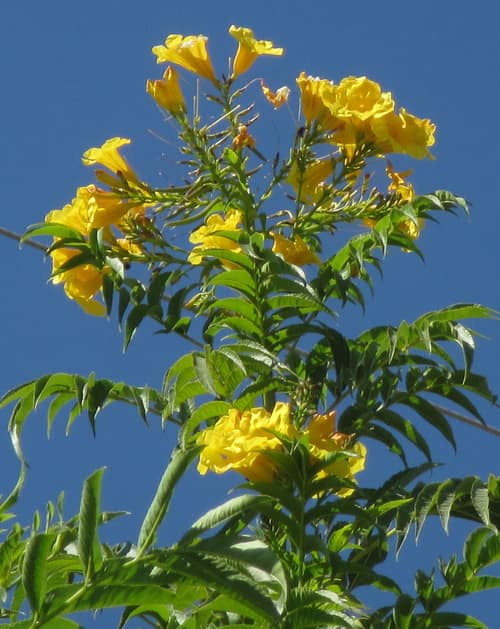
Family Relative (c) Robert Taylor, some rights reserved (CC BY), uploaded by Robert Taylor · cc-by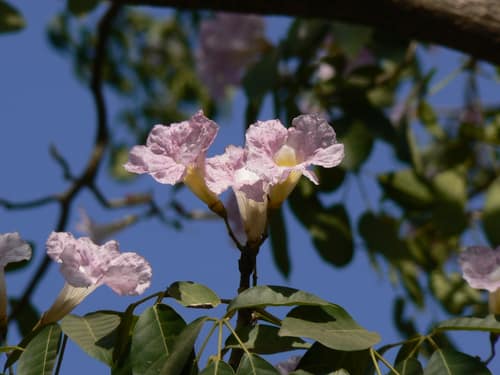
Family Relative (c) Dinesh Valke, some rights reserved (CC BY-SA) · cc-by-sa
Help improve the field guideSomething wrong?
Checking your Fauna account…Report a name, category, or profile issue for review.