
Plant
Star Jasmine
Trachelospermum jasminoidesAlso known as Confederate Jasmine, Confederate Jessamine, Chinese Star Jessamine, Trader's Compass
Star jasmine twines around supports with dense woody stems, covering fences and arbors with glossy dark green leaves. During late spring and early summer, clusters of pinwheel-shaped white flowers open to release an intense, sweet perfume that attracts honeybees and nocturnal moths. The sticky white sap flowing through its stems acts as a natural defense against many chewing pests.
FragrantEvergreenClimbing Vine
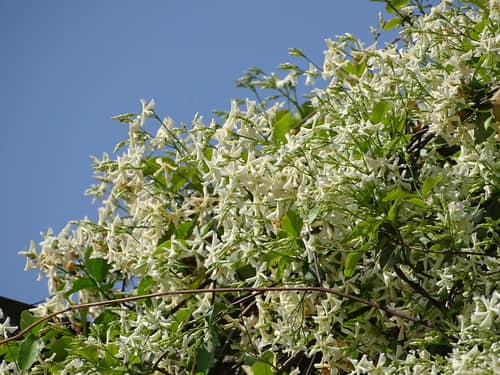
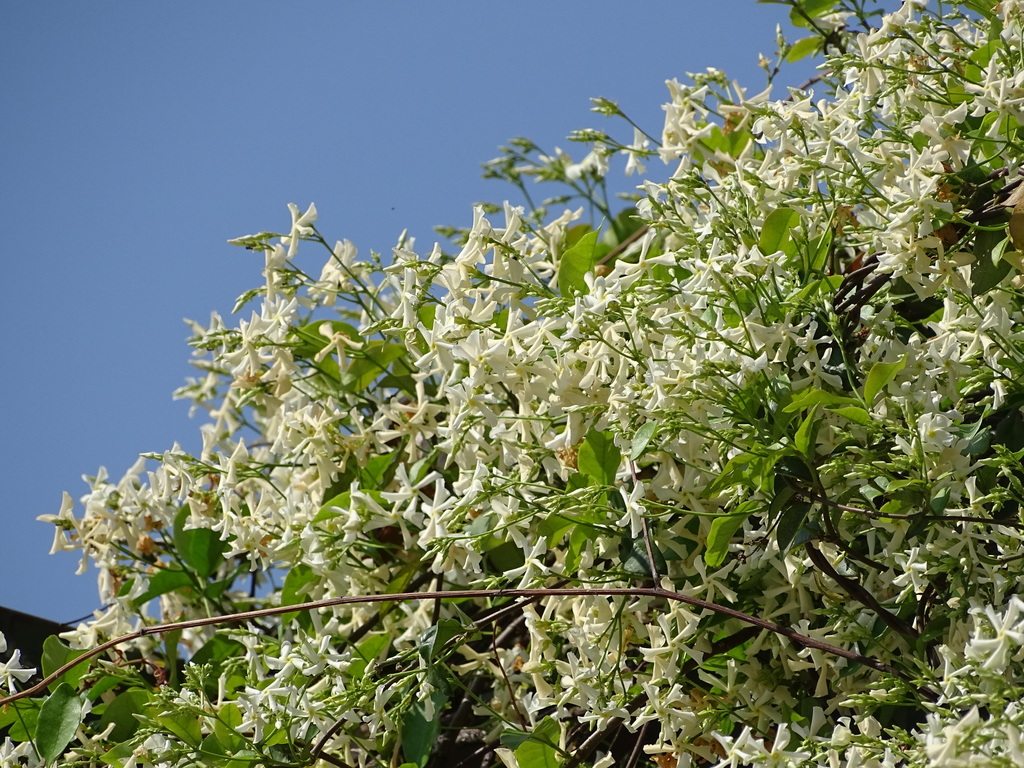
—observations
—countries
—peak records
Not EvaluatedConservation statusIUCN Red List categoriesLCNTVUENCREWEXNot Evaluated — not placed on the risk ladderRed List categories, explained →
Diet & preySunlight, Water, Soil Nutrients
Predators
- Scale Insects
- Mealybugs
- Spider Mites
ThreatsHard freezing temperatures, poorly drained soils, severe drought
HabitatsSubtropical forests, woodland margins, urban landscapes, domestic gardens
Life span10–20+ years
Classification
- OrderGentianales
- FamilyApocynaceae
- GenusTrachelospermum
- SpeciesTrachelospermum jasminoides
Range data is not available yet.
Interaction riskHigh
- Low
- Moderate
- High
- Very high
- Why interaction risk is high
- Milky sap can irritate skin and cause mild toxicity to pets if ingested; handle with care.
- Why it is dangerous
- Milky white latex sap contains alkaloids that irritate sensitive skin and cause digestive upset in pets.
- How to recognize a risky encounter
- Recognized by glossy dark green leaves, climbing woody stems, and sweet pinwheel white flowers.
- What to do
- Wear gloves when pruning to avoid sticky sap, and keep plant trimmings away from curious pets.
Responsible observation
- Trellis Support: Provide sturdy arbors, wires, or fencing for twining stems to climb.
- Pruning Time: Trim immediately after spring flowering to shape growth without losing next season's buds.
- Light Exposure: Position in full sun to partial shade to encourage the densest flowering.
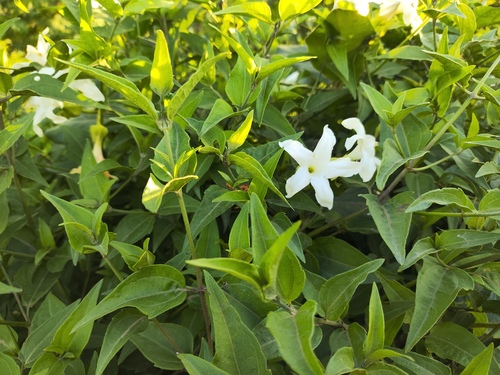
Look-alike (c) Silvia Ten, some rights reserved (CC BY), uploaded by Silvia Ten · cc-by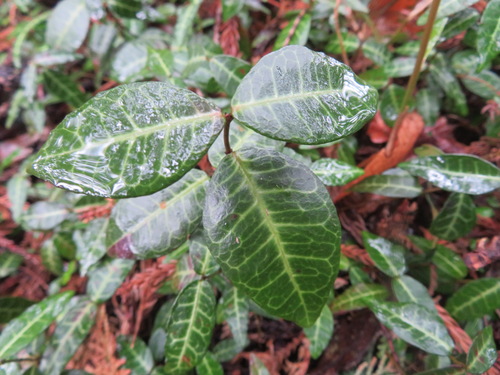
Close Relative (c) Marco Mussita, some rights reserved (CC BY), uploaded by Marco Mussita · cc-by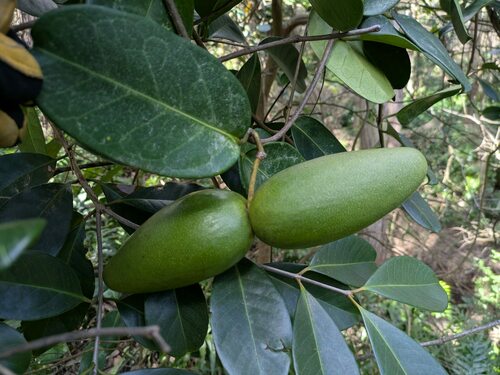
Family Member (c) Kevin Faccenda, some rights reserved (CC BY), uploaded by Kevin Faccenda · cc-by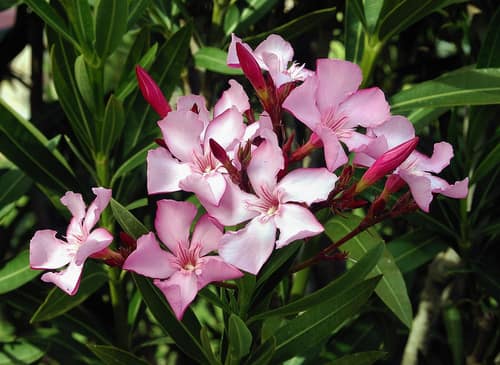
Family Member Alvesgaspar / CC BY 2.5 · cc-by
Help improve the field guideSomething wrong?
Checking your Fauna account…Report a name, category, or profile issue for review.