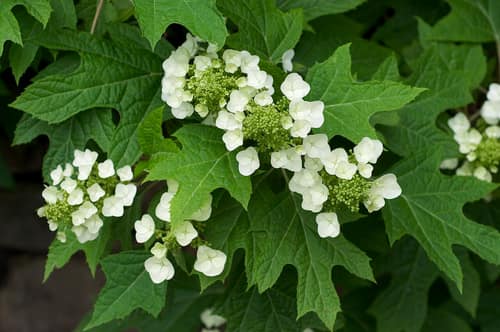
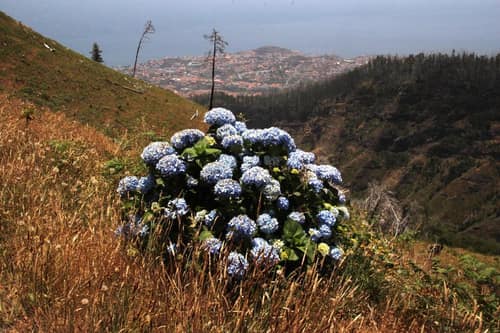
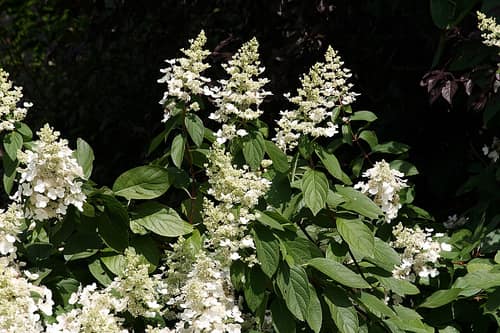
Wild hydrangea forms dense, lush thickets along shaded forest streams and moist rocky ravines across eastern North America. In early summer, branch tips bear broad, flat-topped clusters of creamy white blossoms that attract diverse native bees and beetles. Older stems continuously shed thin layers of pale outer bark, giving rise to its traditional nickname sevenbark.
Contains cyanogenic glycosides that cause severe stomach distress if eaten; do not ingest.
Why it is dangerous
Leaves and flower buds produce cyanogenic glycosides that release hydrocyanic acid upon ingestion, causing nausea, vomiting, and lethargy in humans and pets.
How to recognize a risky encounter
Look for opposite, serrated oval leaves and flat clusters of small creamy-white flowers on flexible woody stems.
What to do
Observe without picking or chewing plant parts, and keep pets from browsing on foliage.
Responsible observation
Spotting: Look for flat, creamy-white flower heads blooming in shaded forest ravines in early summer.
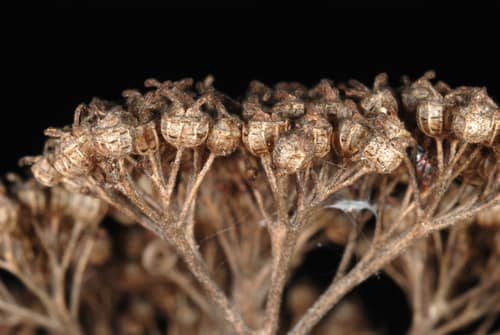
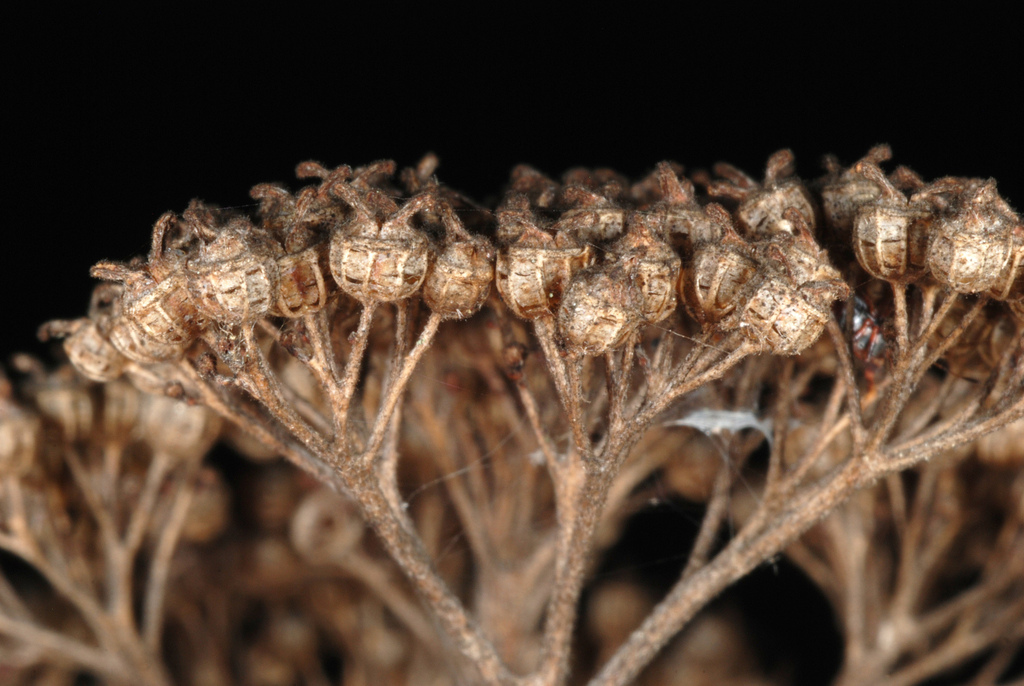
Winter Identification: Look for peeling papery layers of pale bark on dormant multi-stemmed branches.

 1 / 7
1 / 7