Also known as Horsenettle, Ball Nettle, Apple of Sodom, Devil's Tomato
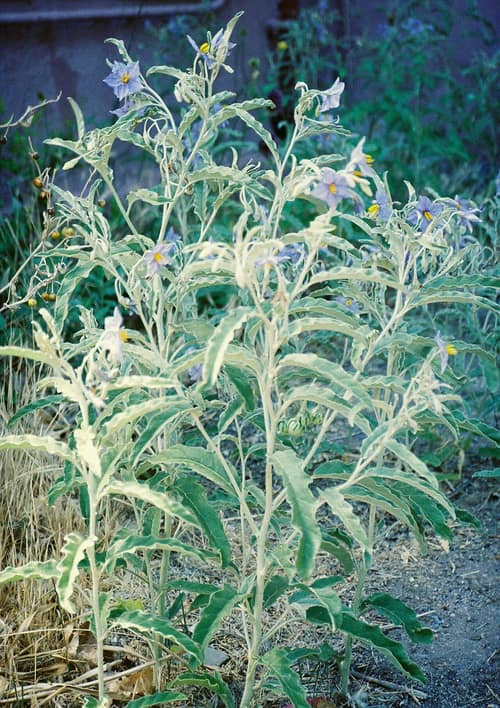
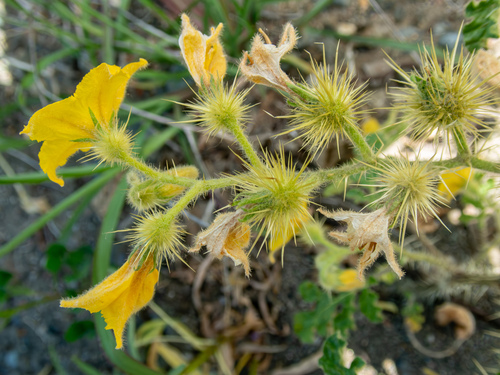
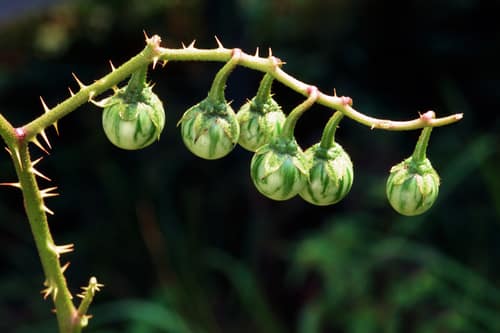
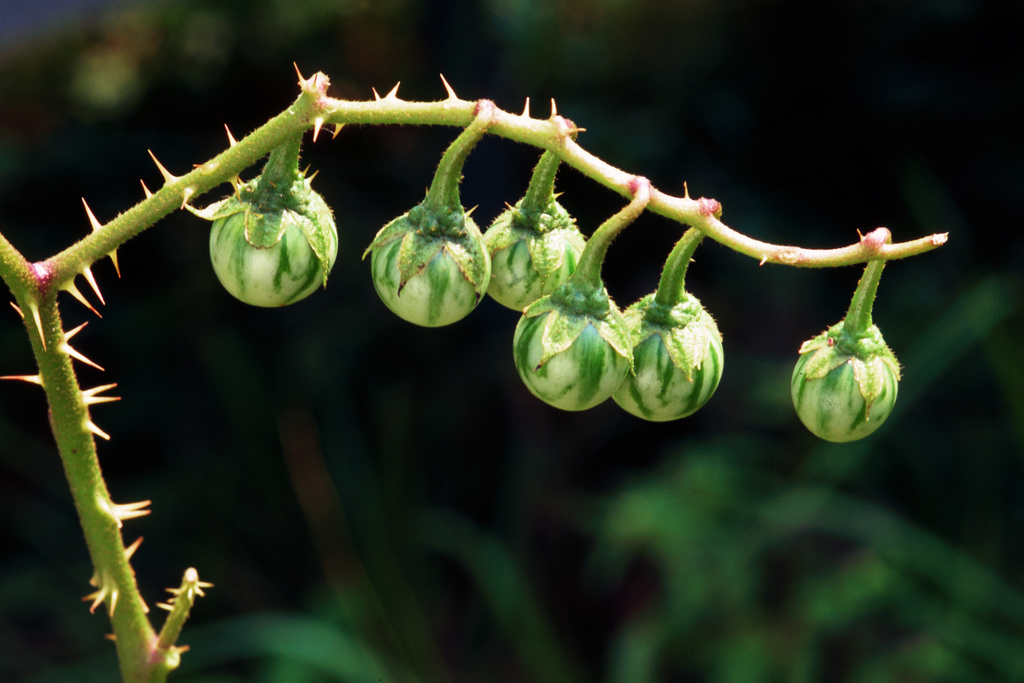
Carolina horsenettle is a tenacious perennial herb easily recognized by its sharp yellow prickles lining stems and leaf veins, alongside starry white to pale purple flowers. Late in the season, it produces round, yellow berries that resemble mini tomatoes but persist long into winter. Spreading aggressively through deep, horizontal rootstocks, it colonizes pastures, fields, and disturbed soils across North America.
Life spanPerennial (rootstocks live for many years)
Classification
OrderSolanales
FamilySolanaceae
GenusSolanum
SpeciesSolanum carolinense
Range & activity
Range data is not available yet.
Safe observation
Interaction riskHigh
Low
Moderate
High
Very high
Why interaction risk is high
All parts contain toxic solanine alkaloids, and wild berries have toxic look-alikes; avoid handling bare-handed and never ingest.
Why it is dangerous
Contains toxic glycoalkaloids including solanine that cause severe digestive and neurological distress if ingested, while sharp stem prickles puncture skin.
How to recognize a risky encounter
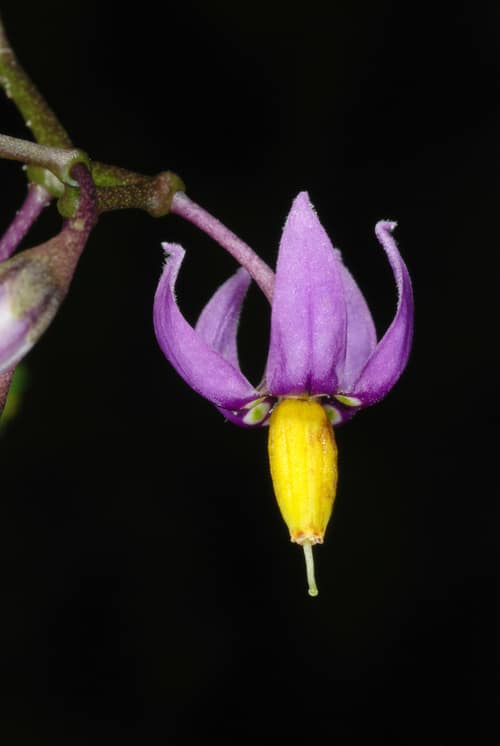
Look for star-shaped white-to-violet flowers, sharp yellow spines along stems and midribs, and yellow tomato-like fruits.
What to do
Wear thick gloves when managing plants, restrict livestock access, and never consume any wild berries.
Responsible observation
Prickle Warning: Wear thick leather gloves when weeding, as sharp yellow spines easily pierce skin.
Livestock Protection: Keep grazing animals away from dry autumn pastures where berries remain toxic.
Leaf Spine Check: Examine leaf undersides for a row of needle-like spines running down the midrib.

 1 / 7
1 / 7