
Plant · GBIF taxon 2929892
Silverleaf Nightshade
Solanum elaeagnifoliumAlso known as White Horsenettle, Silverleaf Nettle, Satansbos, Trompillo
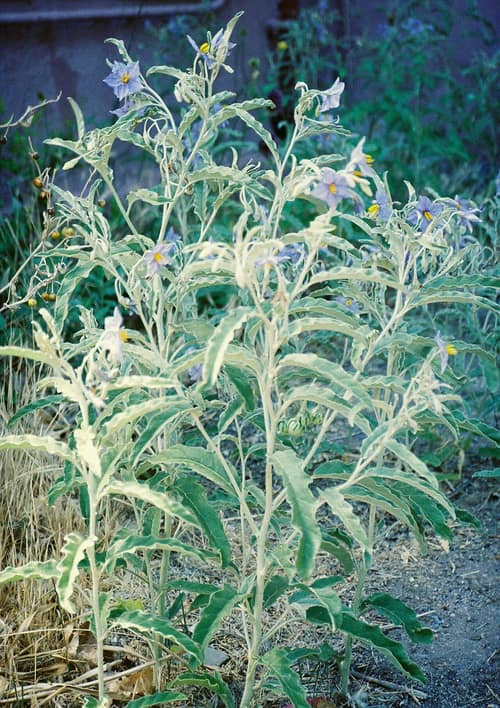
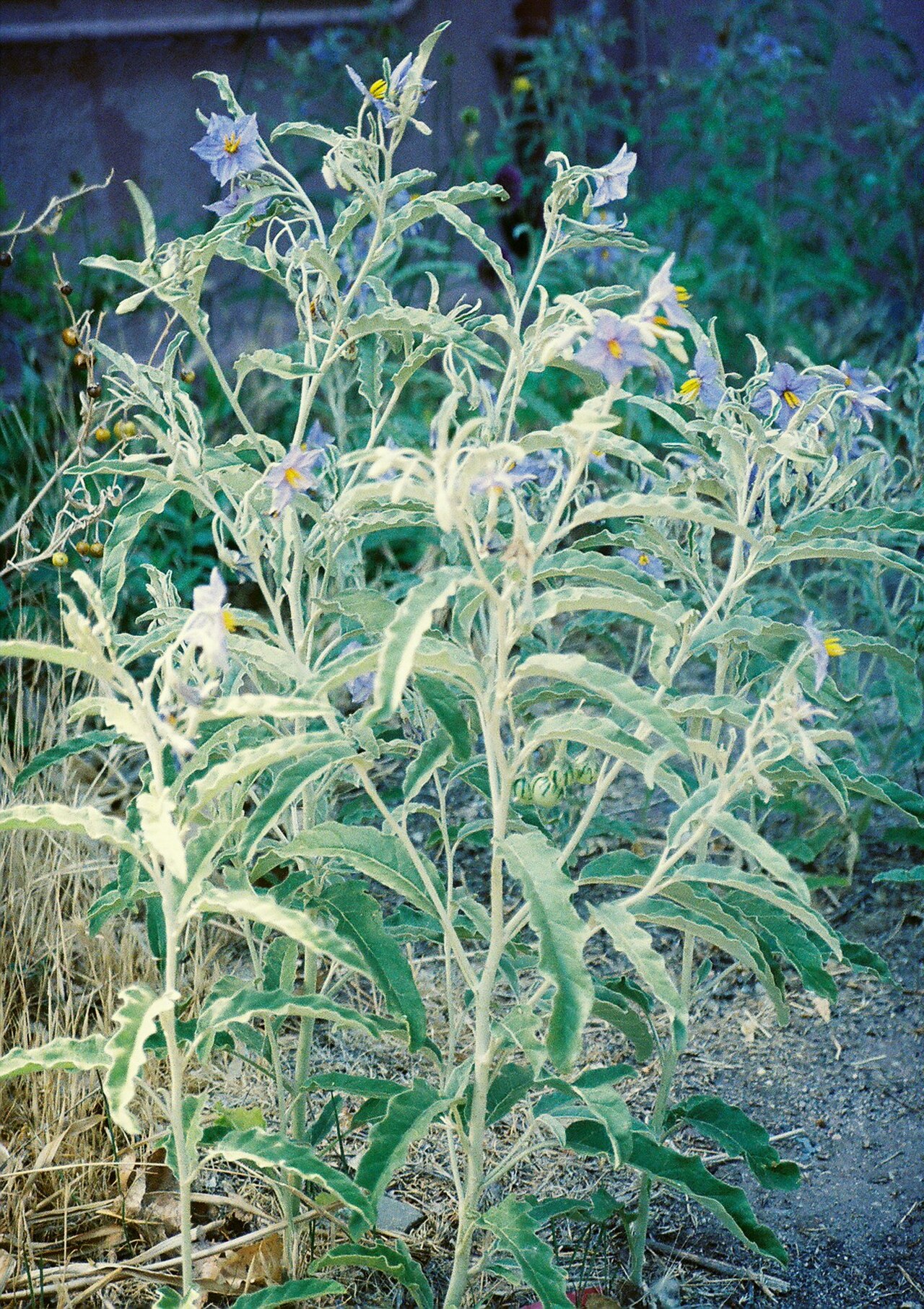
Silverleaf nightshade stands out in arid pastures and roadsides with its velvety grey foliage and striking violet flowers centered with golden stamens. Dense star-shaped hairs cover the stems and leaves, reflecting intense desert sunlight while helping conserve vital moisture. Beneath the surface, an exceptionally deep creeping root system allows this resilient plant to sprout anew even after severe drought or grazing.
ToxicPerennialWildflower
—observations
—countries
—peak records
Not EvaluatedConservation statusIUCN Red List categoriesLCNTVUENCREWEXNot Evaluated — not placed on the risk ladderRed List categories, explained →
Diet & prey
- Autotrophic
Predators
- Tortoise Beetles
- Potato Beetles
- Grasshoppers
ThreatsHerbicides, mechanical weeding, agricultural eradication
HabitatsScrublands, pastures, roadsides, disturbed soils
Life spanPerennial (5-10+ years via creeping roots)
Classification
- OrderSolanales
- FamilySolanaceae
- GenusSolanum
- SpeciesSolanum elaeagnifolium
Range data is not available yet.
Interaction riskHigh
- Low
- Moderate
- High
- Very high
- Why interaction risk is high
- Contains toxic glycoalkaloids harmful to humans and livestock; never ingest wild foliage or berries.
- Why it is dangerous
- Contains toxic glycoalkaloids like solasodine that cause severe gastrointestinal distress, weakness, and potential neurological damage if eaten.
- How to recognize a risky encounter
- Look for silvery-grey foliage covered in dense star-shaped hairs, pale violet star flowers, and smooth yellow berries.
- What to do
- Wear gloves if clearing dense stands, and prevent livestock or pets from grazing near the plants.
Responsible observation
- Identification: Look for silvery velvet leaves, slender prickles, and purple five-lobed flowers with bright yellow centers.
- Management: Deep taproots allow rapid sprouting after cutting, requiring complete root extraction for removal.
- Safety: Keep horses and cattle away from infested pastures to prevent accidental poisoning.
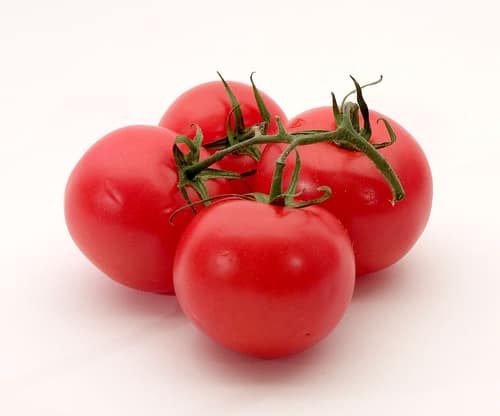
Cultivated Kin Softeis / CC BY-SA 3.0 · cc-by-sa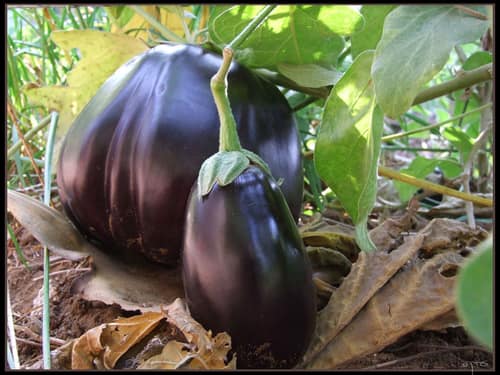
Cultivated Kin (c) Eran Finkle, some rights reserved (CC BY) · cc-by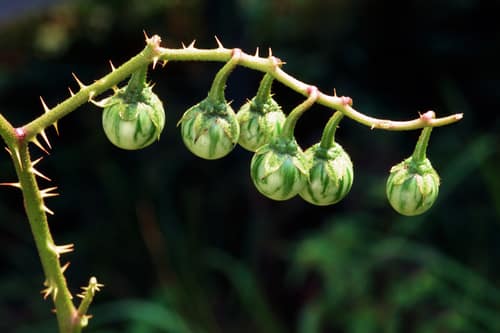
Close Relative (c) Ted Bodner, Southern Weed Science Society, Bugwood.org, some rights reserved (CC BY) · cc-by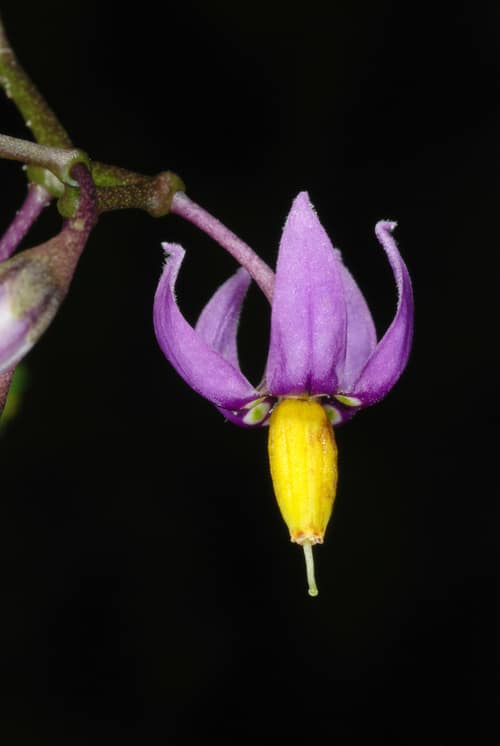
Close Relative (c) Douglas Goldman, some rights reserved (CC BY-SA), uploaded by Douglas Goldman · cc-by-sa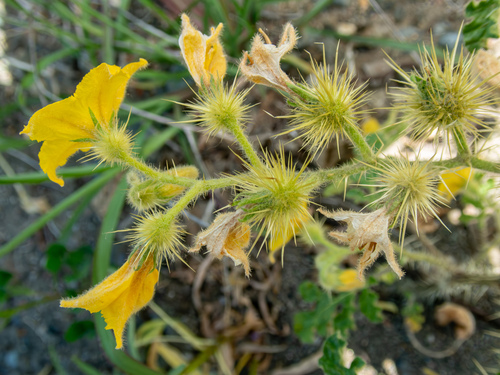
Close Relative (c) Don Loarie, some rights reserved (CC BY), uploaded by Don Loarie · cc-by
Help improve the field guideSomething wrong?
Checking your Fauna account…Report a name, category, or profile issue for review.