Also known as Woody Nightshade, Climbing Nightshade, Bitter Nightshade, Trailing Nightshade
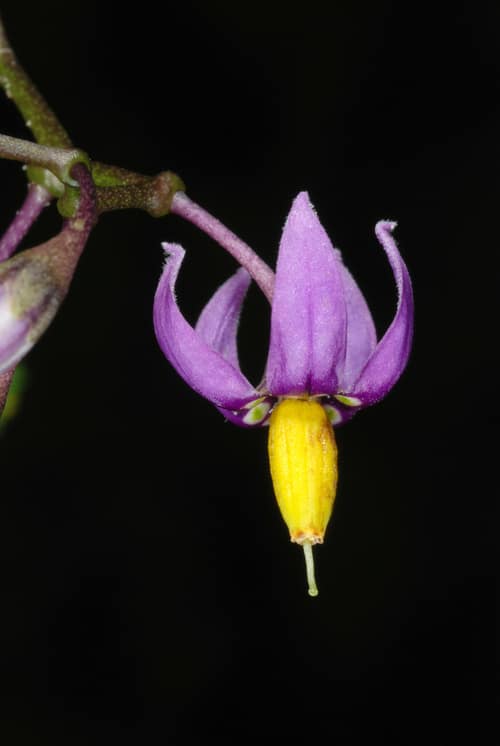
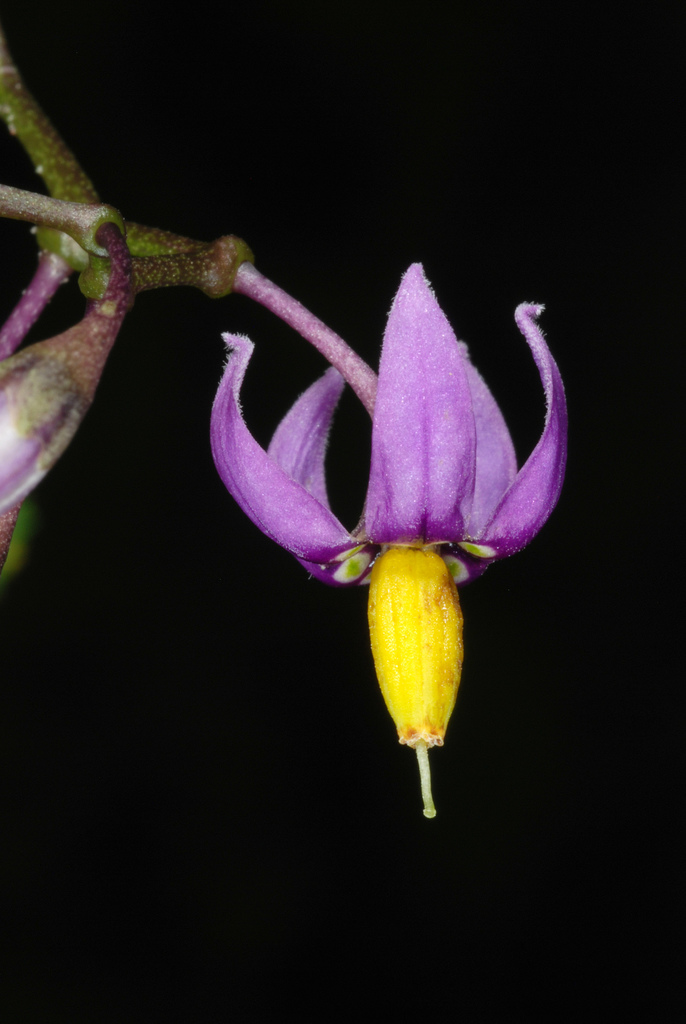
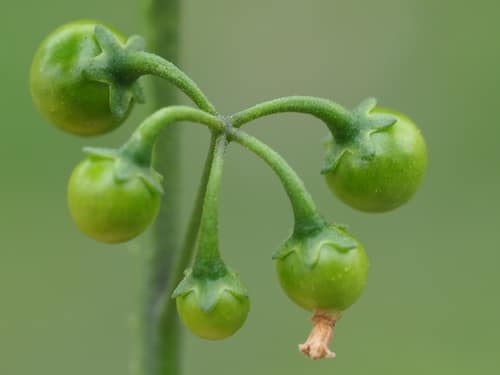
Bittersweet nightshade is a sprawling perennial vine recognized by its purple, star-shaped flowers centered around a vibrant yellow cone of fused anthers. As summer progresses, hanging clusters of oval berries ripen from green to bright glossy red on the same vine. Native across Eurasia, it thrives in damp soil, wetland edges, and urban thickets across North America where birds disperse its seeds.
All plant parts contain toxic solanine; wild berries have toxic look-alikes, so never ingest wild plants.
Why it is dangerous
Contains toxic steroidal alkaloids like solanine and dulcamarin, which cause severe gastrointestinal distress, cardiac arrhythmia, and central nervous system depression if ingested.
How to recognize a risky encounter
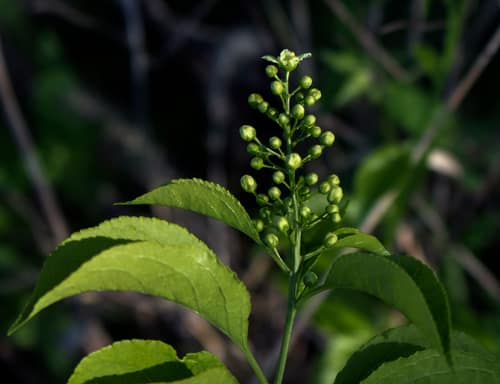
Look for trailing stems with lobed leaves, purple star-like flowers with bright yellow central cones, and shiny red drooping berries.
What to do
Keep children and pets away from the berries, and wear garden gloves when pulling or clearing trailing vines.
Responsible observation
Identification: Look for purple reflexed petals surrounding a prominent cone of yellow fused anthers.
Safety: Avoid touching unwashed skin or eyes after handling, and never ingest any part of the vine.
Weed Management: Wear garden gloves when pulling stems to prevent potential skin irritation from plant sap.