
Plant · GBIF taxon 2736620
Foxtail Palm
Wodyetia bifurcataFoxtail palms feature distinctive, dense green fronds that curl outward in every direction, mimicking the bushy tail of a fox. Their smooth, ringed trunks taper upward into a striking olive-green crownshaft, below which large clusters of bright orange fruit mature. Originating from a tiny, rocky mountain range in northern Queensland, this adaptable palm has become a beloved centerpiece in tropical landscapes worldwide.
OrnamentalTropicalEvergreen
—observations
—countries
—peak records
Least ConcernConservation statusIUCN Red List categoriesLCNTVUENCREWEXLeast ConcernRed List categories, explained →
Diet & prey
- Sunlight
- Soil Nutrients
- Water
Predators
- Fruit Bats
- Rats
- Palm Beetles
ThreatsHistorical seed poaching, habitat restriction, extreme cold snaps
HabitatsGranite boulder fields, tropical open woodlands, coastal landscapes
Life span50–100 years
Classification
- OrderArecales
- FamilyArecaceae
- GenusWodyetia
- SpeciesWodyetia bifurcata
Range data is not available yet.
Interaction riskLow
- Low
- Moderate
- High
- Very high
- Why interaction risk is low
- Wild palm fruits have toxic look-alikes; never ingest wild plant parts based on app identification alone.
- What to notice
- Recognized by full bushy fronds, smooth ringed grey trunk, and large orange oval fruit clusters.
- Support conservation
- Enjoy cultivated specimens freely, but never harvest seeds or disturb wild palms in protected native habitats.
Responsible observation
- Landscape Planting: Place in full sun with well-drained soil to prevent root rot in wet seasons.
- Pruning Care: Allow old fronds to drop naturally as the palm is self-cleaning and self-shedding.
- Cold Protection: Shield young palms from frost, as temperatures below freezing cause leaf burn.
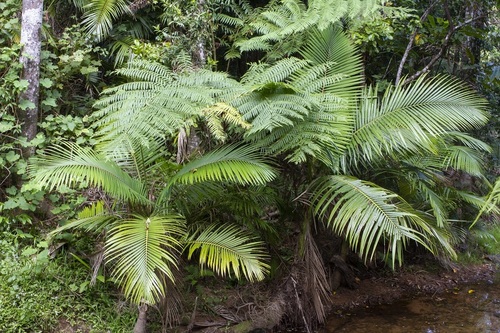
Regional Neighbor (c) dhfischer, some rights reserved (CC BY), uploaded by dhfischer · cc-by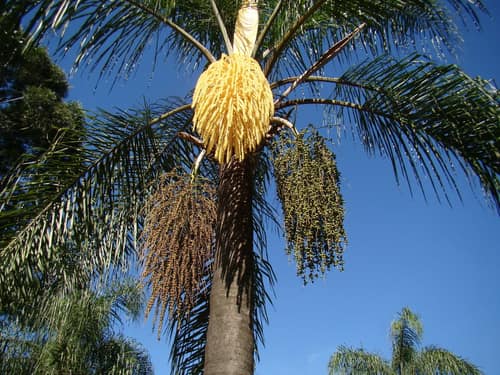
Landscape Look-alike (c) mauro halpern, some rights reserved (CC BY) · cc-by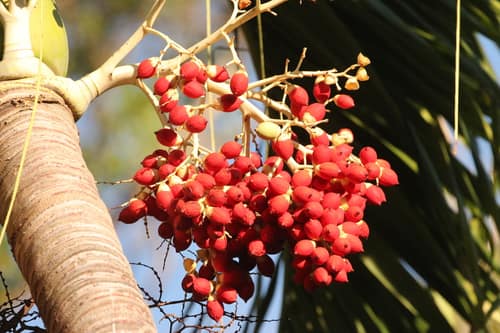
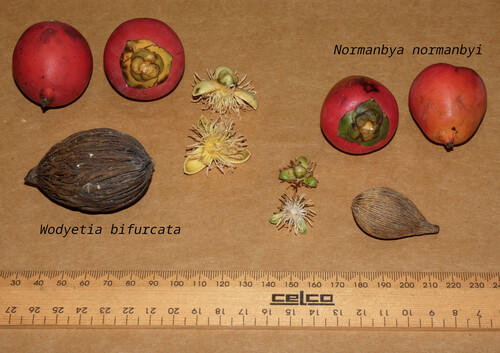
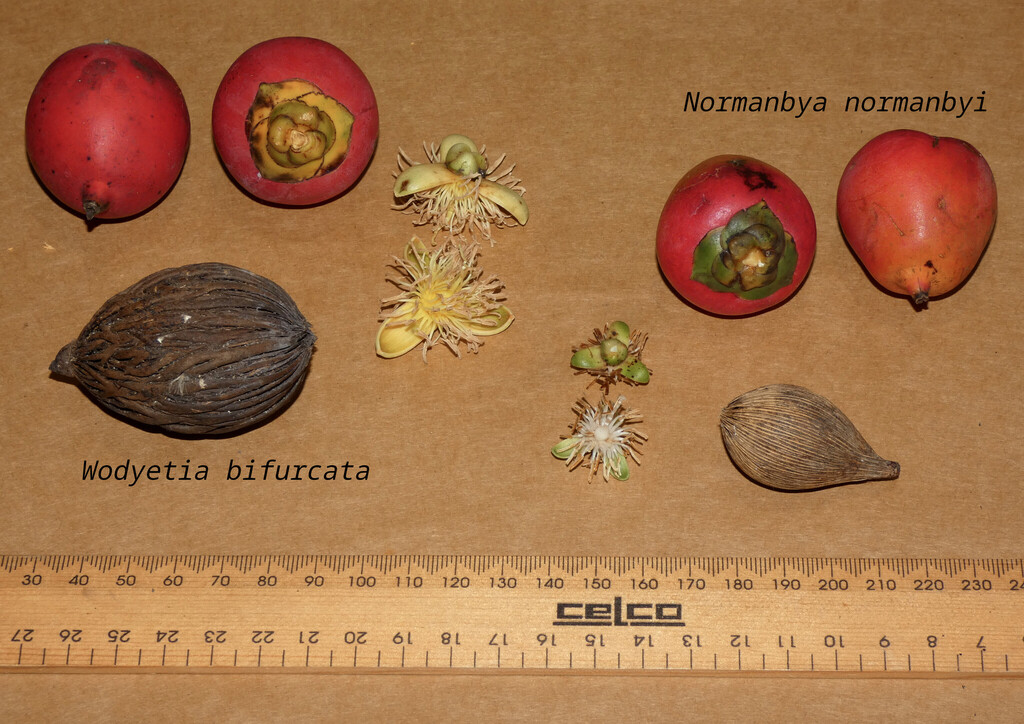
Fruit Look-alike (c) scaup, some rights reserved (CC BY) · cc-by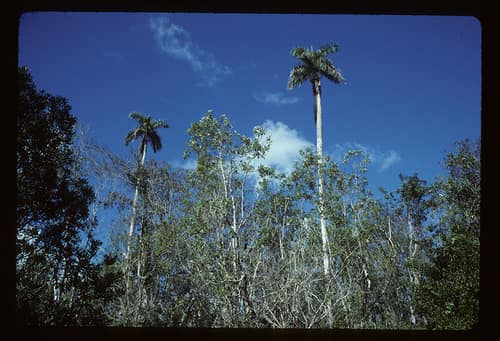
Form Relative (c) Douglas Goldman, some rights reserved (CC BY-SA), uploaded by Douglas Goldman · cc-by-sa
Help improve the field guideSomething wrong?
Checking your Fauna account…Report a name, category, or profile issue for review.