
Plant
Hanging Clubmoss
Phlegmariurus dichotomusAlso known as Forked Tassel Fern, Dichotomous Clubmoss, Hanging Firmoss
Hanging clubmoss drapes dramatically from tree branches in humid tropical forests, forming dense green cascades of bifurcating stems. These primitive spore-bearing epiphytes rely on stable, high-humidity canopy microclimates to thrive and reproduce. Their delicate Y-shaped branching patterns and tightly overlapping leaves make them striking architectural features of ancient swamp forests and cloud forests.
EpiphyticSpore-BearingTropical
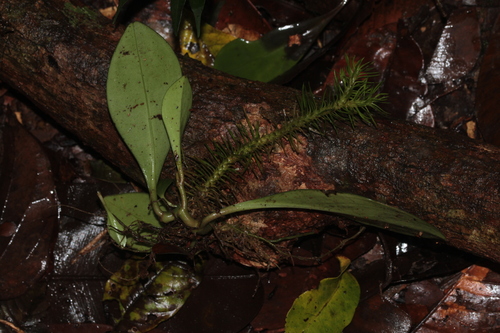
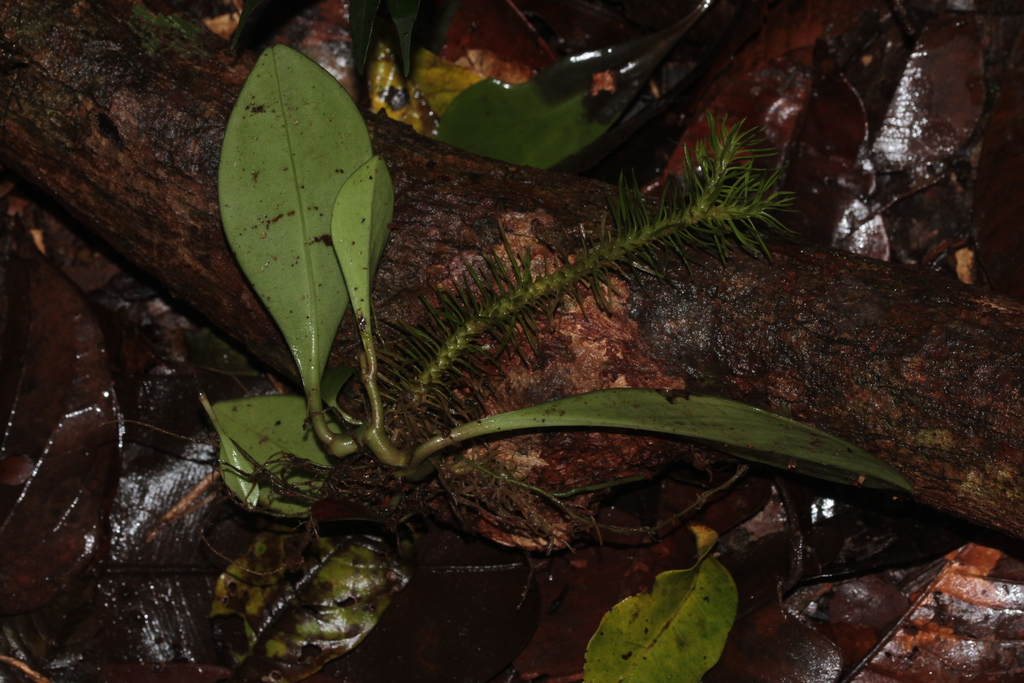
—observations
—countries
—peak records
Not EvaluatedConservation statusIUCN Red List categoriesLCNTVUENCREWEXNot Evaluated — not placed on the risk ladderRed List categories, explained →
Diet & preyAutotrophic (Photosynthetic)
Predators
- Herbivorous Snails
- Slugs
- Insect Larvae
ThreatsHabitat Destruction, Canopy Microclimate Alteration, Illegal Collection
HabitatsHumid Tropical Forests, Swamps, Cloud Forests
Life spanPerennial (Decades)
Classification
- FamilyLycopodiaceae
- SpeciesPhlegmariurus dichotomus
Range data is not available yet.
Interaction riskLow
- Low
- Moderate
- High
- Very high
- Why interaction risk is low
- Safe to observe at a normal distance.
- What to notice
- Look for dangling, bright green streams of repeatedly forked stems hanging directly from host tree bark.
- Support conservation
- Observe from below without touching or disturbing the host tree bark, and never harvest wild specimens.
Responsible observation
- Look Upward: Scan humid upper tree canopies and branch forks in undisturbed tropical swamps.
- Check the Structure: Look for distinct equal Y-shaped branching in dangling stems.
- Observe Respectfully: Avoid touching or disturbing canopy epiphytes, which require decades to establish.
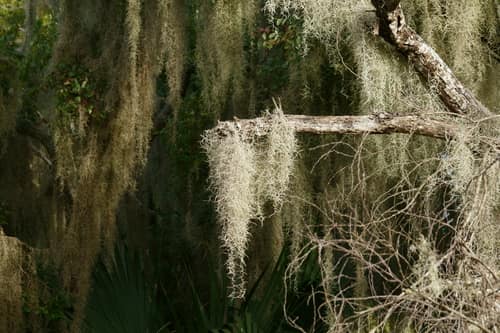
Frequent Companion (c) psweet, some rights reserved (CC BY-SA), uploaded by psweet · cc-by-sa Image unavailable
Close Relative 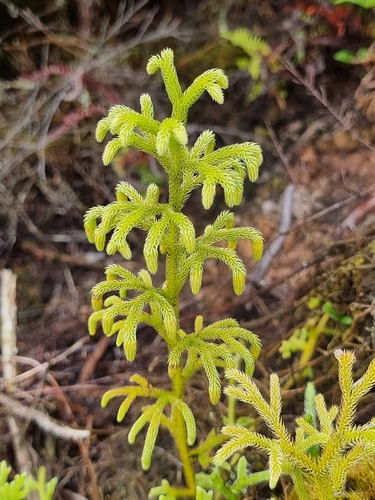
Family Relative (c) Richard Dimon, some rights reserved (CC BY), uploaded by Richard Dimon · cc-by
Help improve the field guideSomething wrong?
Checking your Fauna account…Report a name, category, or profile issue for review.