
Plant
Staghorn Clubmoss
Palhinhaea cernuaAlso known as Nodding Clubmoss
Staghorn clubmoss forms branching mats with upright forked shoots covered in tiny narrow leaves. Slender spore-bearing tips droop from the branch ends, giving established growth a loose antler-like outline.
clubmossspore plantbranching mat
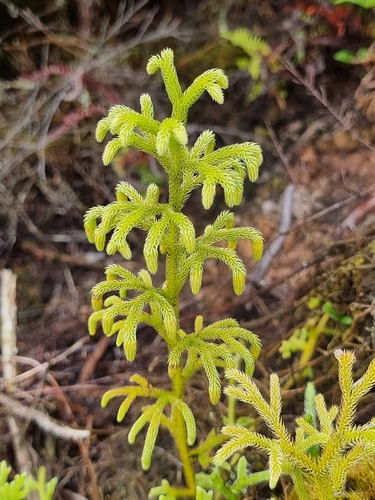
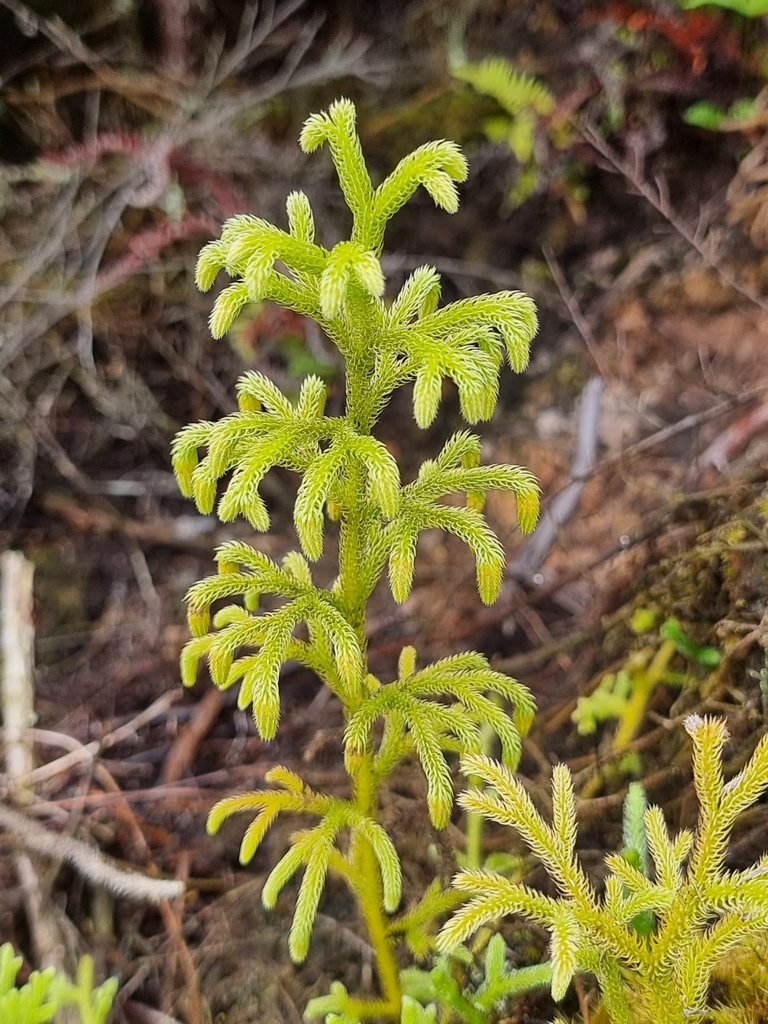
—observations
—countries
—peak records
Not EvaluatedConservation statusIUCN Red List categoriesLCNTVUENCREWEXNot Evaluated — not placed on the risk ladderRed List categories, explained →
Diet & preyProduces energy through photosynthesis and absorbs moisture and minerals through creeping rooted stems
Predators
- slugs
- insect herbivores
- grazing mammals
ThreatsForest clearing, drying, repeated fire, trampling, and collection
HabitatsHumid open forest, banks, disturbed slopes, trail edges, and moist sunny ground
Life spanA perennial spore plant whose connected mats can persist for many years
Classification
- FamilyLycopodiaceae
- SpeciesPalhinhaea cernua
Range data is not available yet.
Interaction riskLow
- Low
- Moderate
- High
- Very high
- Why interaction risk is low
- Do not uproot mats or inhale loose spores from collected material.
Responsible observation
- Identify: Trace forked upright branches to their slender nodding spore tips.
- Protect: Step around creeping stems because broken mats recover slowly.
Help improve the field guideSomething wrong?
Checking your Fauna account…Report a name, category, or profile issue for review.