
Fungus · GBIF taxon 2551173
Green Brittlegill
Russula aerugineaAlso known as Grass-green Russula, Tacky Green Russula, Green Russula
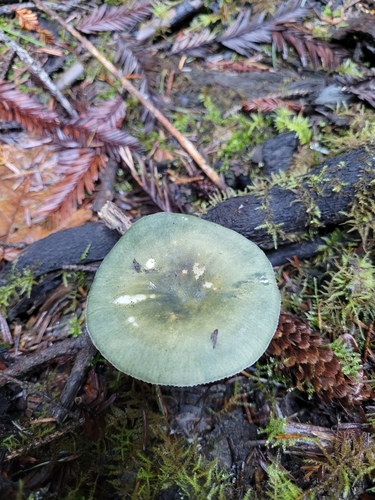
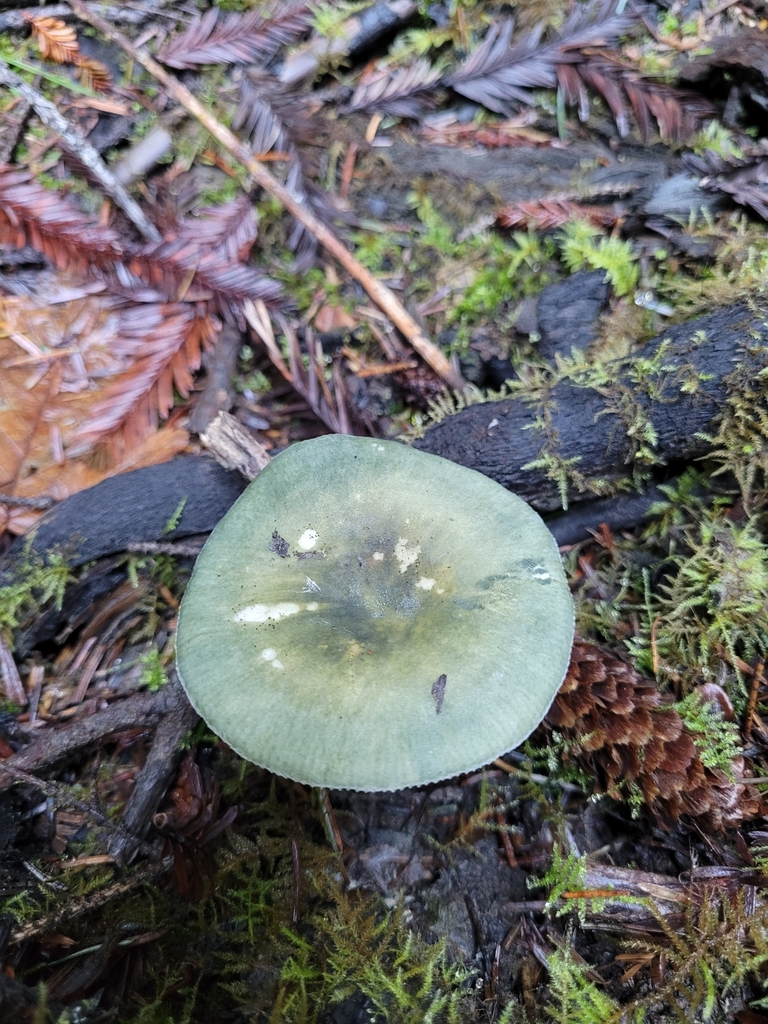
Green brittlegills emerge on woodland floors during summer and autumn, forming vital mycorrhizal partnerships primarily with birch trees. Their caps range from dull grass-green to greyish-green, acquiring a tacky sheen when moist and fading slightly with age. Like all members of their genus, the stem snaps cleanly like chalk rather than splintering, owing to spherical cells called sphaerocysts throughout their tissue.
FungusMycorrhizalForest Dweller
—observations
—countries
—peak records
Least ConcernConservation statusIUCN Red List categoriesLCNTVUENCREWEXLeast ConcernRed List categories, explained →
Diet & prey
- Mycorrhizal
Predators
- Fungus Gnats
- Slugs
- Squirrels
ThreatsHabitat degradation and severe soil compaction
HabitatsTemperate deciduous and mixed woodlands, especially under birch and pine
Life spanPerennial underground mycelium; individual fruiting bodies last 1–2 weeks
Classification
- OrderRussulales
- FamilyRussulaceae
- GenusRussula
- SpeciesRussula aeruginea
Range data is not available yet.
Interaction riskLow
- Low
- Moderate
- High
- Very high
- Why interaction risk is low
- Many green mushrooms have toxic look-alikes; never eat wild fungi based on app identification alone.
Responsible observation
- Check the stem: Gently snap the stem to test for the characteristic chalky break unique to brittlegills.
- Inspect surrounding trees: Look around birch or pine trees where mycorrhizal roots actively feed the fungus.
- Observe cap textures: Note the dull greyish-green tone and slightly sticky feel when damp.
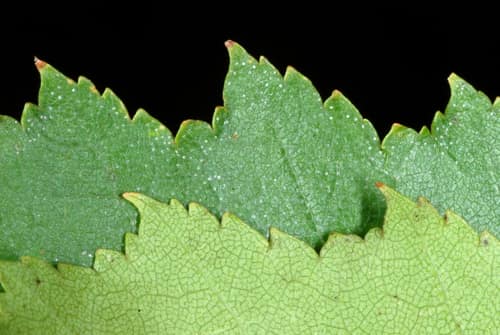
Tree Partner (c) Douglas Goldman, some rights reserved (CC BY-SA), uploaded by Douglas Goldman · cc-by-sa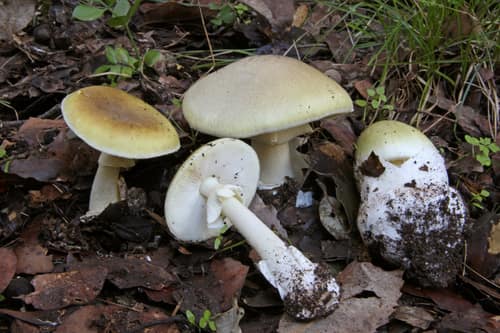
Toxic Look-alike (c) Davide Puddu, some rights reserved (CC BY), uploaded by Davide Puddu · cc-by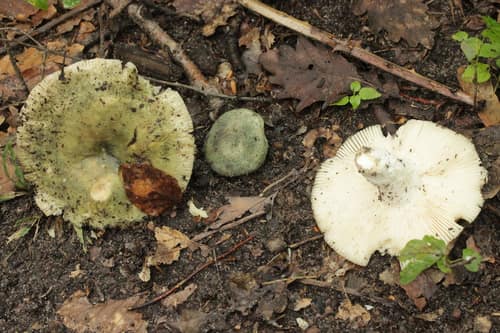
Close Relative (c) Björn Sothmann, some rights reserved (CC BY-SA) · cc-by-sa
Help improve the field guideSomething wrong?
Checking your Fauna account…Report a name, category, or profile issue for review.