
Fungus · GBIF taxon 2538080
Southern Jack-O'-Lantern Mushroom
Omphalotus subilludensAlso known as Southern Jack-o'-Lantern, Southern Jack O'Lantern
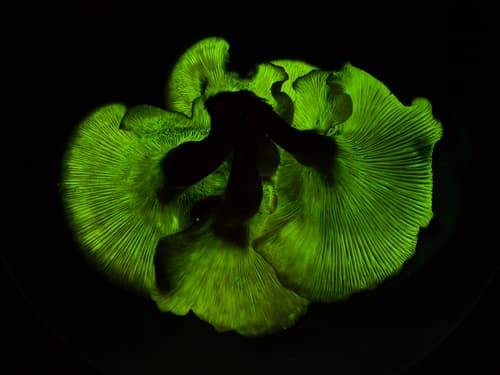
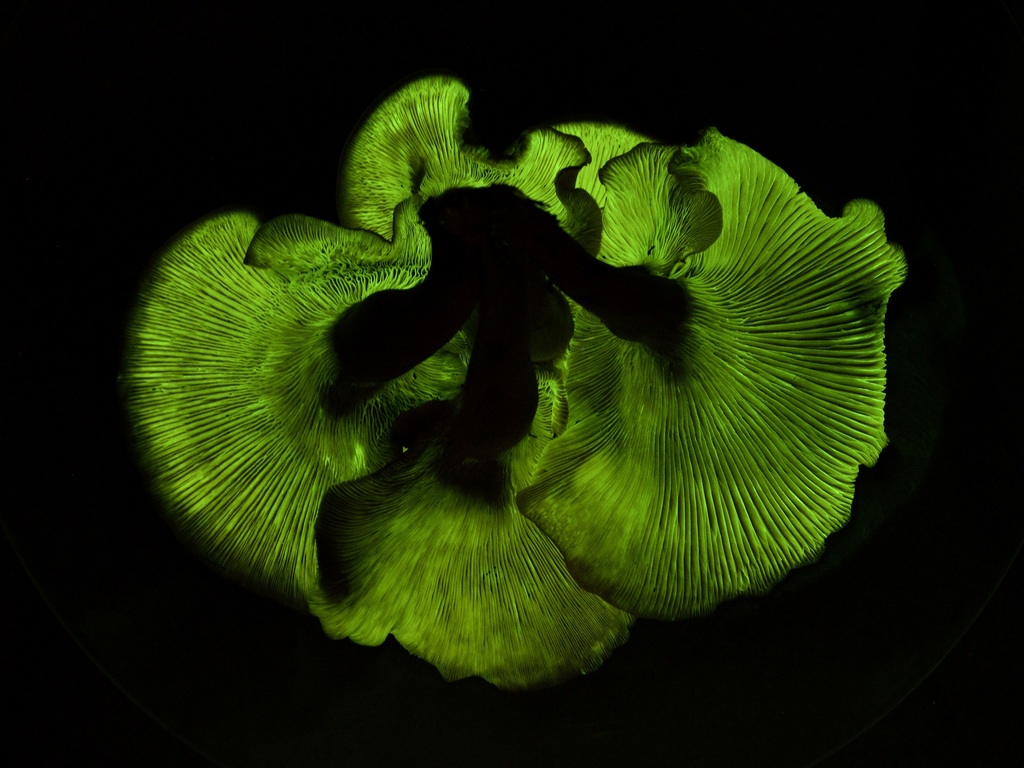
Southern Jack-O'-Lantern Mushrooms grow in dense, eye-catching clusters on decaying hardwoods and buried roots across the southern United States and Mexico. Bright orange to copper-brown caps feature decurrent gills that emit a faint green bioluminescent glow in complete darkness. This fungus plays an important ecological role breaking down dead timber and recycling nutrients back into woodland soils.
BioluminescentToxic FungusCluster-Forming
—observations
—countries
—peak records
Not EvaluatedConservation statusIUCN Red List categoriesLCNTVUENCREWEXNot Evaluated — not placed on the risk ladderRed List categories, explained →
Diet & prey
- Saprotrophic (decomposer of dead wood)
Predators
- Fungus Beetles
- Slugs
- Fly Larvae
ThreatsHabitat loss and deforestation
HabitatsHardwood forests, wooded parks, and suburban landscapes
Life spanFruiting bodies persist 1–2 weeks; subterranean mycelium lives for years
Size / weightNot available
Classification
- FamilyOmphalotaceae
- SpeciesOmphalotus subilludens
Range data is not available yet.
Interaction riskHigh
- Low
- Moderate
- High
- Very high
- Why interaction risk is high
- Toxic if ingested; many mushrooms have dangerous look-alikes, so never eat wild fungi based on app identification.
- Why it is dangerous
- Contains illudin S and illudin M toxins that cause severe nausea, vomiting, diarrhea, and cramps.
- How to recognize a risky encounter
- Look for bright orange decurrent gills running down stems growing in tight clusters on wood.
- What to do
- Avoid ingestion, keep pets away from clusters, and wash hands after handling wild specimens.
Responsible observation
- Night Observation: Allow eyes to adjust in complete darkness to see the faint green gill glow.
- Wood Inspection: Check the base of hardwood trees, stumps, and buried root systems for clusters.
- Spore Deposit: Take a spore print on dark paper to observe white to pale creamy spore lines.
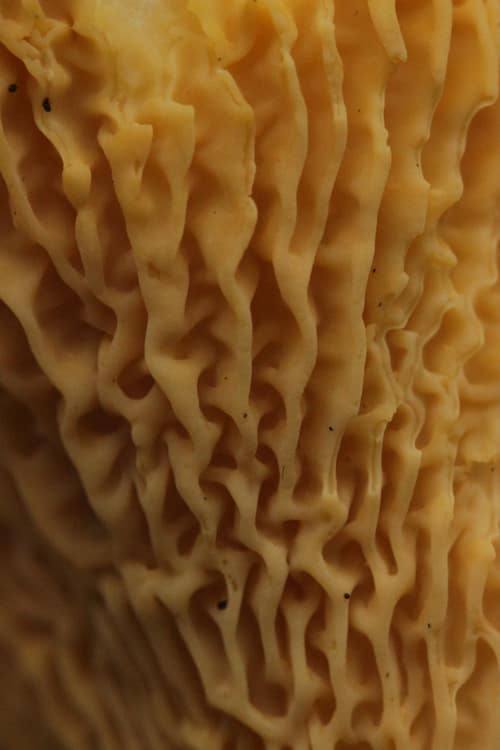
Look-Alike (c) Björn S..., some rights reserved (CC BY-SA) · cc-by-sa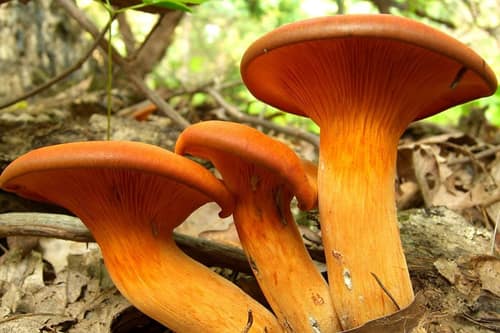
Close Relative (c) Jason Hollinger, some rights reserved (CC BY) · cc-by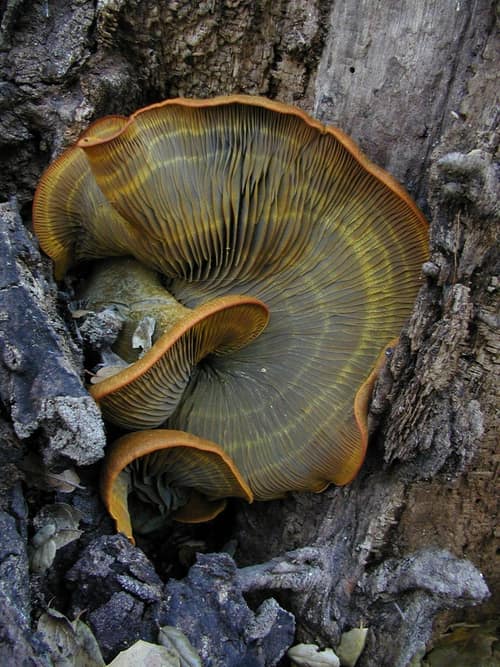
Close Relative (c) Nathan Wilson, some rights reserved (CC BY-SA) · cc-by-sa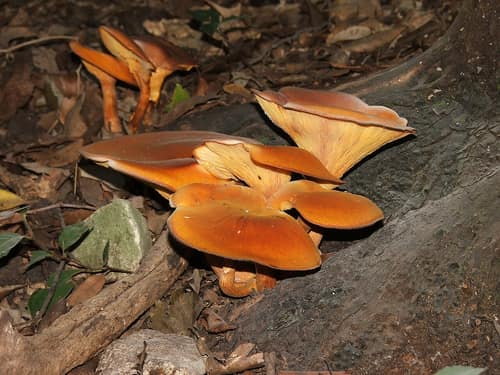
Close Relative Antonio Abbatiello / Public domain · cc0
Help improve the field guideSomething wrong?
Checking your Fauna account…Report a name, category, or profile issue for review.