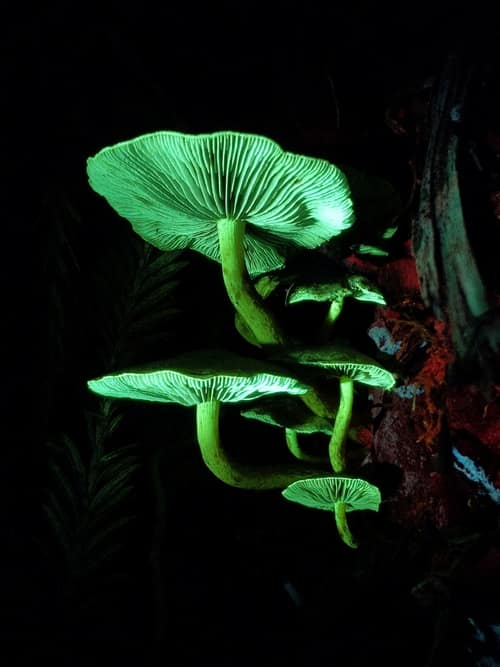
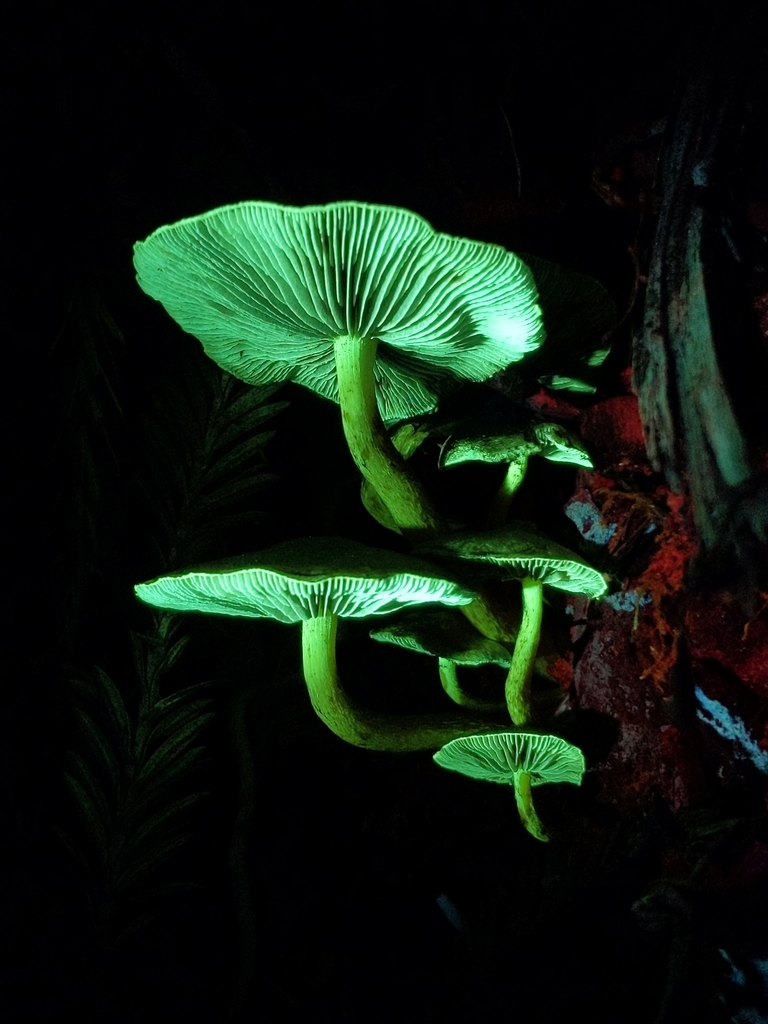
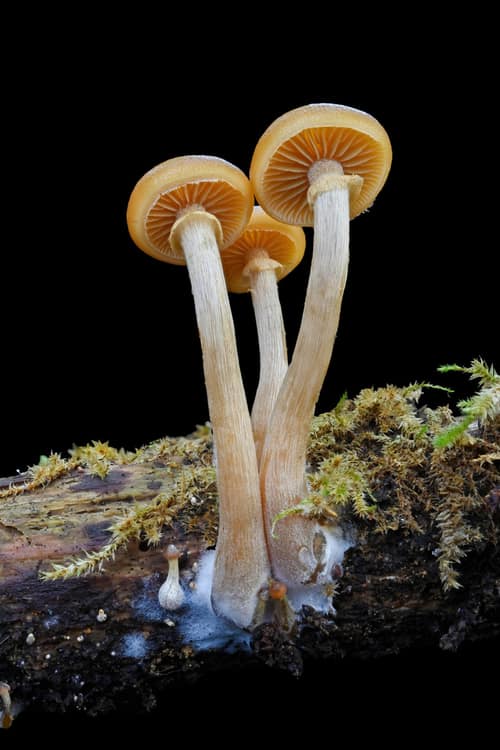
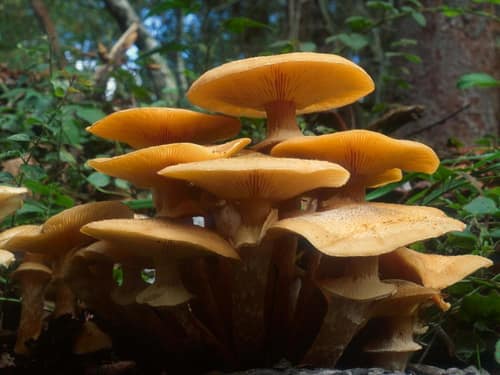
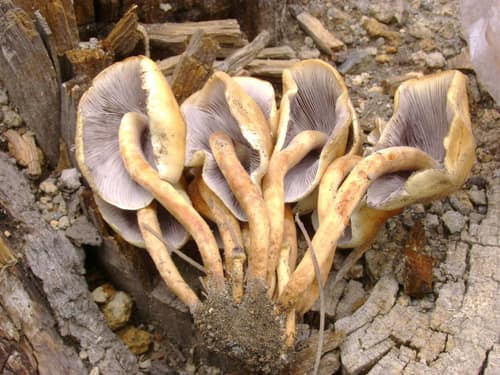
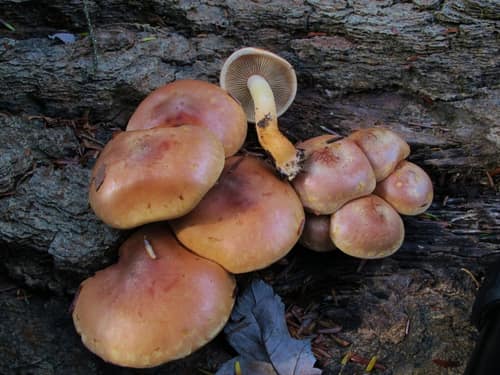
Sulphur tufts burst from decaying tree stumps and buried roots in dense, overlapping rosettes throughout temperate woodlands. Their radiant sulfur-yellow caps gradually reveal distinctive greenish-yellow gills that darken to purple-brown as spores mature. Acting as tenacious primary decomposers, these fungi break down lignin and cellulose, recycling essential nutrients into the forest floor year-round.
Not EvaluatedConservation statusIUCN Red List categoriesLCNTVUENCREWEXNot Evaluated — not placed on the risk ladderRed List categories, explained →
Key facts
Diet & preyDead hardwood and conifer wood, Lignin, Cellulose
Predators
Slugs
Fungus gnat larvae
Staphylinid beetles
ThreatsRemoval of deadwood and intensive forest clearing
HabitatsDeciduous and coniferous forests, woodlands, parks, and hedgerows
Life spanFruiting body 1–3 weeks; mycelial network persists for decades
Classification
OrderAgaricales
FamilyStrophariaceae
GenusHypholoma
SpeciesHypholoma fasciculare
Range & activity
Range data is not available yet.
Safe observation
Interaction riskHigh
Low
Moderate
High
Very high
Why interaction risk is high
Contains bitter fasciculols that cause severe gastrointestinal poisoning; never eat wild fungi based on app identification alone.
Why it is dangerous
Contains fasciculol triterpenes that induce intense nausea, violent vomiting, diarrhea, abdominal cramps, and potential liver stress within hours of consumption.
How to recognize a risky encounter
Look for dense, shelf-like clusters of bright sulfur-yellow caps with distinctive greenish-olive gills that darken to purplish brown.
What to do
Never consume; wash hands thoroughly after handling specimens in the field.
Responsible observation
Spore Print: Place a mature cap face down on white paper to verify its dark purple-brown spore deposit.
Habitat Clues: Search for clustered fruiting bodies on broadleaf stumps, rotting logs, and buried root networks.