
Bird
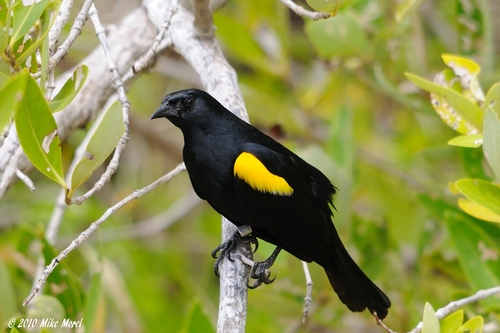
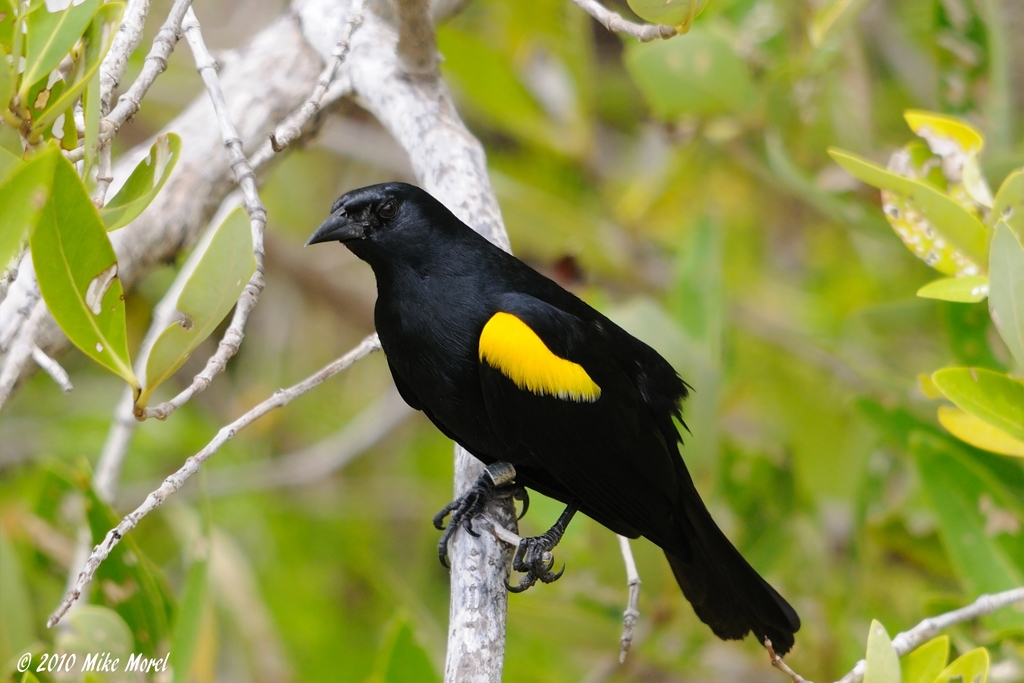
Yellow-shouldered Blackbird
Agelaius xanthomusAlso known as Mariquita de Puerto Rico, Capitán
Yellow-shouldered blackbirds forage in tight family groups through coastal mangroves, dry forests, and pastures, probing bark and foliage for hidden invertebrates. Pairs maintain lifelong monogamous bonds and frequently nest in mangrove tree hollows or managed artificial nest boxes designed to safeguard chicks. Their survival has been critically impacted by brood parasitism from invasive shiny cowbirds, requiring intensive conservation intervention to stabilize nesting colonies.
EndemicIsland Native
—observations
—countries
—peak records
EndangeredConservation statusIUCN Red List categoriesLCNTVUENCREWEXEndangeredRed List categories, explained →
Diet & preyCaterpillars, Beetles, Spiders
Predators
- Small Indian Mongoose
- Black Rat
- Pearly-eyed Thrasher
ThreatsBrood parasitism by shiny cowbirds, habitat loss, and predation by invasive mammals
HabitatsMangrove forests, coastal dry scrub, and offshore scrubby cays
Life span7–12 years
Classification
- FamilyIcteridae
- SpeciesAgelaius xanthomus
Range data is not available yet.
Interaction riskLow
- Low
- Moderate
- High
- Very high
- Why interaction risk is low
- Harmless songbird; safe to observe at a normal distance.
- What to notice
- Look for all-black glossy plumage paired with a distinct, bright yellow patch on the bend of each wing.
- Support conservation
- Maintain a quiet distance, stay on designated trails, and never use audio playback calls near nesting areas.
Responsible observation
- Observation distance: Use binoculars from a respectful distance to avoid interrupting feeding or nesting routines.
- Nesting season caution: Avoid approaching mangrove stands and artificial nest boxes from April through August.
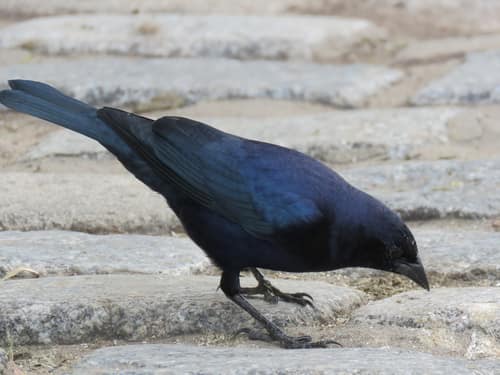
Parasite (c) Nicolas Olejnik, some rights reserved (CC BY), uploaded by Nicolas Olejnik · cc-by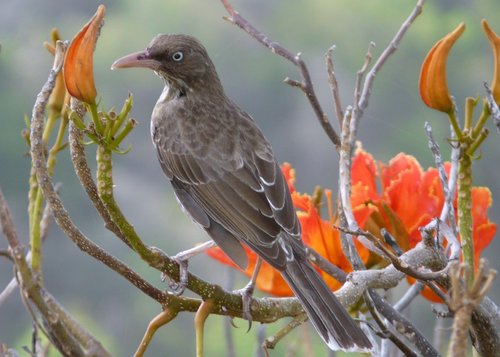
Competitor (c) Mike & Chris, some rights reserved (CC BY-SA) · cc-by-sa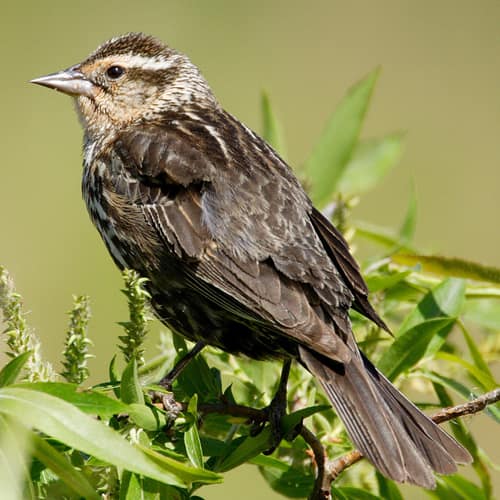
Close Relative (c) anonymous, some rights reserved (CC BY-SA) · cc-by-sa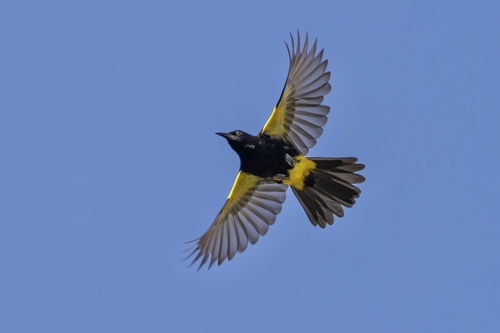
Same Family (c) Matt Felperin, some rights reserved (CC BY), uploaded by Matt Felperin · cc-by
Help improve the field guideSomething wrong?
Checking your Fauna account…Report a name, category, or profile issue for review.