
Bird
Horned Puffin
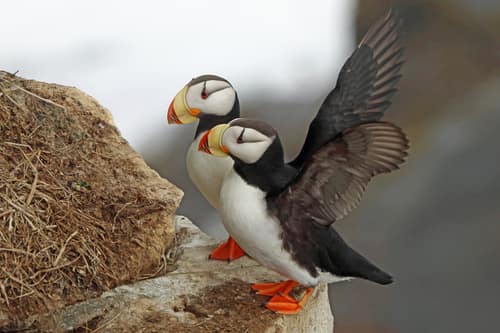
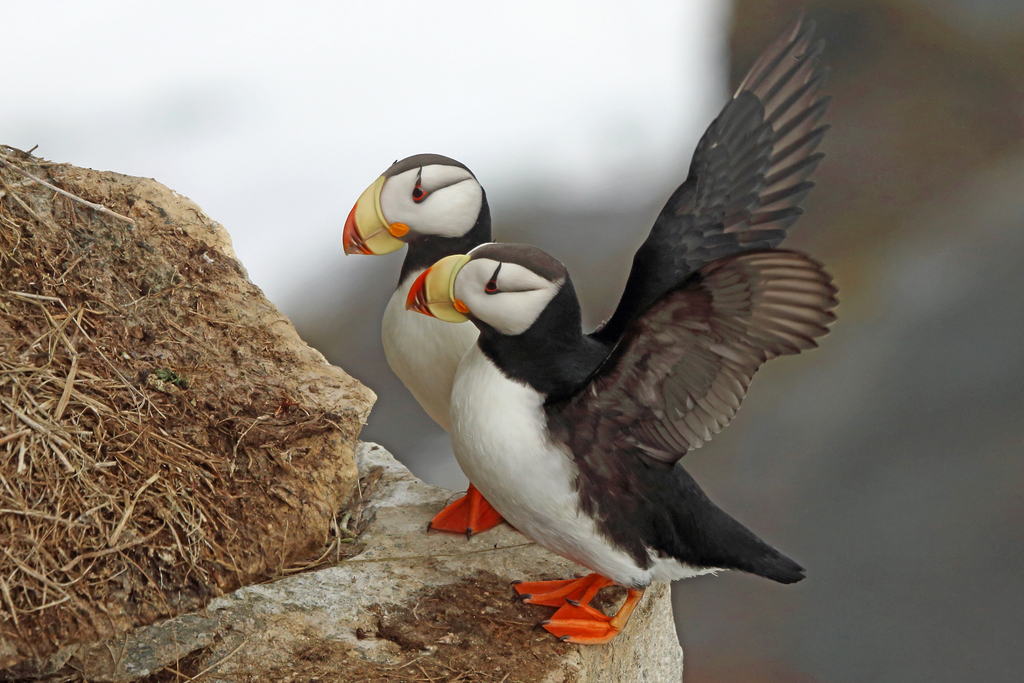
Fratercula corniculataHorned Puffins spend their winters far out at sea, returning to rugged North Pacific cliffs each spring to breed in bustling colonies. During the breeding season, adults display a striking, massive yellow bill with a red tip and a small, black, fleshy horn pointing upward above each eye. Unlike their burrow-nesting relatives, these puffins typically rear their single chick deep within natural rock crevices and boulder scree.
PelagicSeabirdColonial
—observations
—countries
—peak records
Least ConcernConservation statusIUCN Red List categoriesLCNTVUENCREWEXLeast ConcernRed List categories, explained →
Diet & preySand Lance, Capelin, Squid
Predators
- Bald Eagles
- Peregrine Falcons
- Glaucous-winged Gulls
ThreatsClimate change altering prey distribution, oil spills, and marine plastic pollution
HabitatsCold ocean waters, rocky coastal cliffs, and offshore islands
Life span20 to 30 years
Classification
- FamilyAlcidae
- SpeciesFratercula corniculata
N. Pacific
Marine distribution — the ocean basins and seas where the species occurs.
Interaction riskLow
- Low
- Moderate
- High
- Very high
- Why interaction risk is low
- Capable of delivering a painful bite with their powerful beak; observe from a respectful distance.
- Why it is dangerous
- Possesses a highly powerful, sharp-edged bill designed for gripping slippery fish, which can inflict deep cuts if the bird is cornered or handled.
- How to recognize a risky encounter
- Identified by the massive, brightly colored yellow and red bill and the small black fleshy horn above each eye during the breeding season.
- What to do
- Never attempt to touch or capture wild puffins; maintain a safe distance on nesting islands and let them pass undisturbed.
- What to notice
- Nests in deep rocky crevices and boulder scree on steep, remote coastal cliffs.
- Support conservation
- Stay on designated trails, keep noise levels low, and never approach nesting crevices or block flight paths.
Responsible observation
- Use Binoculars: Watch them from coastal overlooks or tour boats to avoid disturbing nesting sites.
- Look for the Horn: Spot the small, dark, fleshy horn extending upward from the eye during summer.
- Listen for Grunts: Listen near breeding cliffs for their low, growling vocalizations coming from deep crevices.
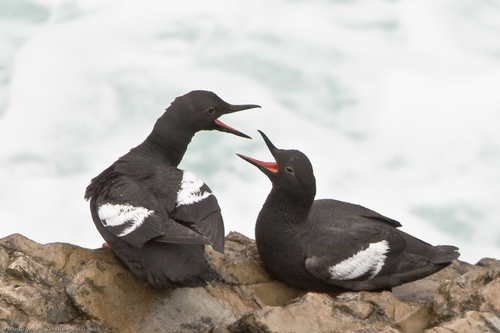
Frequent Companion (c) Mike Baird, some rights reserved (CC BY) · cc-by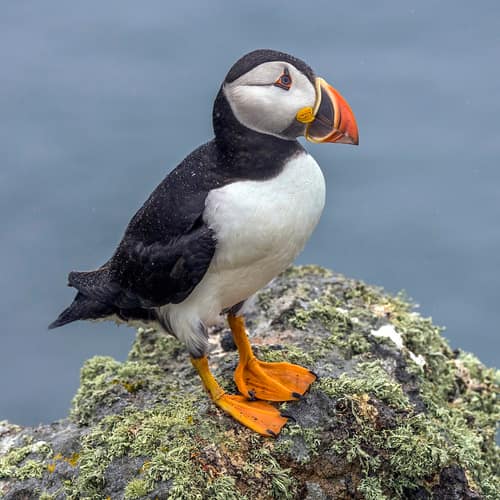
Close Relative Charles J. Sharp / CC BY-SA 4.0 · cc-by-sa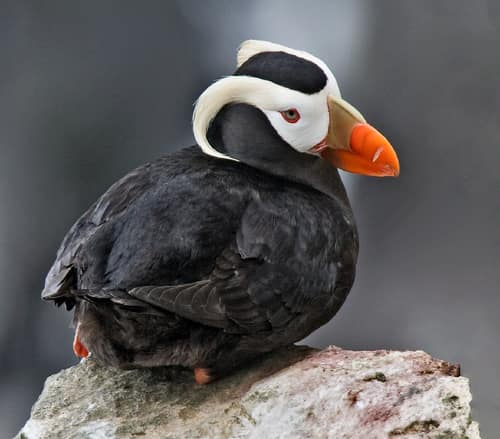
Close Relative Alan D. Wilson / CC BY-SA 3.0 · cc-by-sa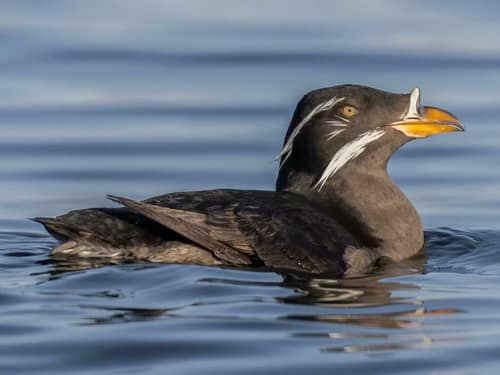
Close Relative no rights reserved, uploaded by Kyle Bowman · cc0
Help improve the field guideSomething wrong?
Checking your Fauna account…Report a name, category, or profile issue for review.