
Atlantic Puffin
Fratercula arcticaAlso known as Common Puffin, Sea Parrot
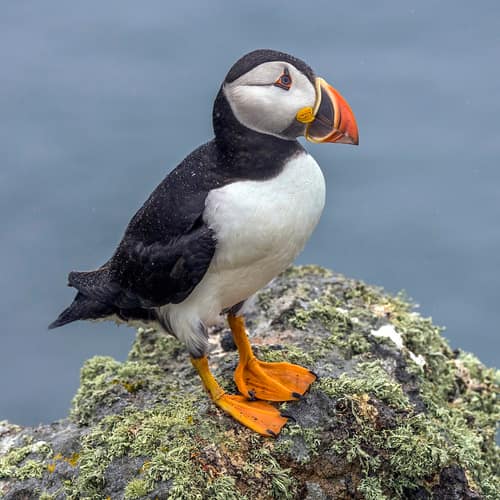
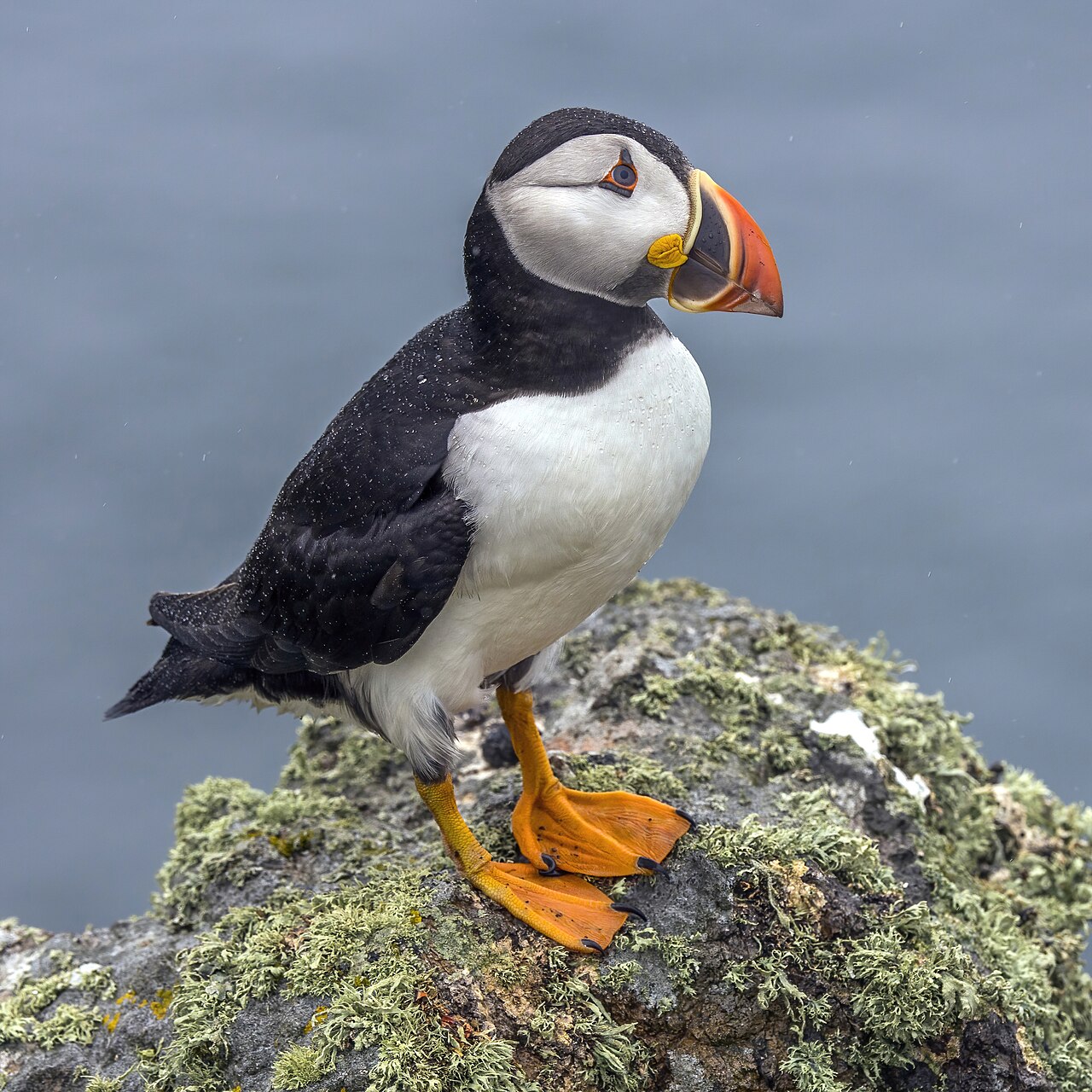
Atlantic puffins spend most of their lives solitary at sea, returning to rugged North Atlantic cliffs each spring to nest in deep underground burrows. Breeding pairs form tight bonds, recognizable by their vibrant triangular beaks and synchronized head bowing displays outside burrow entrances. They dive remarkably deep to hunt forage fish, often returning to their chicks with a lined up mouthful of sand eels held in their specialized rasped bills.
- Great Black-backed Gull
- Arctic Fox
- Great Skua
- OrderCharadriiformes
- FamilyAlcidae
- GenusFratercula
- SpeciesFratercula arctica
Marine distribution — the ocean basins and seas where the species occurs.
- Low
- Moderate
- High
- Very high
- Why interaction risk is low
- Safe to observe from established cliff trails and viewing points.
- What to notice
- Characterized by a stocky black and white body, white cheek patches, and a large, colorful triangular beak in summer.
- Support conservation
- Stay strictly on marked trails on breeding islands, give nesting burrows a wide berth, and never fly drones near colonies.
- Observe from a Distance: Stay on designated paths on nesting islands to avoid crushing fragile underground burrows.
- Bring Optics: Use binoculars or a telephoto lens to watch feeding behavior without causing colony disturbance.
- Limit Visits: Keep stay durations short during peak incubation and chick rearing periods in late spring.
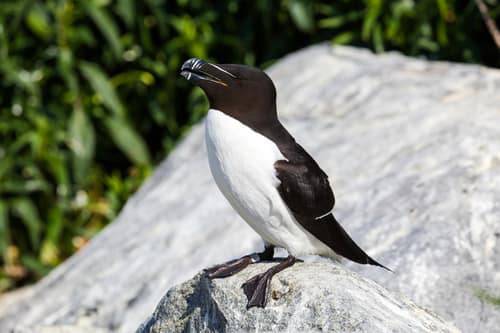
Frequent Companion (c) Melissa McMasters, some rights reserved (CC BY) · cc-by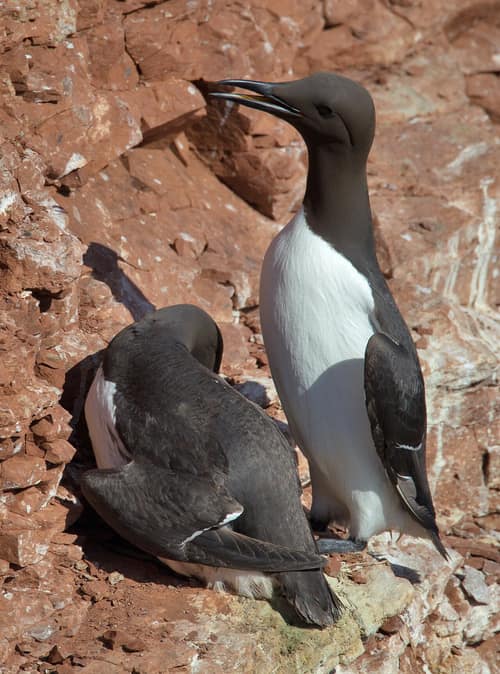
Frequent Companion Andreas Trepte / CC BY-SA 2.5 · cc-by-sa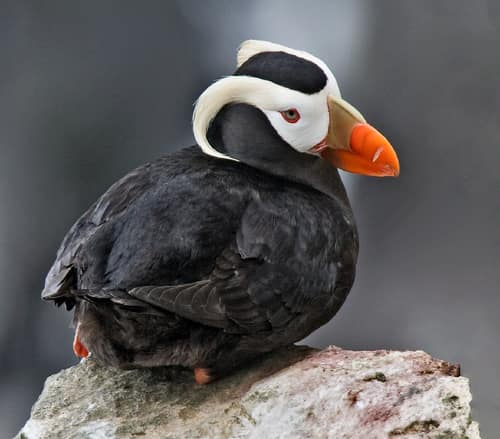
Close Relative Alan D. Wilson / CC BY-SA 3.0 · cc-by-sa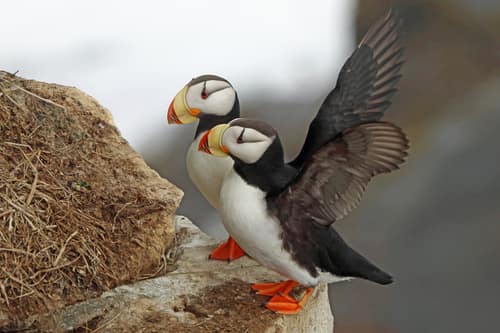
Close Relative (c) Nigel Voaden, some rights reserved (CC BY) · cc-by
Found in Collections
Shore Life
Atlantic Puffin is found in this collection. Identify it in Fauna to fill this slot and continue your progress.
Unlock to track progress
Report a name, category, or profile issue for review.