
Bird · GBIF taxon 2481106
Andean Flamingo
Phoenicoparrus andinusAlso known as Flamenco Andino, Parina Grande
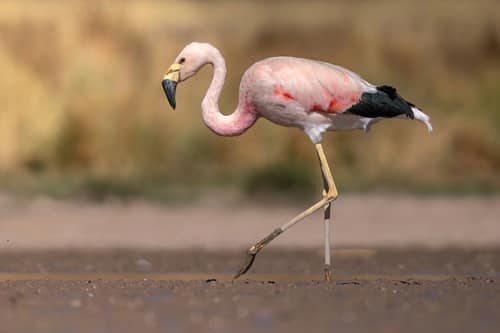
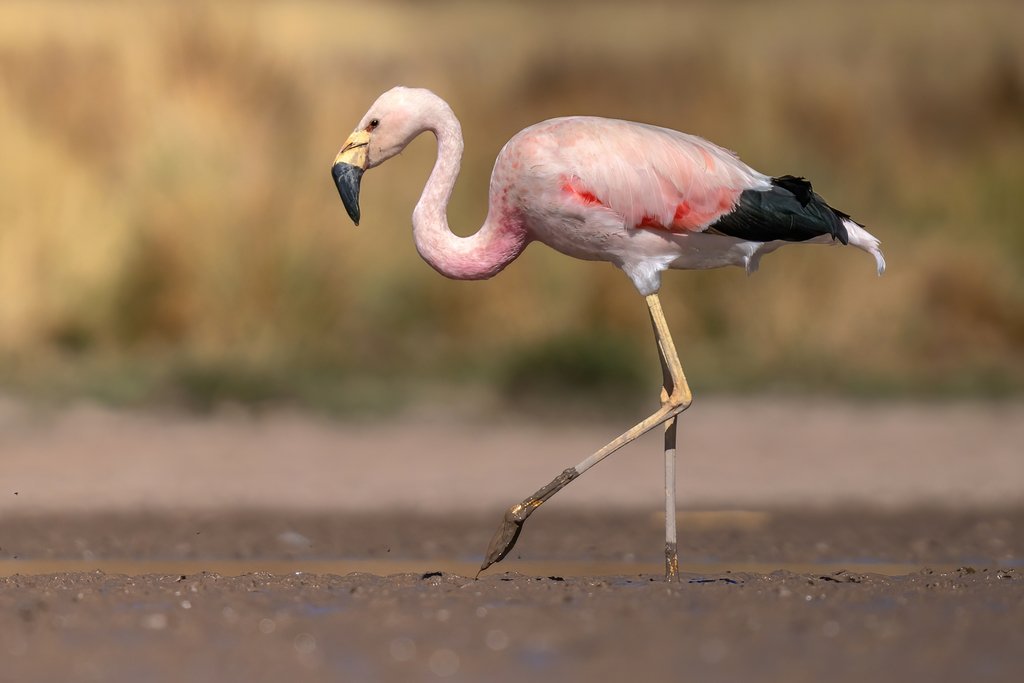
Andean flamingos thrive in the extreme, high-altitude salt flats of the South American Andes. Specialized bill lamellae allow them to filter fine diatoms and micro-algae from shallow saline lagoons. Their vibrant yellow legs and unique three-toed feet distinguish them from all other flamingo species sharing their rugged mountain habitat.
High AltitudeSocialWading Bird
 1 / 7
1 / 7—observations
—countries
—peak records
VulnerableConservation statusIUCN Red List categoriesLCNTVUENCREWEXVulnerableRed List categories, explained →
Diet & prey
- Diatoms
- Microscopic algae
- Brine shrimp
Predators
- Andean Fox
- Culpeo
- Andean Condor
ThreatsLithium mining, water extraction, habitat disturbance, egg collection
HabitatsHigh-altitude salt lakes, alkaline lagoons, salt flats
Life span30–50 years
Size / weightNot available
Classification
- FamilyPhoenicopteridae
- SpeciesPhoenicoparrus andinus
Range data is not available yet.
Interaction riskLow
- Low
- Moderate
- High
- Very high
- Why interaction risk is low
- Safe to observe at a distance; keep back to avoid disturbing high-altitude colonies.
- What to notice
- Recognized by pale pink plumage, yellow legs with three-toed feet, and a long yellow-and-black bill.
- Support conservation
- Maintain a distance of at least 200 meters from Andean breeding lagoons to avoid flushing roosting birds.
Responsible observation
- Observation distance: Use a spotter scope to view high-altitude colonies without causing flock disturbance.
- Tread lightly: Avoid walking across fragile crusts surrounding salt lakes during nesting season.
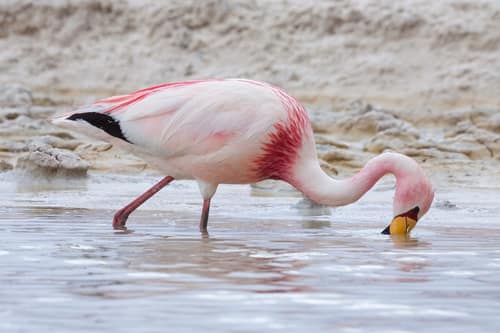
Close Relative (c) User:Chmehl, some rights reserved (CC BY) · cc-by
Co-occurring Relative (c) David F. Belmonte, some rights reserved (CC BY) / CC BY 4.0 · cc-by
Distant Relative "American flamingo Phoenicopterus ruber" by Paul and Jill is licensed under CC BY 2.0. To view a copy of this license, visit https://creativecommons.org/licenses/by/2.0/. · cc-by
Help improve the field guideSomething wrong?
Checking your Fauna account…Report a name, category, or profile issue for review.