
Bird
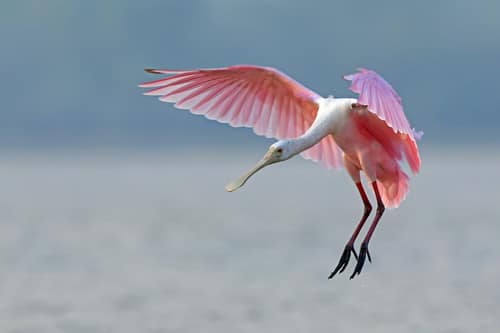
Roseate Spoonbill
Platalea ajajaAlso known as Pink Curlew, Rosy Spoonbill
Roseate spoonbills sweep their spatulate bills through shallow muddy waters, using sensitive nerve endings to snap shut on small fish and crustaceans. Their brilliant pink plumage grows richer with age as they accumulate carotenoid pigments from a diet rich in aquatic prey. During breeding season, adult heads turn a bare yellowish green while intense scarlet patches flare along their shoulders.
Wading BirdCoastalFlamboyant

—observations
—countries
—peak records
Least ConcernConservation statusIUCN Red List categoriesLCNTVUENCREWEXLeast ConcernRed List categories, explained →
Diet & preyKillifish, Prawns, Crayfish
Predators
- Bald Eagle
- American Alligator
- Raccoon
ThreatsHabitat loss, wetland drainage, water pollution
HabitatsCoastal marshes, mangroves, mudflats, shallow lagoons
Life span10–15 years in the wild
Classification
- OrderPelecaniformes
- FamilyThreskiornithidae
- GenusPlatalea
- SpeciesPlatalea ajaja
Range data is not available yet.
Interaction riskLow
- Low
- Moderate
- High
- Very high
- Why interaction risk is low
- Safe to observe at a normal distance.
- What to notice
- Look for dense breeding colonies on mangrove islands with large stick nests and vocal chicks.
- Support conservation
- Keep a respectful distance of at least 100 meters from rookeries and slow motorized boats nearby.
Responsible observation
- Observing foraging: Look for side to side sweeps of their spoon shaped bill in shallow water.
- Nesting etiquette: Keep a distance from coastal mangrove islands during spring nesting season.
- Lighting conditions: View during early morning hours when soft light highlights their pink plumage.

Dietary Companion "American flamingo Phoenicopterus ruber" by Paul and Jill is licensed under CC BY 2.0. To view a copy of this license, visit https://creativecommons.org/licenses/by/2.0/. · cc-by
Frequent Companion (c) Jessica, some rights reserved (CC BY) · cc-by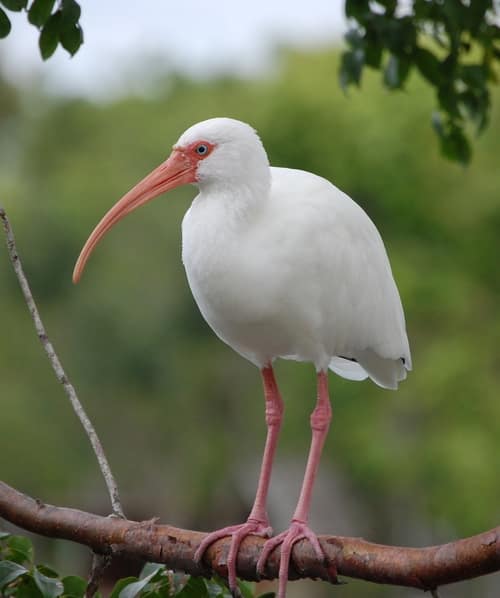
Close Relative (c) unnormalized, some rights reserved (CC BY-SA) · cc-by-sa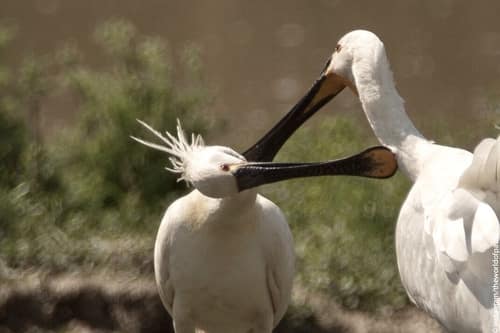
Close Relative (c) Paolo, some rights reserved (CC BY), uploaded by Paolo · cc-by
Help improve the field guideSomething wrong?
Checking your Fauna account…Report a name, category, or profile issue for review.