
Reptile · GBIF taxon 2459655
Lesser Antillean Iguana
Iguana delicatissimaAlso known as Lesser Antillean Green Iguana
Lesser Antillean iguanas spend their days high in the canopy of coastal woodlands and dry scrub forests, foraging on leaves, flowers, and fruits. Mature males turn a pale grey-white with striking pinkish blushes around the head, lacking the banded tail and large subtympanic shield of their green iguana relatives. Females dig deep nest burrows in sandy soil, laying up to thirty eggs that face heavy pressure from invasive predators and coastal development.
ArborealReptileEndangered
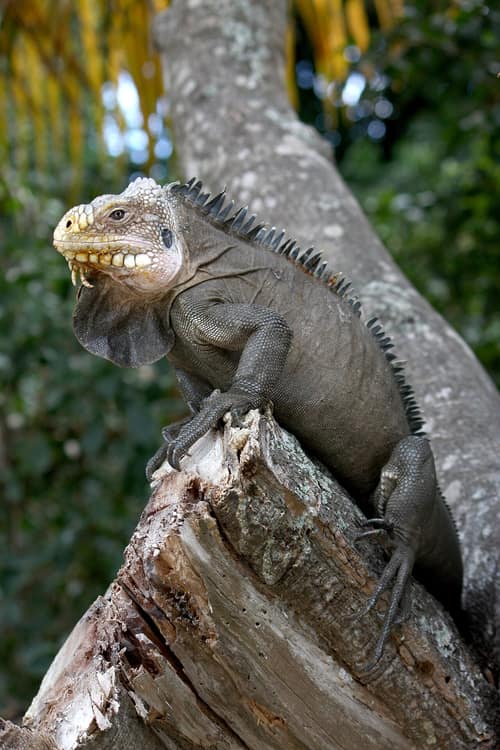
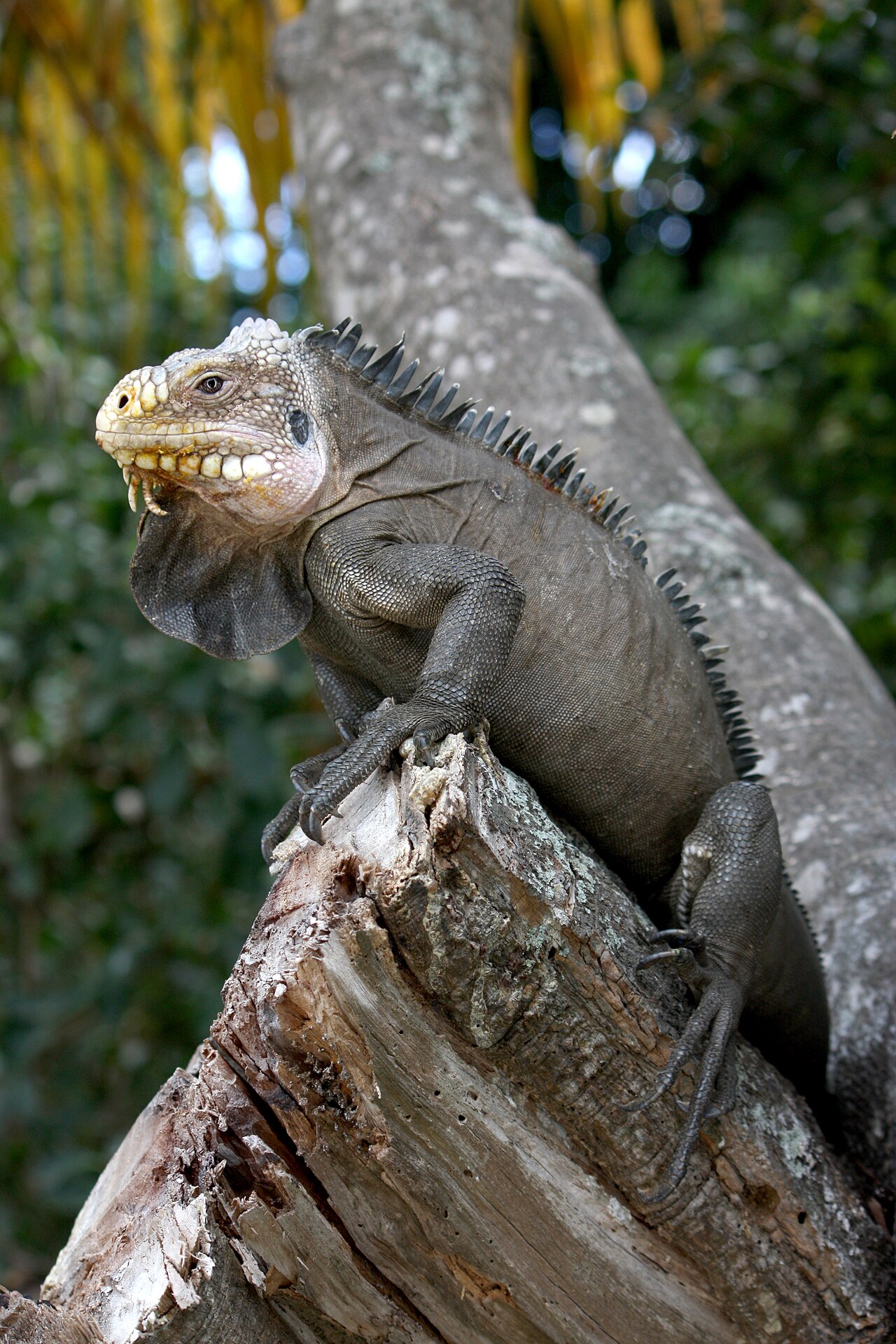
Licensed referencePostdlf / CC BY-SA 3.0 · cc-by-sa
—observations
—countries
—peak records
Critically EndangeredConservation statusIUCN Red List categoriesLCNTVUENCREWEXCritically EndangeredRed List categories, explained →
Diet & prey
- Tree leaves
- Flowers
- Wild fruits
Predators
- Feral cats
- Dogs
- Mongooses
ThreatsHybridization with green iguanas, habitat loss, and feral predators
HabitatsDry scrublands, coastal woodlands, and tropical moist forests
Life span15–20 years
Size / weightNot available
Classification
- FamilyIguanidae
- SpeciesIguana delicatissima
Range data is not available yet.
Interaction riskLow
- Low
- Moderate
- High
- Very high
- Why interaction risk is low
- Capable of a painful bite or scratch if cornered; observe quietly from a respectful distance.
- Why it is dangerous
- Powerful jaw muscles and sharp serrated teeth can inflict severe lacerations if the animal feels threatened.
- How to recognize a risky encounter
- Large lizard over a meter long with a dorsal crest of prominent spines and a pale head.
- What to do
- Do not attempt to touch or corner wild iguanas, and always allow them a clear exit route.
- What to notice
- Identified by a plain tail lacking dark bands and the absence of a large circular plate on the lower jaw.
- Support conservation
- Never disturb nesting sites in sandy coastal areas and report invasive green iguana sightings to local authorities.
Responsible observation
- Maintain Distance: Remain at least five meters away to avoid triggering stress or flight responses.
- Check Key Features: Look for the lack of a large circular scale under the ear opening to distinguish from green iguanas.
- Report Sightings: Document sightings with local conservation groups to help monitor remaining populations.
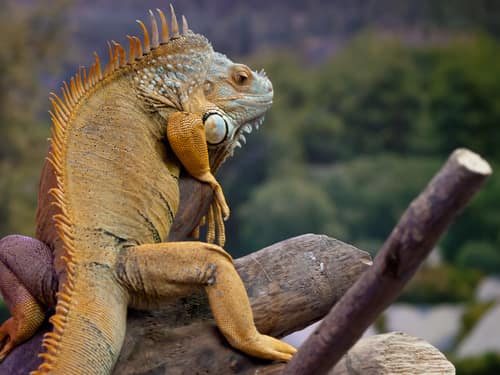
Close Relative "Green Iguana" by wwarby is licensed under CC BY 2.0. To view a copy of this license, visit https://creativecommons.org/licenses/by/2.0/. · cc-by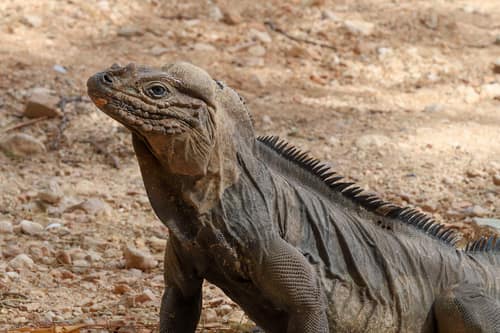
Close Relative (c) Kristof Zyskowski, some rights reserved (CC BY), uploaded by Kristof Zyskowski · cc-by Image unavailable
Close Relative
Help improve the field guideSomething wrong?
Checking your Fauna account…Report a name, category, or profile issue for review.