
Reptile · GBIF taxon 5960674
Rhinoceros Iguana
Cyclura cornutaAlso known as Hispaniolan Rhinoceros Iguana, Hispaniolan Rock Iguana
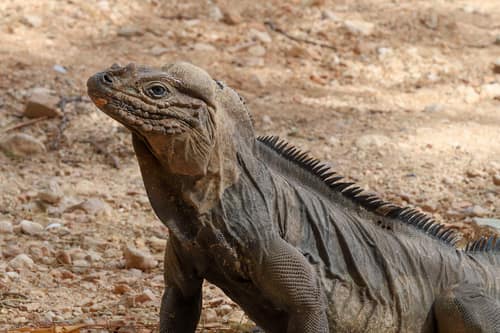
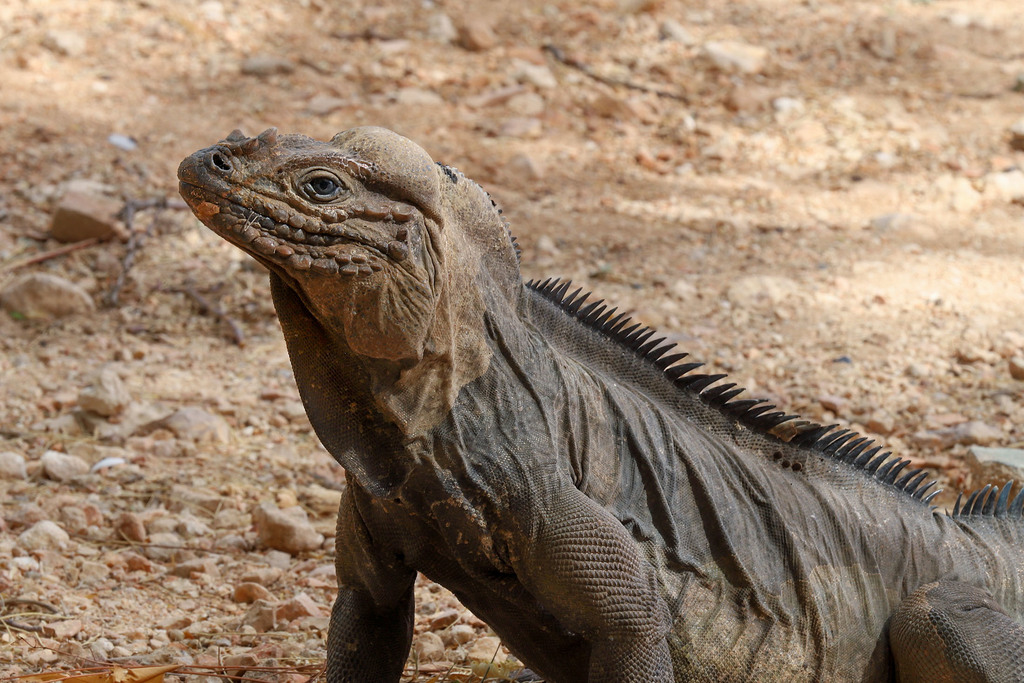
Rhinoceros iguanas dominate the dry scrublands and limestone hills of Hispaniola with a heavy-bodied, prehistoric presence. Males actively defend large territories, using head bobs and aggressive displays to warn off rivals along rocky outcrops. As vital seed dispersers, they consume a wide variety of native plants and fruits, playing a critical role in maintaining island vegetation.
ReptileDiurnalHerbivorous
 1 / 5
1 / 5—observations
—countries
—peak records
EndangeredConservation statusIUCN Red List categoriesLCNTVUENCREWEXEndangeredRed List categories, explained →
Diet & prey
- Cactus Fruit
- Native Leaves
- Flowers
Predators
- Feral Dogs
- Feral Cats
- Humans
ThreatsHabitat loss, invasive mammalian predators, poaching
HabitatsDry tropical forest, coastal scrub, limestone karst
Life span20–40 years
Size / weightNot available
Classification
- FamilyIguanidae
- GenusCyclura
- SpeciesCyclura cornuta
Range data is not available yet.
Interaction riskLow
- Low
- Moderate
- High
- Very high
- Why interaction risk is low
- Delivers powerful bites and tail whips when cornered; observe safely from a distance.
- Why it is dangerous
- Strong jaws and sharp claws can inflict deep puncture wounds and lacerations if the animal feels trapped.
- How to recognize a risky encounter
- Look for prominent horn-like scale outgrowths on the snout and a stocky, greyish-green body.
- What to do
- Never corner or attempt to handle wild individuals; step back slowly if one adopts a defensive posture.
- What to notice
- Recognize its heavy grey-brown body, horn-lined snout, and preference for rocky limestone terrain.
- Support conservation
- Keep a respectful distance, stay on established paths, and never share specific nest burrow locations.
Responsible observation
- Safe Distance: Maintain a gap of at least five meters to prevent stressing these territorial lizards.
- Basking Areas: Look for individuals resting on sun-exposed limestone rocks during mid-morning.
- Habitat Protection: Stick to marked trails in protected dry forests to avoid crushing burrows.
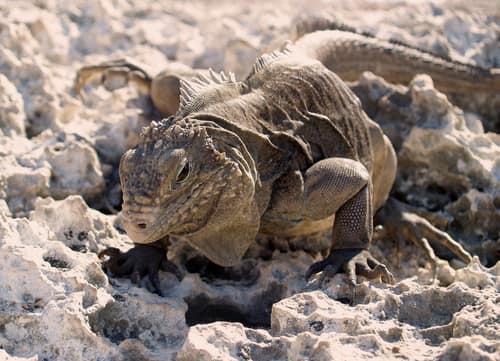
Close Relative Staselnik / CC BY-SA 3.0 · cc-by-sa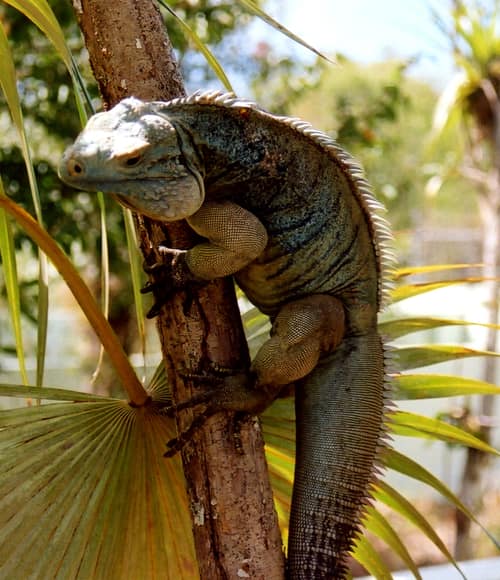
Genus Relative Luke from Oxford, MS / CC BY-SA 2.0 · cc-by-sa
Keep collecting in Fauna
Found in Collections
Ecosystem chain Pro
Desert Sands
Rhinoceros Iguana is found in this collection. Identify it in Fauna to fill this slot and continue your progress.
Unlock to track progress
Help improve the field guideSomething wrong?
Checking your Fauna account…Report a name, category, or profile issue for review.