
Reptile
Pig-nosed Turtle
Carettochelys insculptaAlso known as Fly River Turtle, Pitted-shelled Turtle, Warradjan
Pig-nosed turtles are entirely aquatic freshwater reptiles equipped with flipper-like limbs and a fleshy, snorkel-like snout that allows them to breathe while remaining submerged. Unlike most freshwater turtles, they boast a leathery carapace over a solid bony foundation, swimming with simultaneous wing-like strokes reminiscent of marine sea turtles. Females leave the water solely to deposit clutches of eggs into river sandbanks under the cover of night during the dry season.
AquaticFreshwater
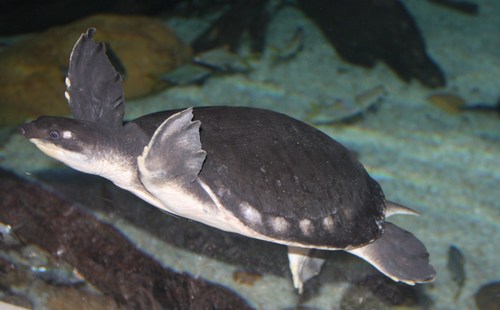
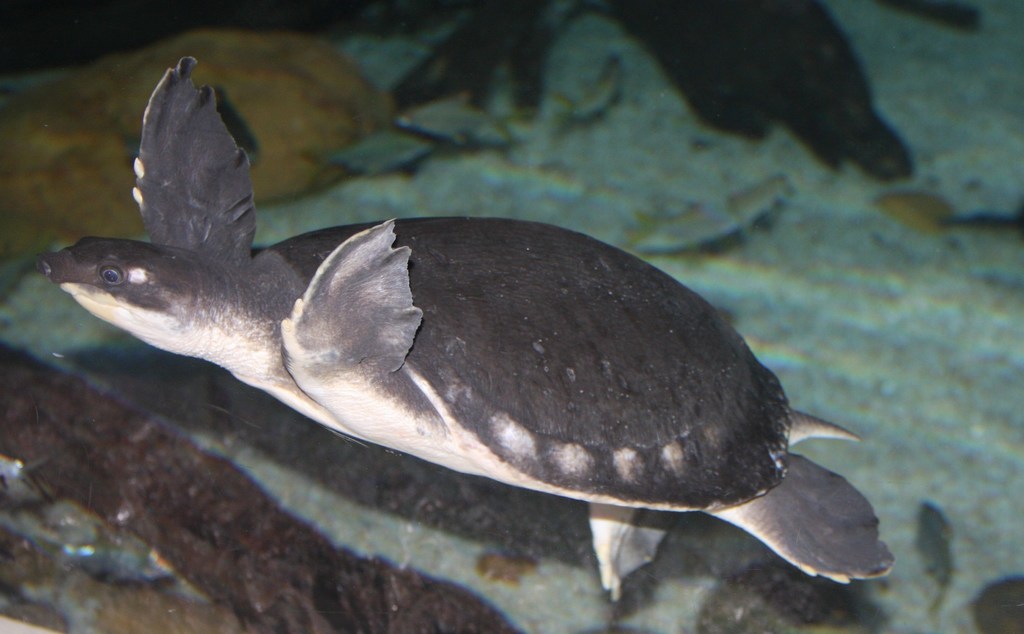
—observations
—countries
—peak records
EndangeredConservation statusIUCN Red List categoriesLCNTVUENCREWEXEndangeredRed List categories, explained →
Diet & preyWild Fig, Freshwater Snail, Water Ribbon
Predators
- Saltwater Crocodile
- White-bellied Sea-Eagle
- Goanna
ThreatsPoaching for the international pet trade, meat and egg harvesting, and river damming
HabitatsFreshwater rivers, streams, lagoons, swamps, and estuaries with sandy banks
Life span30–50 years
Classification
- FamilyCarettochelyidae
- GenusCarettochelys
- SpeciesCarettochelys insculpta
Range data is not available yet.
Interaction riskLow
- Low
- Moderate
- High
- Very high
- Why interaction risk is low
- Powerful jaws can deliver a crushing bite if handled; observe from riverbanks or boats.
- Why it is dangerous
- Equipped with strong, sharp-edged jaws adapted for crushing hard shells and tough river debris, capable of inflicting severe flesh lacerations.
- How to recognize a risky encounter
- Look for a prominent, pig-like snout, paddle-like forelimbs without distinct claws, and a smooth, leathery grey carapace.
- What to do
- Never attempt to grab, corner, or lift from the water; maintain distance and watch through binoculars.
- What to notice
- Recognized by its fleshy tubular nostrils, distinct grey leathery shell, and flippers swimming in clear tropical rivers.
- Support conservation
- Avoid approaching nesting females at night on sandbanks and report any suspected illegal capture or transport.
Responsible observation
- Watch sandbars: Scan quiet, clear river reaches and exposed sandbars during the dry season for basking or nesting females.
- Do not disturb nests: Keep clear of riverbank nesting scrapes, as hatchlings rely on undisturbed nests to survive until floods arrive.
- Never purchase: Refuse wild-caught turtles sold in exotic pet markets to deter illegal poaching rings.
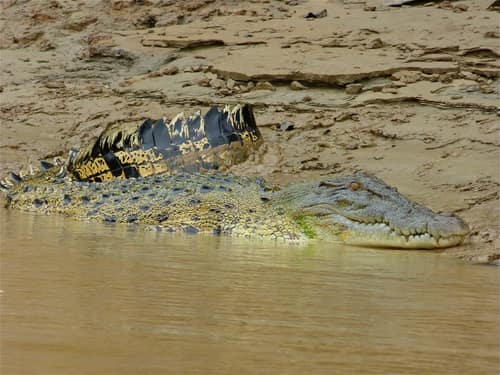
Predator (c) Bernard DUPONT, some rights reserved (CC BY-SA) · cc-by-sa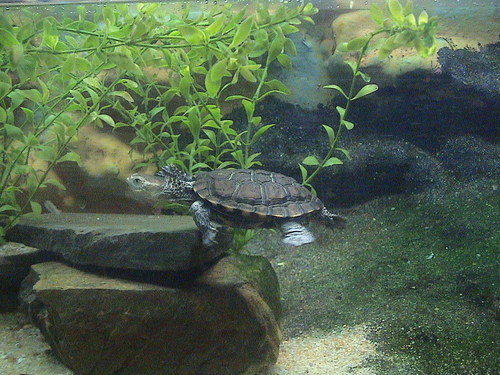
Competitor (c) Bahudhara, some rights reserved (CC BY-SA) · cc-by-sa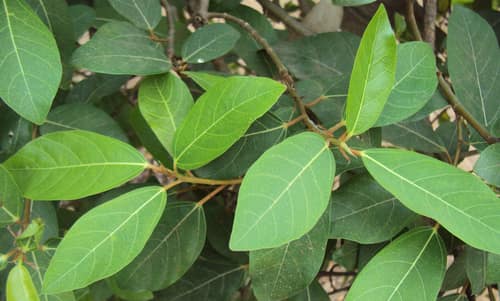
Host Plant (c) Vinayaraj, some rights reserved (CC BY-SA) · cc-by-sa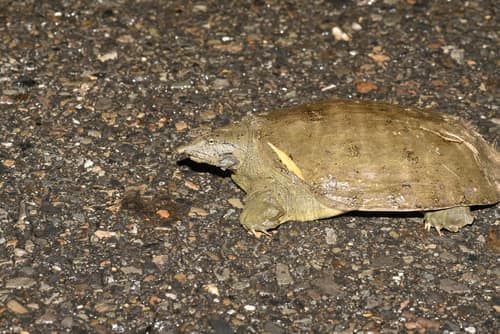
Softshell Relative (c) Yung-Lun Lin, some rights reserved (CC BY) · cc-by
Help improve the field guideSomething wrong?
Checking your Fauna account…Report a name, category, or profile issue for review.