
Dwarf Crocodile
Osteolaemus tetraspisAlso known as African Dwarf Crocodile, West African Dwarf Crocodile, Broad-snouted Crocodile, Bony Crocodile
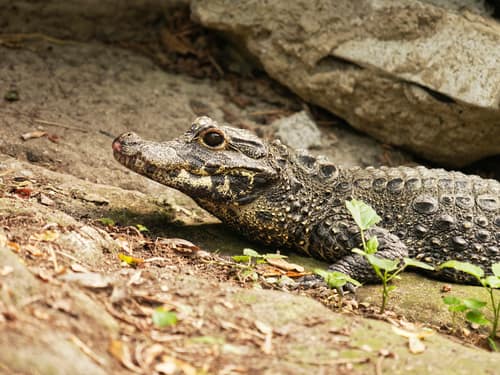
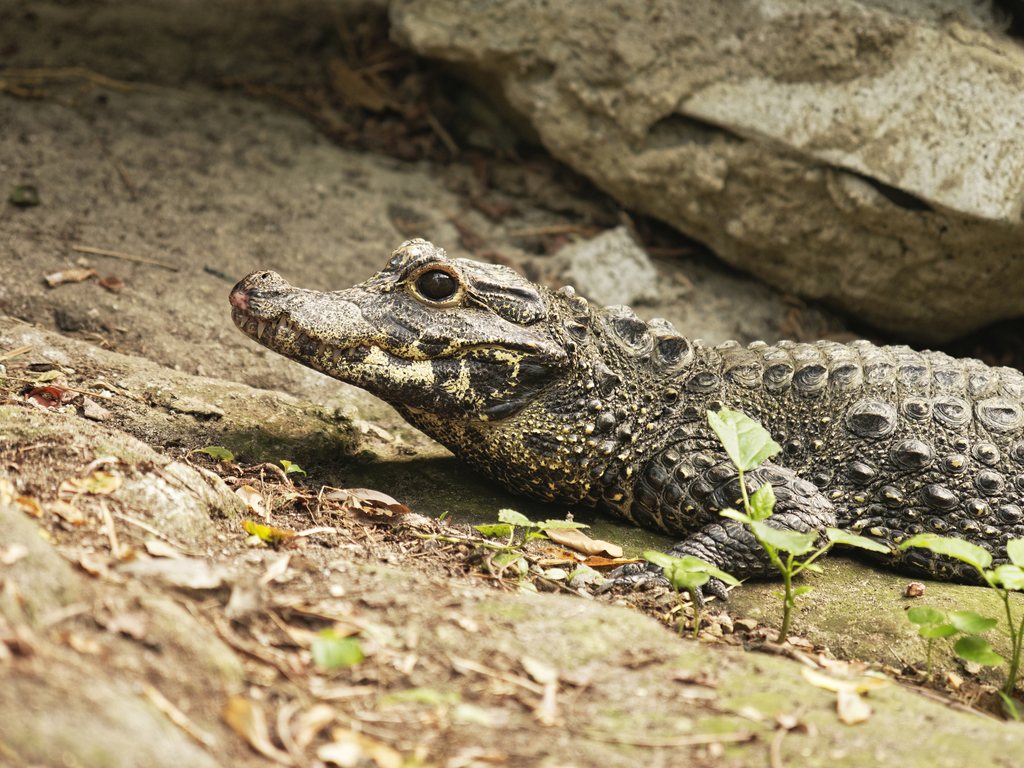
Dwarf crocodiles spend daylight hours sequestered inside excavated riverbank burrows or hollow submerged tree roots, emerging at night to patrol slow-moving forest streams. Heavily reinforced with bony osteoderms across their back, neck, and belly, they rely on armor to protect themselves from larger apex predators while foraging on land and water. Females construct raised mounds of decaying vegetation to incubate their small clutches, actively guarding the nest and helping hatchlings emerge when called by their high-pitched chirps.
- Leopard
- Nile Crocodile
- African Rock Python
- FamilyCrocodylidae
- GenusOsteolaemus
- SpeciesOsteolaemus tetraspis
- Low
- Moderate
- High
- Very high
- Why interaction risk is high
- Can inflict a crushing defensive bite if cornered; maintain a safe distance along forest waterways.
- Why it is dangerous
- Crushing jaw pressure and backward-curving teeth can cause bone fractures and severe lacerations prone to deep infection.
- How to recognize a risky encounter
- Look for a short, broad snout, dense protective back scales, and an adult body length under two meters.
- What to do
- Maintain several meters of clearance, back away steadily if hissed at, and never block access to the water.
- What to notice
- Identifiable by its dark coloration, stubby broad head, and heavily armored throat and belly scales.
- Support conservation
- Keep boat traffic slow in shallow tributaries to protect burrow systems and report illegal commercial capture.
- Night Spotting: Scan swamp margins after dark with a flashlight to detect their intense reddish eyeshine.
- Riverbank Caution: Avoid stepping near burrow entrances or submerged logs where adults rest during the day.
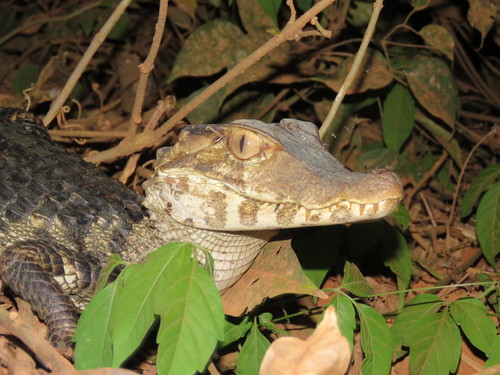
Look-alike (c) Vincent A. Vos, some rights reserved (CC BY), uploaded by Vincent A. Vos · cc-by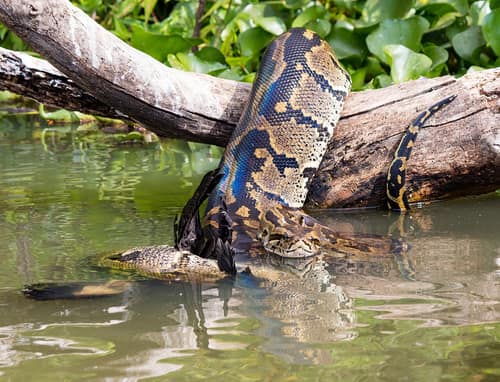
Predator Ray in Manila / CC BY 2.0 · cc-by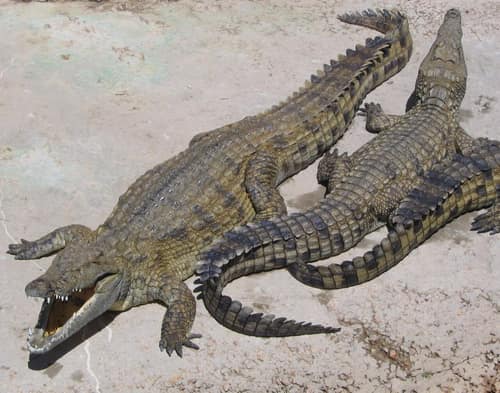
Same Family Dewet / CC BY-SA 2.0 · cc-by-sa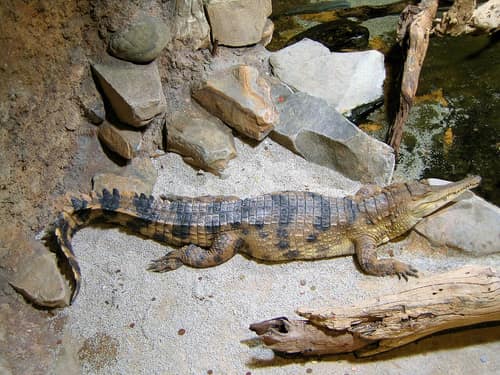
Same Family Thesupermat / CC BY-SA 3.0 · cc-by-sa
Found in Collections
Wetland Territory
Dwarf Crocodile is found in this collection. Identify it in Fauna to fill this slot and continue your progress.
Report a name, category, or profile issue for review.