
Reptile · GBIF taxon 2441378
Malayan False Gharial
Tomistoma schlegeliiAlso known as False Gharial, Sunda Gharial, Tomistoma, Malayan Gharial
False gharials are large, slender-snouted freshwater crocodilians adapted for lurking in peat swamps and slow-moving tropical rivers. They spend hours virtually motionless among submerged roots and fallen logs, using their narrow jaws to swipe laterally at passing prey. Females construct giant mound nests out of dry leaves and peat, standing guard until the eggs hatch into dark-striped offspring.
ReptileAquaticPredator
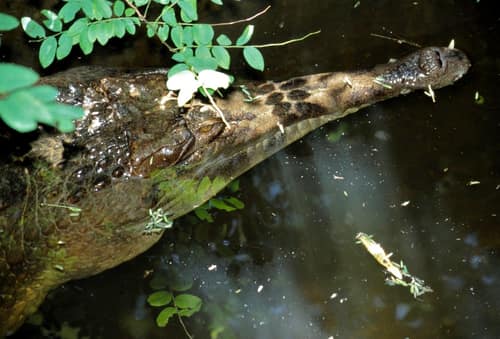
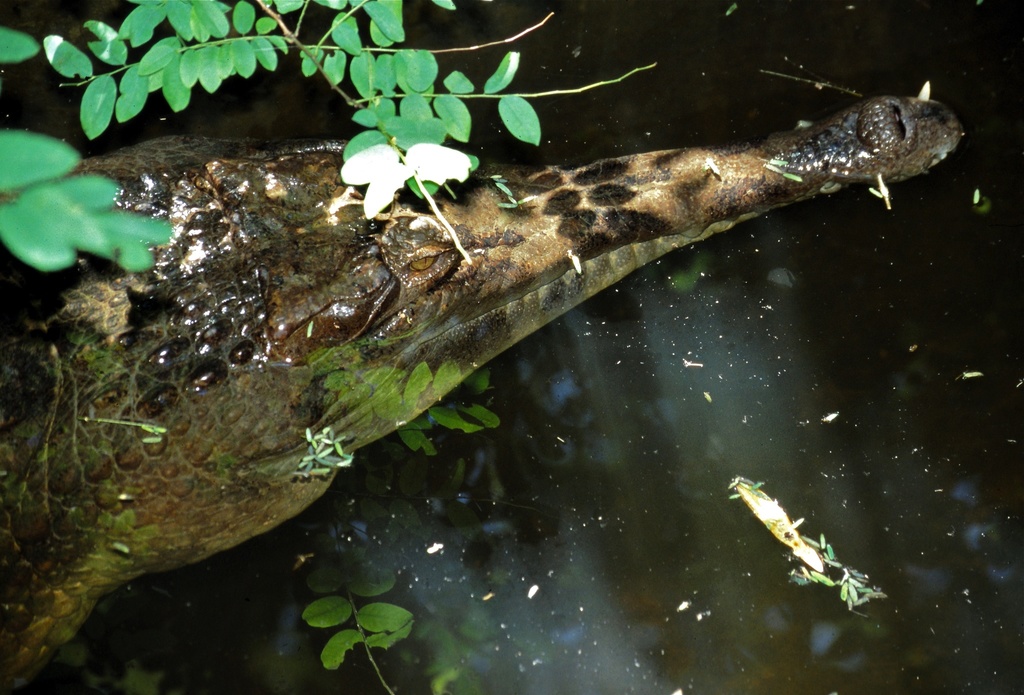
Licensed reference(c) Bernard DUPONT, some rights reserved (CC BY-SA) · cc-by-sa
—observations
—countries
—peak records
EndangeredConservation statusIUCN Red List categoriesLCNTVUENCREWEXEndangeredRed List categories, explained →
Diet & prey
- Fish
- Waterfowl
- Crustaceans
Predators
- Humans
- Monitor Lizards
ThreatsPeatland drainage, palm oil expansion, dam construction, poaching
HabitatsFreshwater peat swamps, flooded forests, lowland rivers
Life span50–70 years
Size / weightNot available
Classification
- FamilyCrocodylidae
- SpeciesTomistoma schlegelii
Range data is not available yet.
Interaction riskHigh
- Low
- Moderate
- High
- Very high
- Why interaction risk is high
- Large wild crocodilian; observe safely from boats or elevated boardwalks and stay clear of water edges.
- Why it is dangerous
- Possesses powerful jaws lined with dozens of sharp teeth capable of inflicting severe trauma.
- How to recognize a risky encounter
- Look for an extremely narrow, elongated snout and reddish-brown to dark green hide with dark bands.
- What to do
- Never wade into murky swamp rivers in known habitats, and retreat slowly if spotted near water edges.
- What to notice
- Recognized by its distinctively slender head profile and dark blotched body pattern.
- Support conservation
- Avoid disturbing nest mounds during breeding season and report sightings to local conservation authorities.
Responsible observation
- Boat observation: View safely from motorized riverboats rather than paddling low canoes in swamp habitats.
- Keep distance from banks: Maintain a safe retreat distance from murky peatland water edges.
- Avoid nesting mounds: Back away immediately if you encounter a large leaf mound on riverbanks.
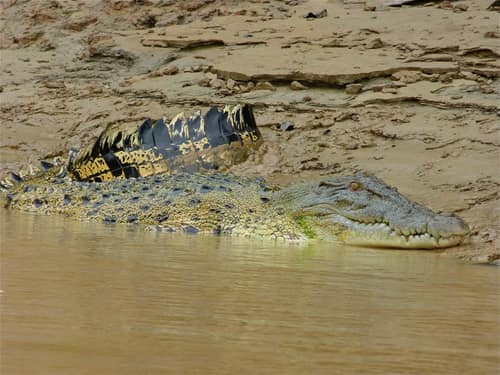
Competitor (c) Bernard DUPONT, some rights reserved (CC BY-SA) · cc-by-sa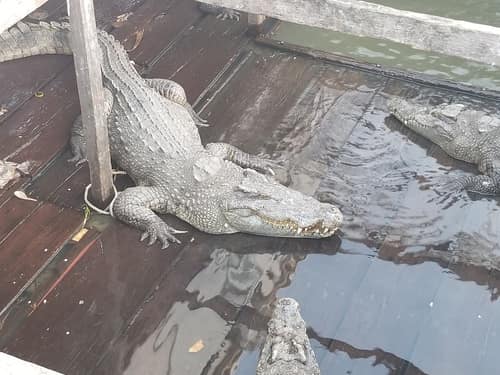
Regional Neighbor no rights reserved, uploaded by Steven Smethurst · cc0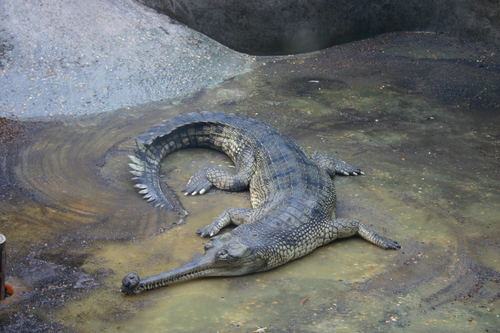
Close Relative (c) Ryan Somma, some rights reserved (CC BY-SA) · cc-by-sa
Help improve the field guideSomething wrong?
Checking your Fauna account…Report a name, category, or profile issue for review.