
Mammal · GBIF taxon 2441065
Blackbuck
Antilope cervicapraAlso known as Indian Antelope, Kala Hiran
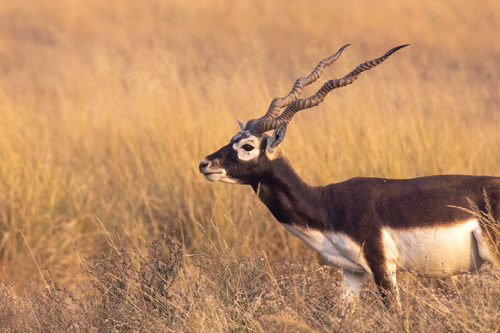
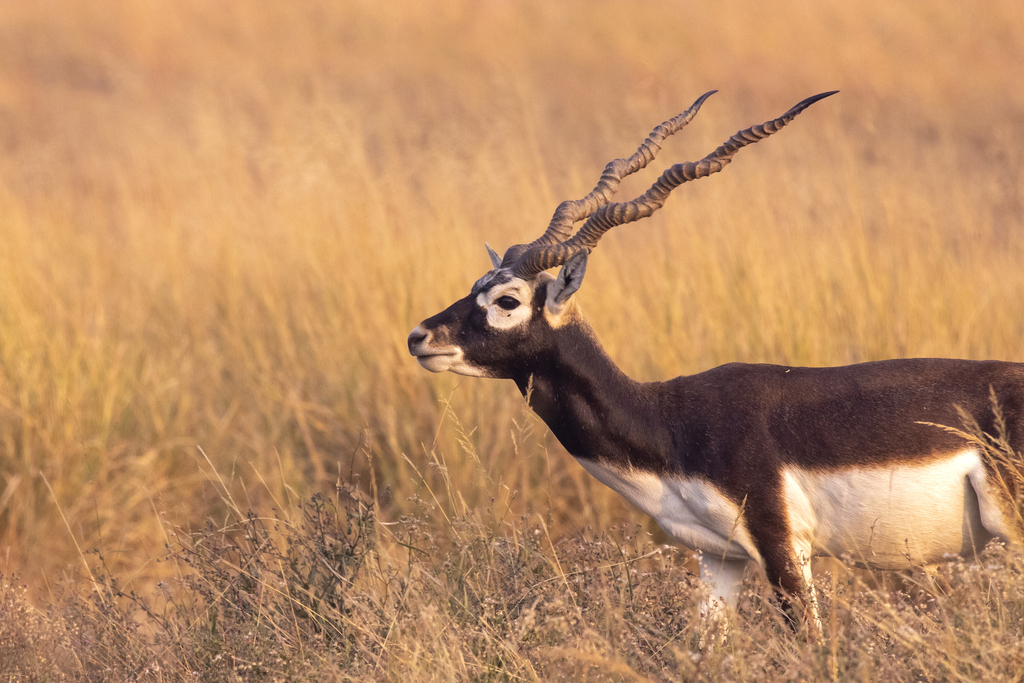
Dominant male blackbucks display striking dark brown to black coats contrasting sharply with bright white underparts and spiraled, ringed horns. Herds bound across open plains at speeds exceeding eighty kilometers per hour to outrun predators like wolves and dholes. Males establish display territories on open lek sites where they strut with raised chins to court harems of females.
GrasslandFast RunnerHerding
 1 / 7
1 / 7—observations
—countries
—peak records
Least ConcernConservation statusIUCN Red List categoriesLCNTVUENCREWEXLeast ConcernRed List categories, explained →
Diet & prey
- Grasses
- Forbs
- Shrub shoots
Predators
- Indian Wolf
- Dhole
- Leopard
ThreatsHabitat loss, agricultural expansion, feral dog attacks, illegal hunting
HabitatsGrassy plains, open scrublands, semi-arid savannahs
Life span10–15 years
Classification
- OrderArtiodactyla
- FamilyBovidae
- GenusAntilope
- SpeciesAntilope cervicapra
Range data is not available yet.
Interaction riskLow
- Low
- Moderate
- High
- Very high
- Why interaction risk is low
- Horned males can cause injury if cornered; observe herds from a safe distance.
- What to notice
- Look for dark brown males with long spiraled horns and pale tan females in open grasslands.
- Support conservation
- Maintain a distance of at least 100 meters and never chase or flush grazing herds with vehicles.
Responsible observation
- Observe from Afar: Keep a respectful distance, as herds startle easily and flee at high speeds.
- Look for Leks: Watch open clearings in spring where males defend small display territories.
- Notice Pronking: High leaping bounds indicate an alarmed herd signaling danger to group members.
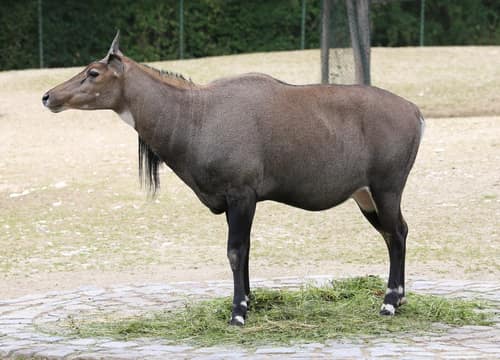
Co-occurring Ungulate (c) Rufus46, some rights reserved (CC BY-SA) · cc-by-sa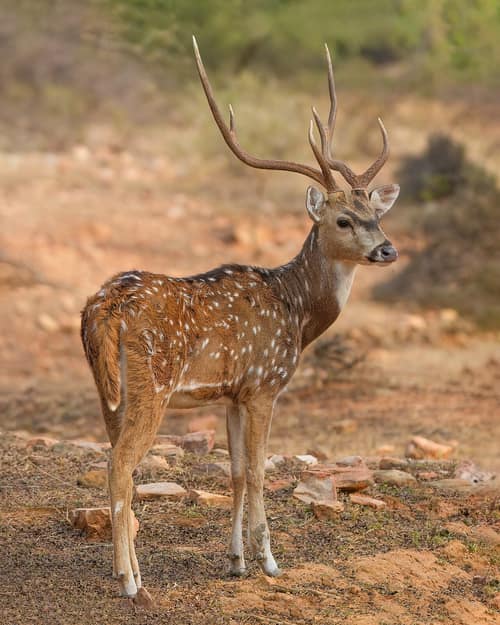
Frequent Companion Giles Laurent / CC BY-SA 4.0 · cc-by-sa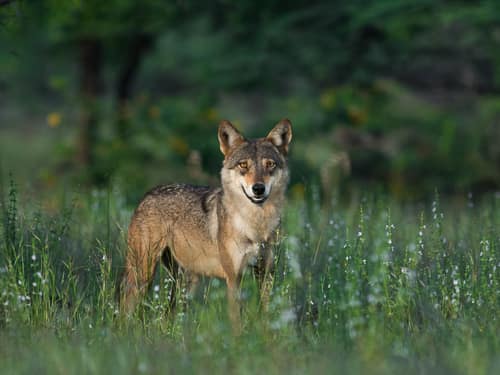
Predator (c) Rudraksha Chodankar, some rights reserved (CC BY-SA) · cc-by-sa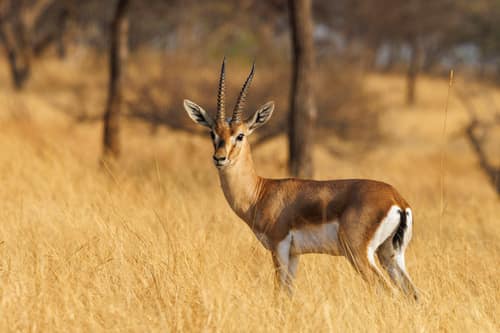
Close Relative (c) Ramesh Shenai Jr., some rights reserved (CC BY) · cc-by
Help improve the field guideSomething wrong?
Checking your Fauna account…Report a name, category, or profile issue for review.