
Mammal · GBIF taxon 2437366
Long-tailed Marmot
Marmota caudataAlso known as Golden Marmot
Golden marmots navigate the rugged alpine meadows and rocky scree of Central Asia, easily identified by their unusually long, bushy tails and rich yellowish fur with a dark mantle. These social rodents live in extensive underground burrow systems where colonies forage on alpine vegetation during brief summer months. Before harsh winter blizzards set in, family groups retreat into deep hibernacula to sleep together for up to seven months.
MountainousSocialHibernating

 1 / 3
1 / 3—observations
—countries
—peak records
Least ConcernConservation statusIUCN Red List categoriesLCNTVUENCREWEXLeast ConcernRed List categories, explained →
Diet & prey
- Alpine Grasses
- Wild Herbs
- Plant Roots
Predators
- Snow Leopard
- Golden Eagle
- Himalayan Wolf
ThreatsHabitat fragmentation, climate change, localized hunting
HabitatsAlpine meadows, montane steppes, rocky slopes
Life span10–15 years
Size / weightNot available
Classification
- FamilySciuridae
- SpeciesMarmota caudata
Range data is not available yet.
Interaction riskLow
- Low
- Moderate
- High
- Very high
- Why interaction risk is low
- Capable of a painful defensive bite if cornered; observe from a respectful distance.
Responsible observation
- Listen for warnings: A high-pitched whistling bark signals their presence and alerts the colony.
- Scan rocky outcrops: Look for golden coats warming on sun-lit boulders near burrow entrances.
- Keep your distance: Avoid driving foraging marmots into burrows during brief summer feeding seasons.
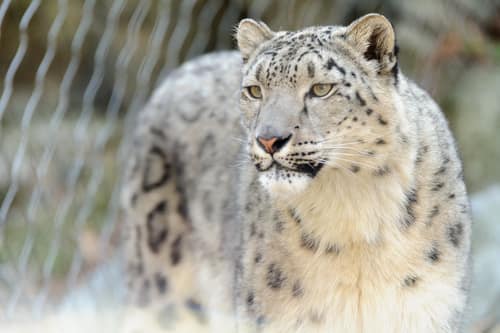
Predator "Snow Leopard from the Side" by Eric Kilby is licensed under CC BY-SA 2.0. To view a copy of this license, visit https://creativecommons.org/licenses/by-sa/2.0/. · cc-by-sa
Predator Giles Laurent / CC BY-SA 4.0 · cc-by-sa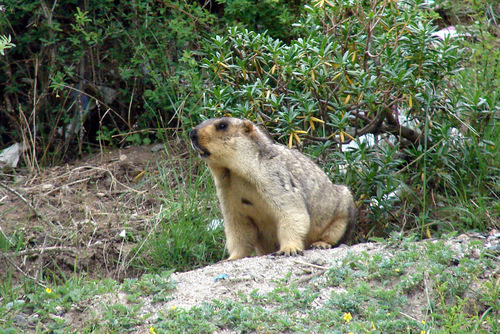
Close Relative (c) James Hardcastle, some rights reserved (CC BY), uploaded by James Hardcastle · cc-by
Close Relative Levashkin / CC BY-SA 4.0 · cc-by-sa
Help improve the field guideSomething wrong?
Checking your Fauna account…Report a name, category, or profile issue for review.