
Bird
Golden Eagle
Aquila chrysaetosAlso known as Mountain Eagle, Ring-tailed Eagle
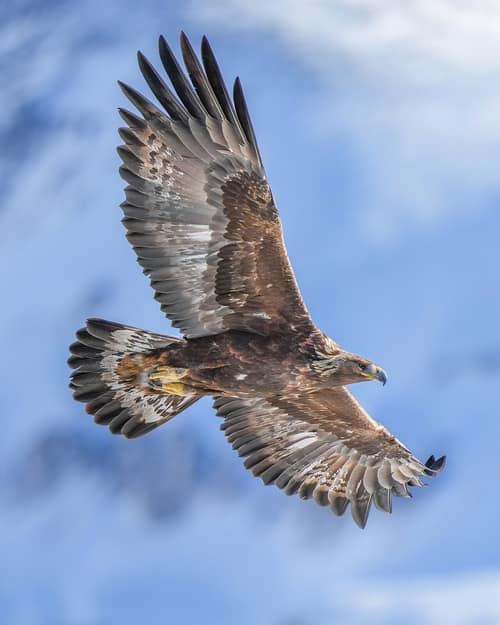
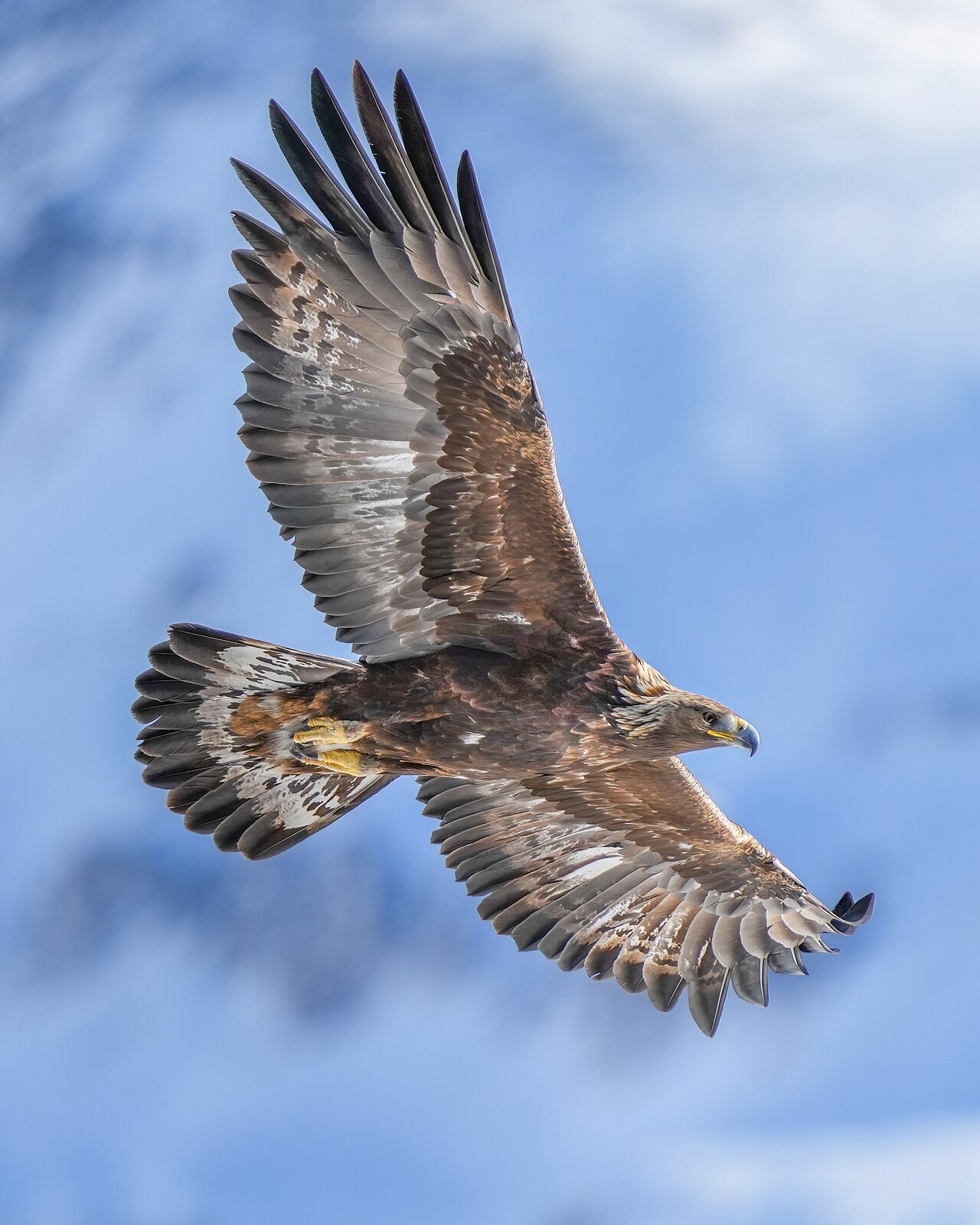
Golden eagles command open landscapes across the Northern Hemisphere, soaring effortlessly over mountains, steppes, and deserts on broad wings. These solitary apex predators capture large ground mammals with astounding aerial speed, diving at over 240 kilometers per hour to strike prey with crushing talon pressure. Breeding pairs maintain vast territories and build massive cliffside or treetop stick nests that they reuse and expand over decades.
Apex PredatorRaptorSoaring
—observations
—countries
—peak records
Least ConcernConservation statusIUCN Red List categoriesLCNTVUENCREWEXLeast ConcernRed List categories, explained →
Diet & preyMountain Hare, Yellow-bellied Marmot, Ground Squirrel
Predators
- Grizzly Bear
- Wolverine
- Eurasian Eagle-Owl
ThreatsPower line electrocution, lead poisoning, habitat loss, human disturbance
HabitatsMountains, open country, cliffs, shrublands, alpine tundra
Life span15–30 years in the wild
Classification
- FamilyAccipitridae
- SpeciesAquila chrysaetos
Native
Interaction riskLow
- Low
- Moderate
- High
- Very high
- Why interaction risk is low
- Powerful talons can cause serious harm if birds are handled or approached at nests; observe from afar.
- Why it is dangerous
- Equipped with massive talons that exert intense crushing force and sharp beaks capable of tearing flesh.
- How to recognize a risky encounter
- Distinguished by dark brown plumage with a golden-yellow nape and broad, square-ended wings.
- What to do
- Never approach nesting cliffs or injured adults; contact licensed wildlife rehabilitators for assistance.
- What to notice
- Identified by golden nape feathers, fully feathered legs, and an immense wingspan.
- Support conservation
- Maintain a respectful distance of several hundred meters from active nests and roost sites.
Responsible observation
- Binoculars Required: Observe soaring birds or nest sites from at least 300 meters away to prevent stress.
- Watch for Soaring: Look for broad wings held in a slight V shape while riding thermal updrafts over ridges.
- Respect Nest Closures: Avoid climbing or hiking near known cliff nesting territories during spring breeding.
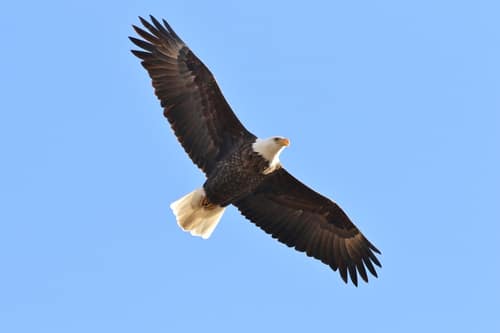
Co-occurring Raptor (c) Thibaud Aronson, some rights reserved (CC BY-SA), uploaded by Thibaud Aronson · cc-by-sa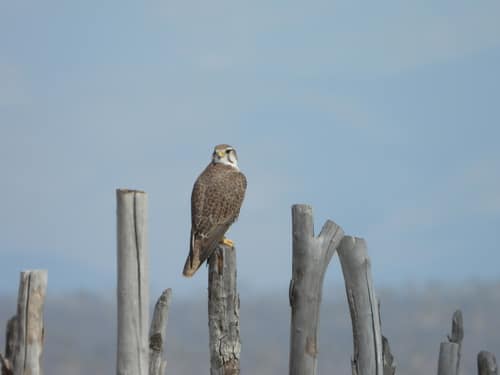
Nest Competitor (c) Aarón Sandoval, some rights reserved (CC BY-SA) · cc-by-sa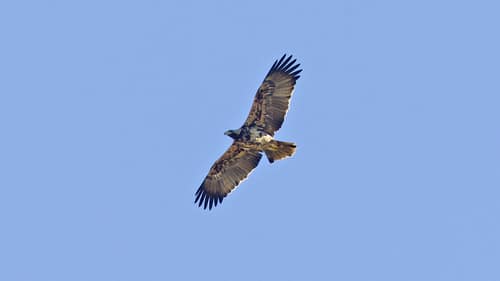
Close Relative (c) Juan lacruz, some rights reserved (CC BY-SA) · cc-by-sa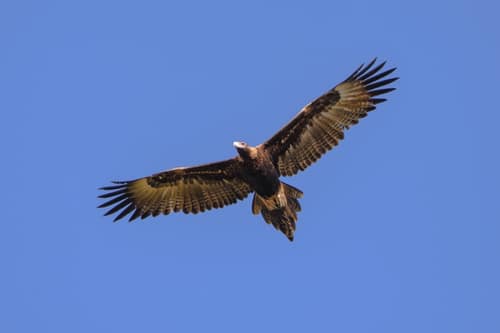
Close Relative (c) Mark Kriedemann, some rights reserved (CC BY), uploaded by Mark Kriedemann · cc-by
Help improve the field guideSomething wrong?
Checking your Fauna account…Report a name, category, or profile issue for review.