
Mammal · GBIF taxon 2436910
Desert Cottontail
Sylvilagus auduboniiAlso known as Audubon's Cottontail, Western Cottontail
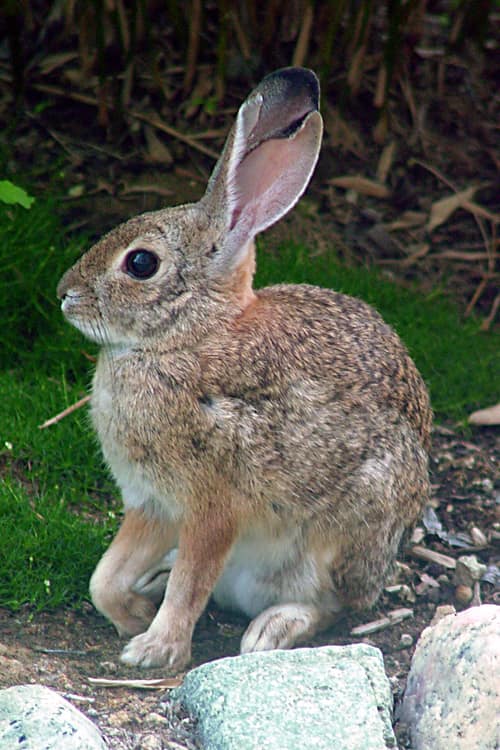
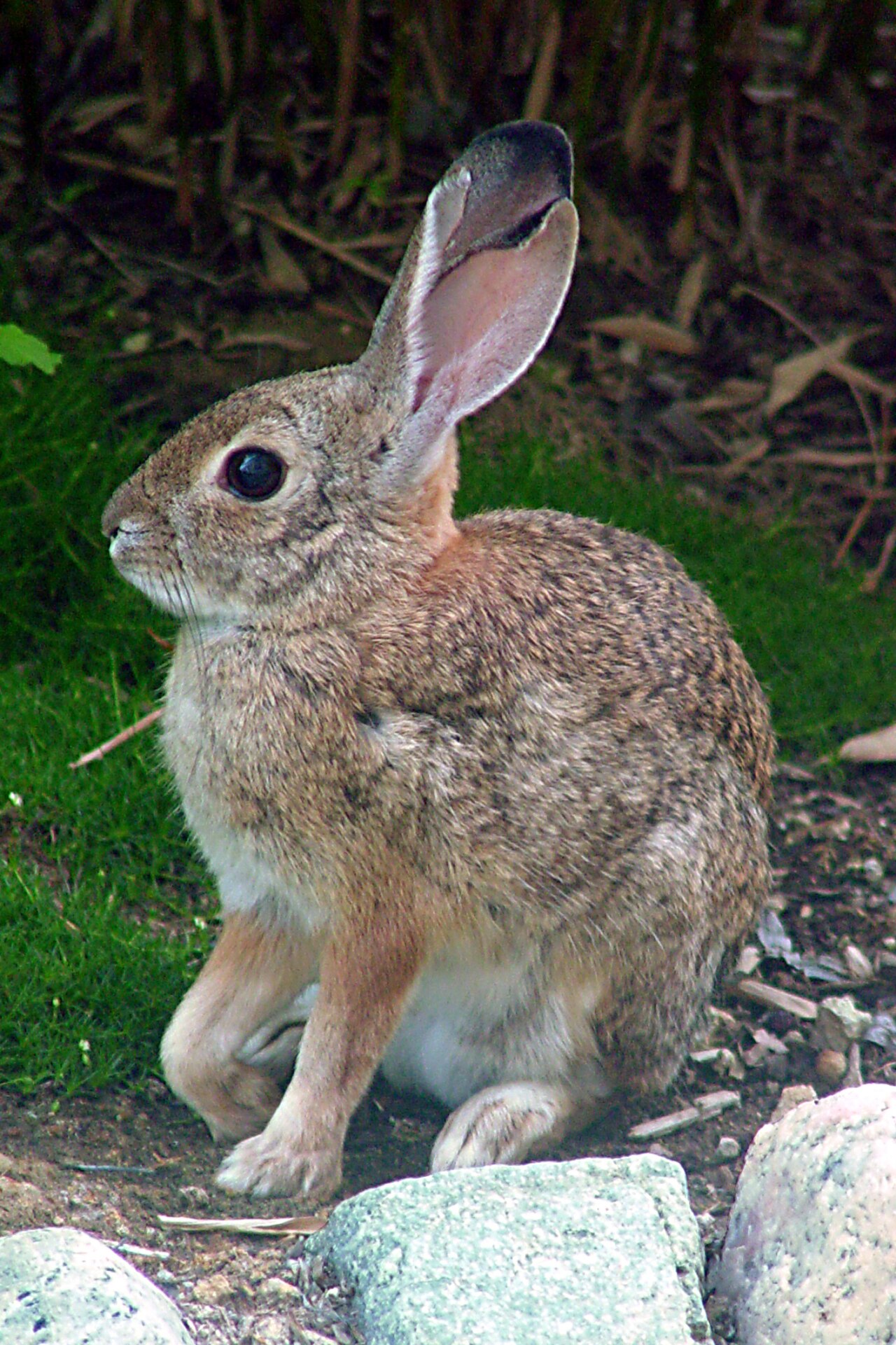
Desert cottontails thrive across North American arid lands, recognizable by their large erect ears and signature white tail fluff flashed during evasive zig-zag sprints. These adaptable herbivores forage during cooler twilight hours, seeking refuge from desert heat under brush, in abandoned burrows, or up low-sloping trees. Mothers construct grass-lined nests in shallow ground depressions, rearing multiple litters each year in response to rainfall and surges in fresh vegetation.
CrepuscularDesert DwellerHerbivore
—observations
—countries
—peak records
Least ConcernConservation statusIUCN Red List categoriesLCNTVUENCREWEXLeast ConcernRed List categories, explained →
Diet & prey
- Desert Grasses
- Prickly Pear Cactus
- Mesquite Leaves
Predators
- Coyote
- Bobcat
- Great Horned Owl
ThreatsHabitat loss, severe drought, and Rabbit Hemorrhagic Disease Virus
HabitatsDeserts, arid scrublands, grasslands, and pinyon-juniper woodlands
Life span1–3 years
Size / weightNot available
Classification
- OrderLagomorpha
- FamilyLeporidae
- GenusSylvilagus
- SpeciesSylvilagus audubonii
Native
Interaction riskModerate
- Low
- Moderate
- High
- Very high
- Why interaction risk is moderate
- Can carry pathogens or fleas; observe from a respectful distance and do not handle wild rabbits.
- Why it is dangerous
- Carries pathogens like tularemia and plague-bearing fleas, which can transmit illness through direct contact or bites.
- How to recognize a risky encounter
- Look for a compact rabbit with brownish-gray fur, large erect ears, and a bright white underside to its short tail.
- What to do
- Do not approach or handle wild rabbits; keep pets leashed and report noticeably sick animals to local wildlife authorities.
Responsible observation
- Observe from distance: Use binoculars during early morning or evening hours when rabbits actively forage.
- Keep pets leashed: Prevent dogs from chasing or stressing rabbits taking shelter in garden shrubs.
- Avoid touching nests: Leave young rabbits alone in shallow grass nests, as mothers return periodically.
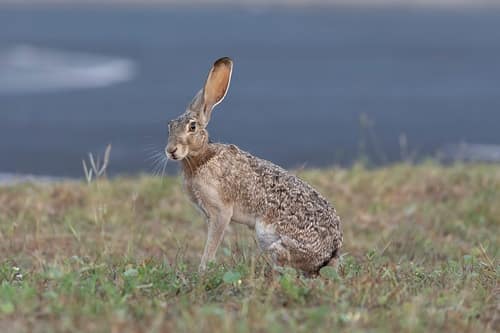
Co-occupant Chuck Homler d/b/a Focus On Wildlife / CC BY-SA 4.0 · cc-by-sa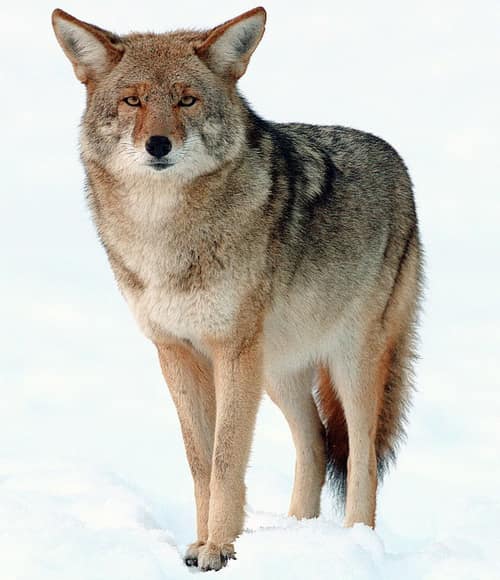
Predator Yathin S Krishnappa / CC BY-SA 3.0 · cc-by-sa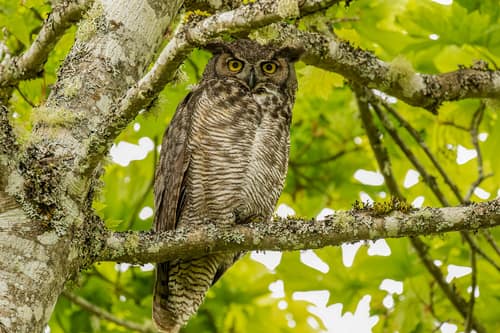
Predator "Great Horned Owl, the first I've seen in decent light this year. Didn't want to disturb it for too long so we continued along the trail" by island deborah- is licensed under CC BY-SA 2.0. To view a copy of this license, visit https://creativecommons.org/licenses/by-sa/2.0/. · cc-by-sa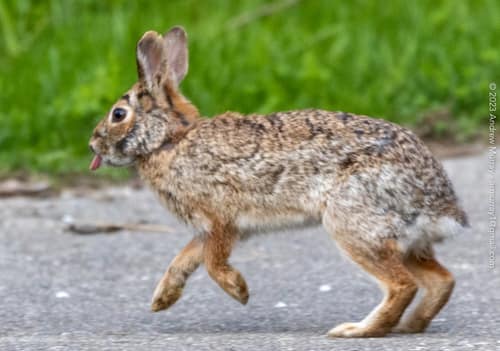
Close Relative (c) Andrew Murray, some rights reserved (CC BY), uploaded by Andrew Murray · cc-by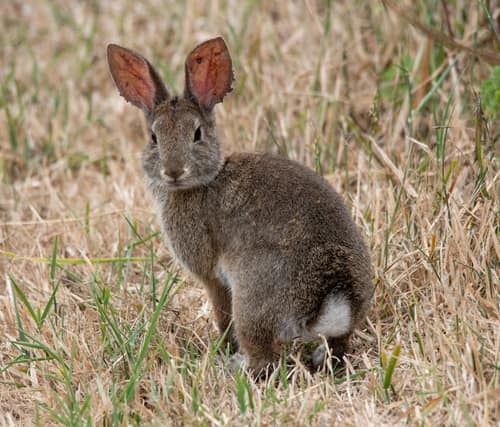
Close Relative (c) Don Loarie, some rights reserved (CC BY), uploaded by Don Loarie · cc-by
Keep collecting in Fauna
Found in Collections
Ecosystem chain Pro
Mystic Meadows
Desert Cottontail is found in this collection. Identify it in Fauna to fill this slot and continue your progress.
Unlock to track progress
Help improve the field guideSomething wrong?
Checking your Fauna account…Report a name, category, or profile issue for review.