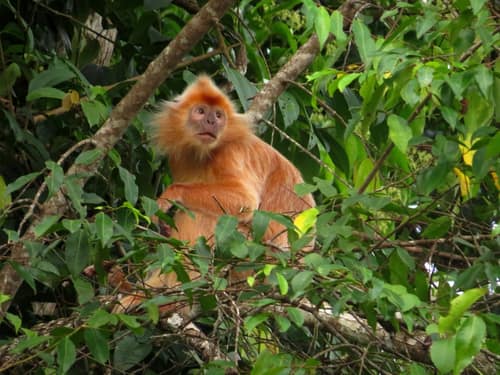
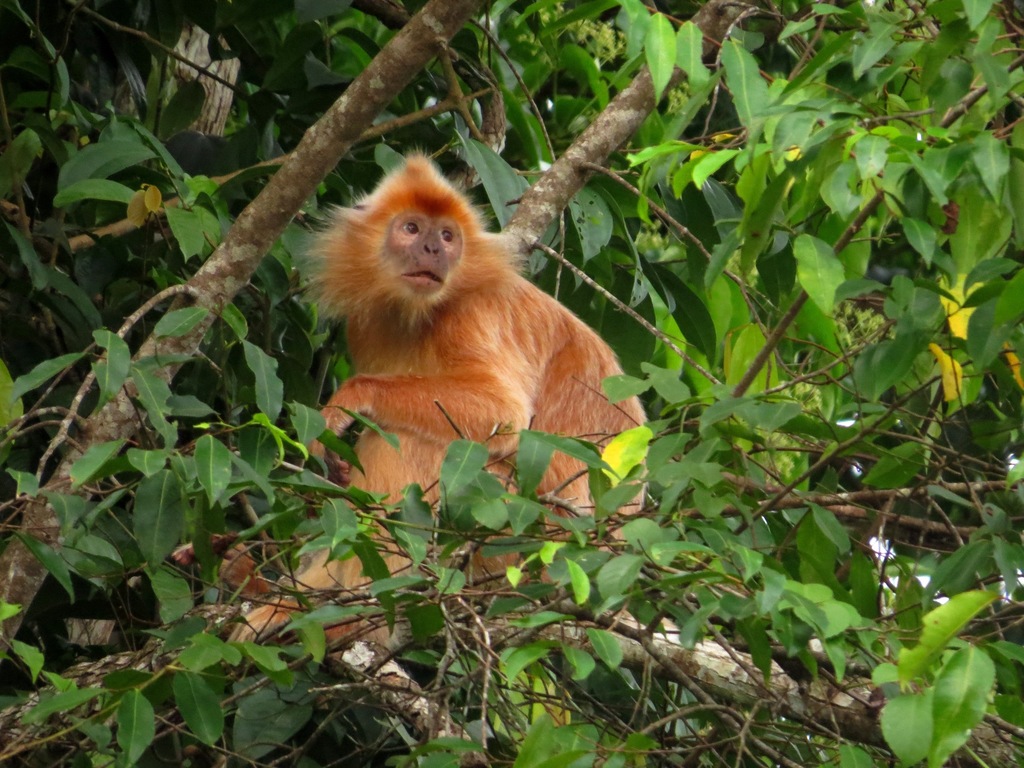
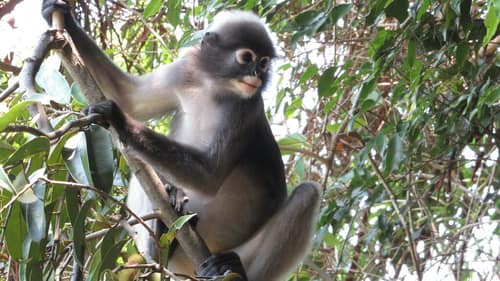
Silvered leaf monkeys are calm, canopy-dwelling primates renowned for their dark grey coats tipped with shimmering silver and their prominent cheek tufts. They live in cohesive social troops typically consisting of a dominant male alongside several females and their offspring, navigating mangrove and riverine branches with remarkable agility. Infants are born bright orange with creamy white skin, an eye-catching coloration that encourages allomaternal care, prompting group females to groom, protect, and baby-sit them until their silver fur develops around three months of age.
ThreatsMangrove clearing, palm oil expansion, coastal development, and the pet trade
HabitatsMangrove forests, coastal swamps, and riverine lowland forests
Life span20–25 years in the wild
Classification
FamilyCercopithecidae
SpeciesTrachypithecus cristatus
Range & activity
Range data is not available yet.
Safe observation
Interaction riskLow
Low
Moderate
High
Very high
Why interaction risk is low
Can inflict deep bites if cornered or harassed; observe quietly from a respectful distance.
Why it is dangerous
Possesses sharp, dagger-like canine teeth and strong jaws capable of inflicting severe puncture wounds and lacerations when defending young or threatened.
How to recognize a risky encounter
Look for dark charcoal to black fur frost-tipped with silver, crest-topped heads, and strikingly bright orange infants.
What to do
Never corner, touch, or attempt to feed individuals; step back slowly if a troop male displays open-mouth yawns or ground-slaps.
What to notice
Recognized by its slender build, long non-prehensile tail, spiky crest, and specialized mangrove and riverbank distribution in Southeast Asia.
Support conservation
Observe silently from boats or designated boardwalks without blocking shoreline travel paths or using flash photography.
Responsible observation
Binocular viewing: Scan mid-canopy mangrove limbs in early morning to watch troop social grooming.
Do not feed: Hand-feeding habituates individuals and can trigger territorial aggression or bacterial infection.
Keep distance: Maintain at least ten meters to avoid stressing mothers guarding vulnerable infants.