Also known as Northern Sea Lion, Steller's Sea Lion
Steller sea lions are formidable marine carnivores known for their booming, low-frequency roars and immense physical power along wind-battered coastlines. Mature bulls defend rocky breeding territories with intense visual posturing, lunges, and vocal duels, often going without food for weeks during the peak mating season. Groups haul out together on remote offshore reefs and islets, diving to depths beyond 200 meters to hunt schooling fish and squid in cold northern waters.
ThreatsFisheries interactions, entanglement in marine debris, prey depletion, environmental contaminants, and illegal shooting.
HabitatsSubarctic and temperate coastal marine waters, rocky sea stacks, islands, and sandy haul-outs.
Life span20–30 years (females to 30, males rarely exceed 20)
Classification
OrderCarnivora
FamilyOtariidae
GenusEumetopias
SpeciesEumetopias jubatus
Range & activity
Native
Safe observation
Interaction riskHigh
Low
Moderate
High
Very high
Why interaction risk is high
Massive, powerful animals capable of serious defensive bites; maintain a distance of at least 100 meters.
Why it is dangerous
Massive body mass combined with formidable canine teeth can cause devastating crush injuries and deep, infection-prone puncture wounds if an animal charges.
How to recognize a risky encounter
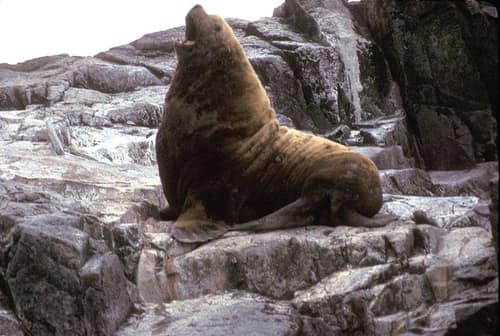
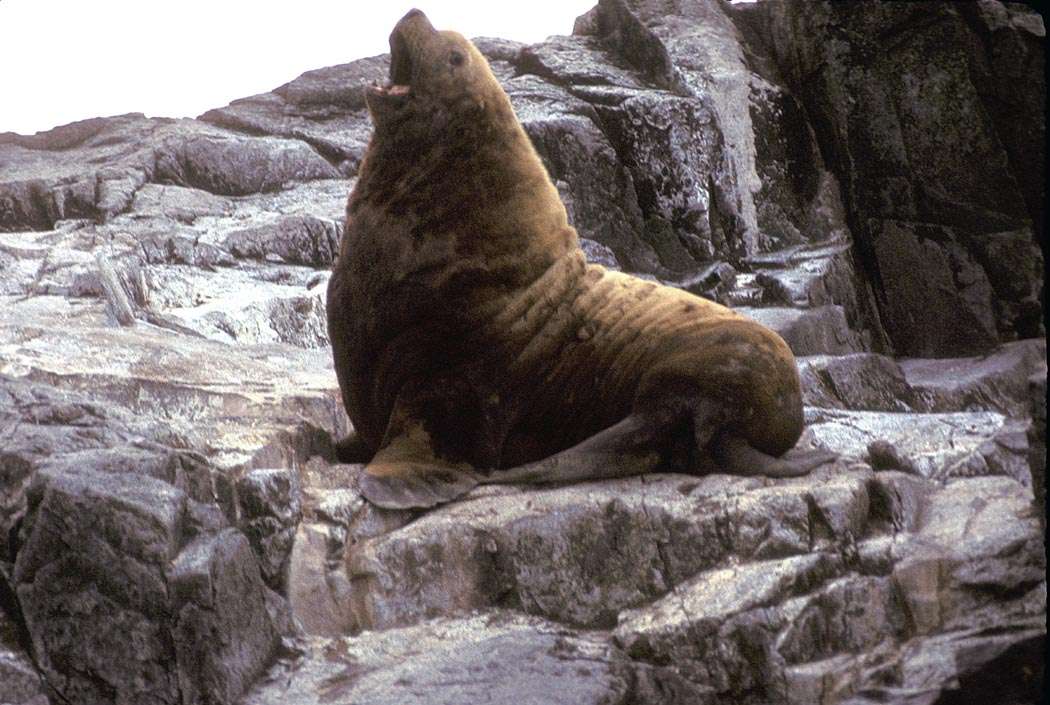
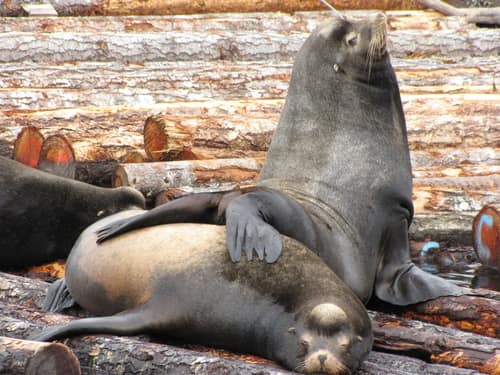
Recognizable by their massive golden-brown to tawny bodies, blunt squarish muzzles, and deep roaring vocalizations compared to the sharp barks of smaller sea lions.
What to do
Never approach haul-out rocks, stay well outside territorial zones, and withdraw slowly without turning your back if an animal displays aggression.
What to notice
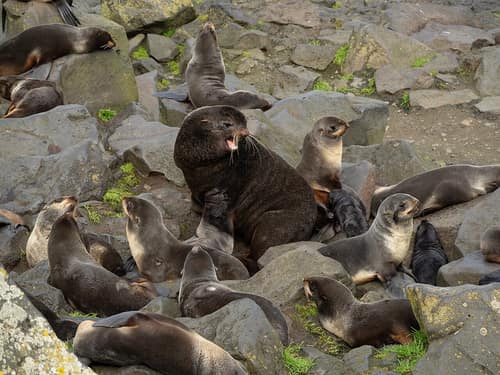
Look for vast aggregations on isolated rocky islands, with gigantic, thick-necked bull males towering over paler females and small dark pups.
Support conservation
Avoid loud noises and sudden vessel maneuvers near rookeries, as panicking adults can trampling pups during mass rushes into the surf.
Responsible observation
Safe Distance: Maintain at least 100 meters on land or water, using telephoto lenses to observe haul-out behavior.
Watch for Agitation: If sea lions lift their heads, growl, or shuffle toward water, back away immediately to prevent disturbance.
Boating Etiquette: Idle your engine when passing rookeries to prevent stampedes that can crush young pups.