
Species · GBIF taxon 2289331
Blue-ringed Octopus
Hapalochlaena maculosaAlso known as Southern Blue-ringed Octopus, Blue-banded Octopus
Southern blue-ringed octopuses spend their days tucked away in crevices, empty shells, or discarded bottles, emerging at night to hunt. When calm, their bodies blend seamlessly into sandy reefs and rocky pools with mottled brown and yellow tones. If disturbed, they flash brilliant, iridescent blue rings across their skin as a stark warning of their lethal tetrodotoxin venom.
VenomousMarineNocturnal
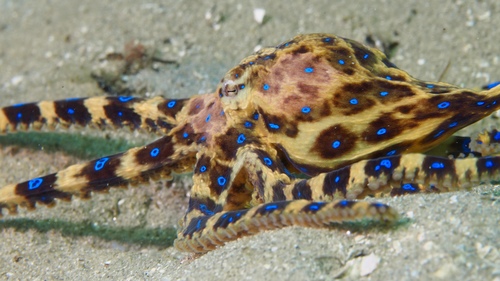
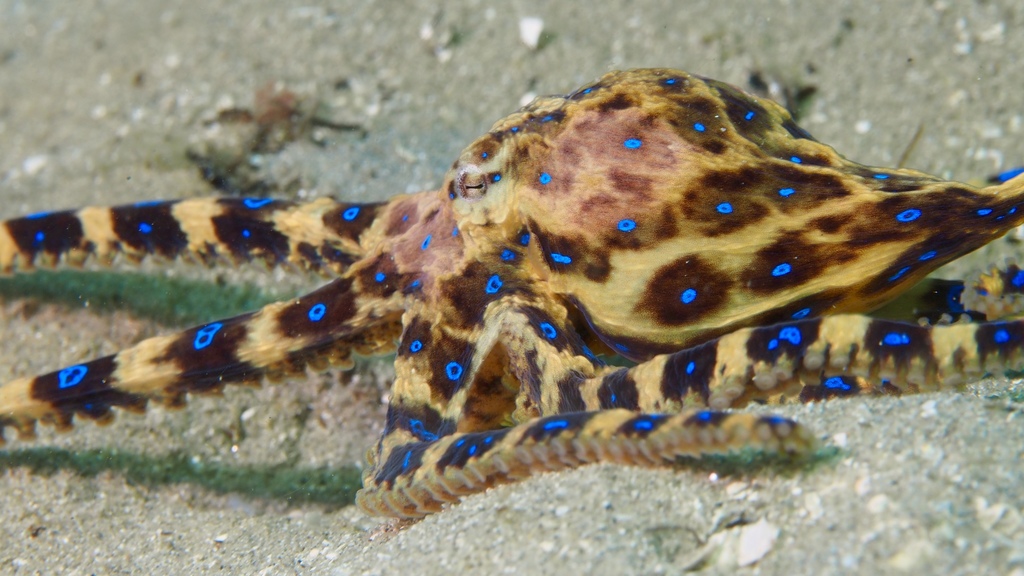
—observations
—countries
—peak records
Not EvaluatedConservation statusIUCN Red List categoriesLCNTVUENCREWEXNot Evaluated — not placed on the risk ladderRed List categories, explained →
Diet & prey
- Crabs
- Shrimp
- Small fish
Predators
- Moray eels
- Large fish
- Sea birds
ThreatsHabitat degradation, coastal pollution, and climate change
HabitatsTidal rock pools, shallow reefs, and seagrass beds
Life spanAbout 1 to 2 years
Size / weightNot available
Classification
- FamilyOctopodidae
- SpeciesHapalochlaena maculosa
Range data is not available yet.
Interaction riskVery high
- Low
- Moderate
- High
- Very high
- Why interaction risk is very high
- Possesses deadly tetrodotoxin; never touch or handle this octopus under any circumstances.
- Why it is dangerous
- Possesses tetrodotoxin, a potent neurotoxin produced by symbiotic bacteria that causes rapid paralysis and respiratory failure.
- How to recognize a risky encounter
- Look for a small, golf-ball-sized octopus with yellowish skin that flashes bright blue rings when agitated.
- What to do
- Never handle or corner this animal; if bitten, seek emergency medical care and apply pressure immobilization.
Responsible observation
- Look but do not touch: Observe these creatures from a safe distance without reaching into crevices.
- Watch for color changes: If the dull brown skin flashes bright blue, back away immediately.
- Check shells and debris: Inspect empty shells or bottles before picking them up in tidal pools.
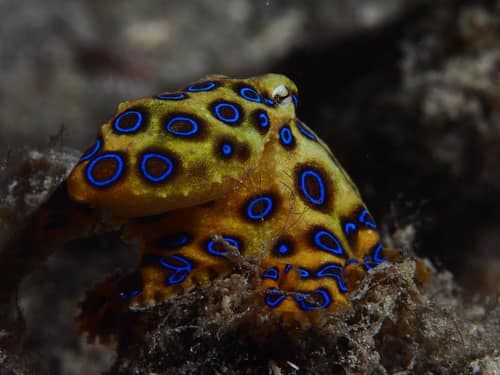
Close Relative "Greater blue-ringed octopus (Hapalochlaena lunulata)" by krokodiver is licensed under CC BY-SA 2.0. To view a copy of this license, visit https://creativecommons.org/licenses/by-sa/2.0/. · cc-by-sa Image unavailable
Close Relative 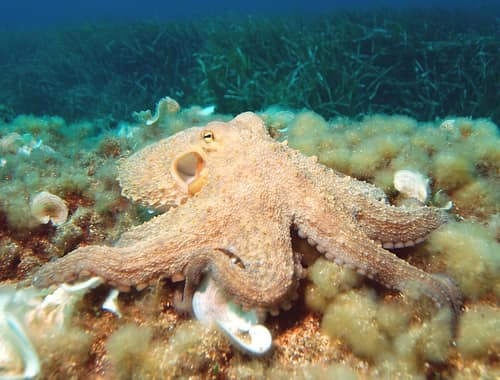
Family Member albert kok / CC BY-SA 3.0 · cc-by-sa
Help improve the field guideSomething wrong?
Checking your Fauna account…Report a name, category, or profile issue for review.