
Arachnid
Magnolia Green Jumping Spider
Lyssomanes viridisAlso known as Magnolia Green Jumper
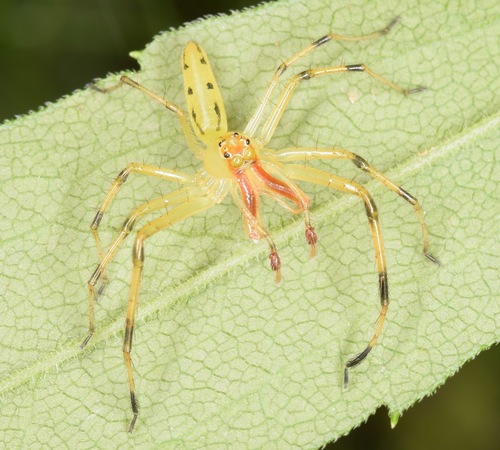
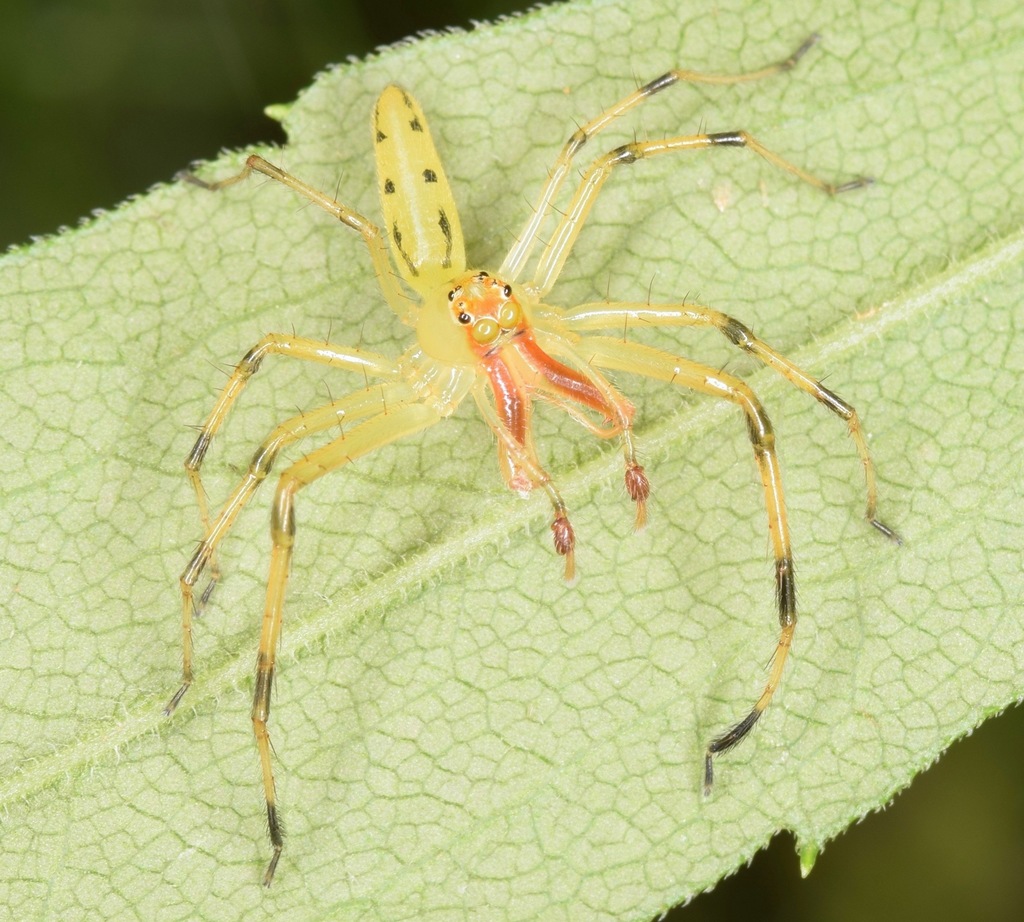
Magnolia green jumping spiders are translucent, vivid green hunters renowned for their exceptionally long legs and vibrant crown of red, white, and yellow scales atop the cephalothorax. Unlike most salticids that stalk open bark or stone, they spend their daylight hours patrolling the undersides of broad, waxy leaves where their glassy coloration offers near-perfect camouflage. Males possess strikingly elongated chelicerae that they flare outward during ritualized visual displays to intimidate rivals and court prospective mates.
ArborealDiurnalTranslucent
—observations
—countries
—peak records
Not EvaluatedConservation statusIUCN Red List categoriesLCNTVUENCREWEXNot Evaluated — not placed on the risk ladderRed List categories, explained →
Diet & preyAphids, Fungus gnats, Plant bugs
Predators
- Songbirds
- Spider wasps
- Larger jumping spiders
ThreatsPesticide spraying, habitat fragmentation, and heavy bird predation.
HabitatsBroadleaf deciduous and subtropical evergreen foliage, particularly magnolia, oak, and garden shrubs.
Life spanAbout 1 year
Classification
- OrderAraneae
- FamilySalticidae
- GenusLyssomanes
- SpeciesLyssomanes viridis
Range data is not available yet.
Interaction riskLow
- Low
- Moderate
- High
- Very high
- Why interaction risk is low
- Harmless to humans; bites are extremely rare, trivial, and incapable of causing medical concern.
Responsible observation
- Observation Angle: Inspect the undersides of large, glossy evergreen leaves in warm months where they rest or ambush prey.
- Approach Speed: Move slowly to avoid triggering their visual alarm reflex, as their large eyes detect swift movement from several inches away.
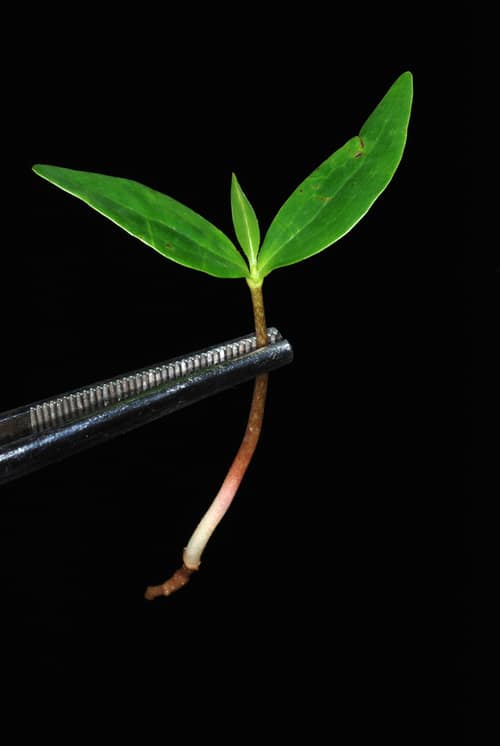
Host Plant (c) Douglas Goldman, some rights reserved (CC BY-SA), uploaded by Douglas Goldman · cc-by-sa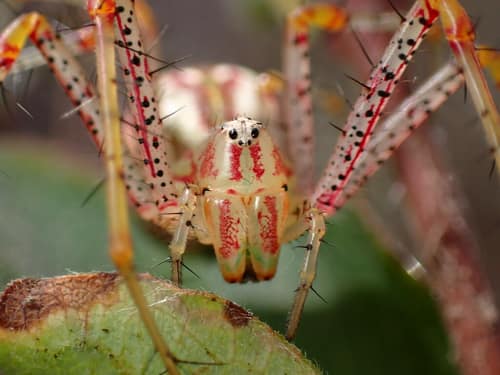
Competitor (c) Cricket Raspet, some rights reserved (CC BY), uploaded by Cricket Raspet · cc-by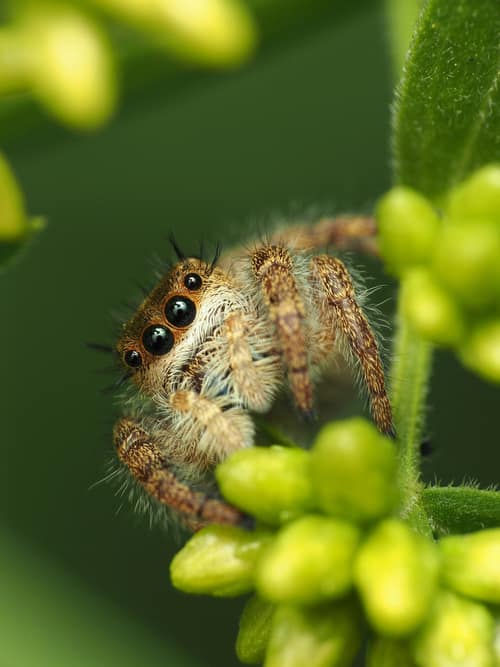
Same Family (c) Katja Schulz, some rights reserved (CC BY), uploaded by Katja Schulz · cc-by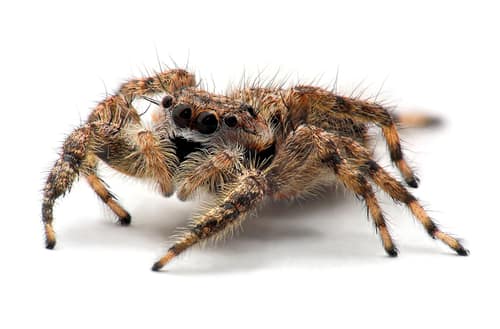
Same Family (c) Kevincollins123, some rights reserved (CC BY-SA) · cc-by-sa
Help improve the field guideSomething wrong?
Checking your Fauna account…Report a name, category, or profile issue for review.