
Arachnid
Green Lynx Spider
Peucetia viridansAlso known as Green Lynx
Green lynx spiders are bright chartreuse daytime predators that stalk prey across woody shrubs, agricultural crops, and garden blossoms. Instead of weaving capture webs, these agile hunters rely on sharp vision and explosive leaps to ambush bees, moths, and caterpillars. Female lynx spiders aggressively guard their straw-colored egg sacs through autumn, even spitting venom defensively if a threat approaches too closely.
DiurnalCamouflagePredator
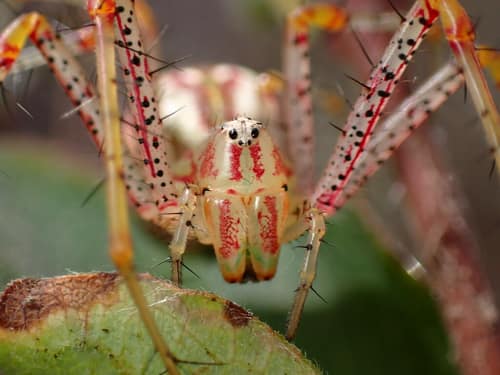
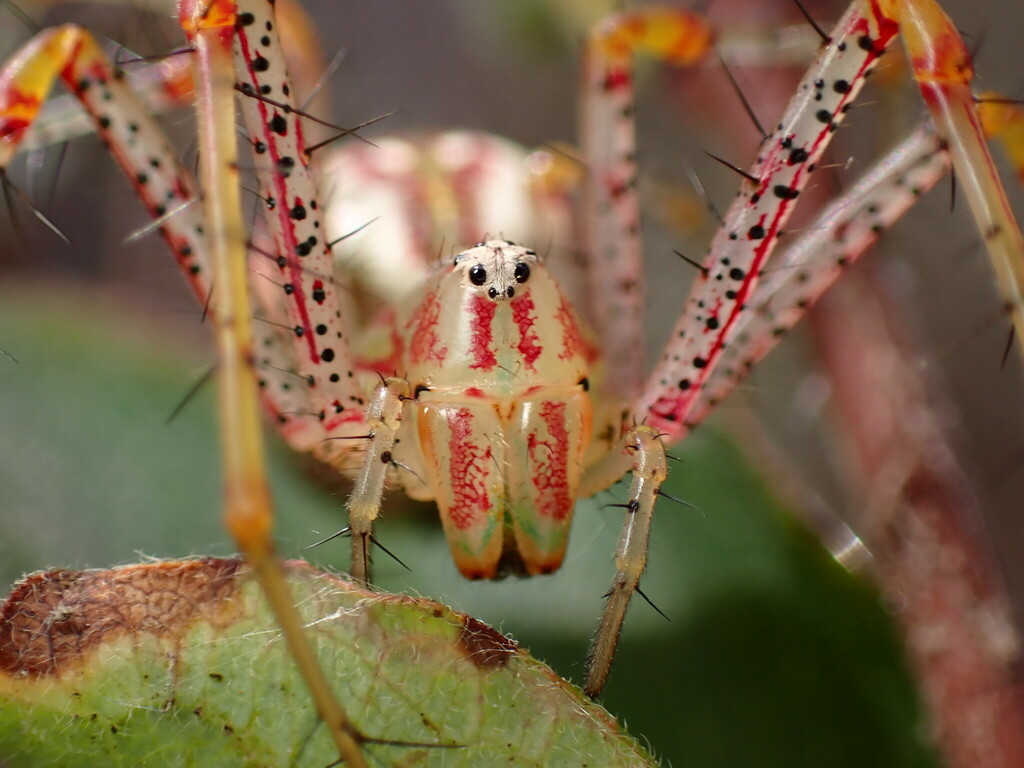
—observations
—countries
—peak records
Not EvaluatedConservation statusIUCN Red List categoriesLCNTVUENCREWEXNot Evaluated — not placed on the risk ladderRed List categories, explained →
Diet & preyHoney Bees, Caterpillars, Moths
Predators
- Birds
- Lizards
- Spider Wasps
ThreatsPesticides and agricultural habitat clearing
HabitatsShrublands, gardens, crop fields, coastal scrub
Life span1 year
Classification
- OrderAraneae
- FamilyOxyopidae
- GenusPeucetia
- SpeciesPeucetia viridans
Range data is not available yet.
Interaction riskVery high
- Low
- Moderate
- High
- Very high
- Why interaction risk is very high
- Capable of a painful defensive bite or squirting venom if harassed; observe from a safe distance.
Responsible observation
- Spotting: Scan the upper surfaces of sunlit leaves and flower heads during bright warm afternoons.
- Observation: Approach slowly without sudden movements to prevent the spider from leaping out of sight.
- Egg Sac Defense: Give females guarding their silk nests a wide berth to avoid defensive behaviors.
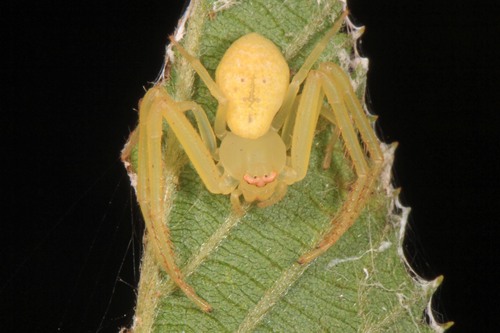
Look-alike (c) Judy Gallagher, some rights reserved (CC BY-SA), uploaded by Judy Gallagher · cc-by-sa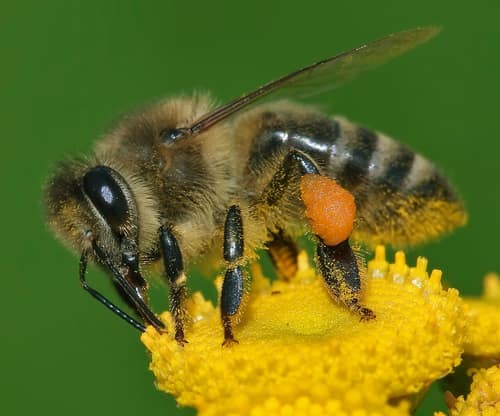
Prey Andreas Trepte / CC BY-SA 2.5 · cc-by-sa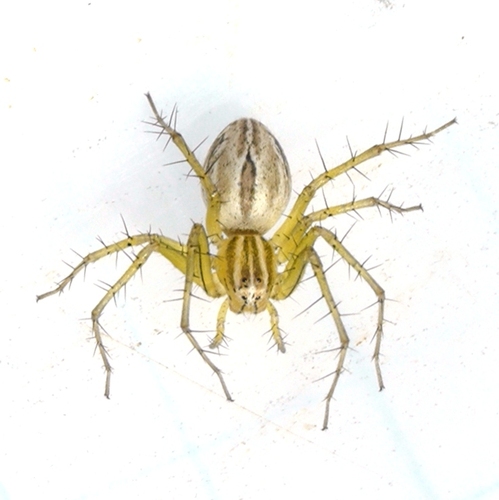
Close Relative (c) Ilona, some rights reserved (CC BY-SA), uploaded by Ilona · cc-by-sa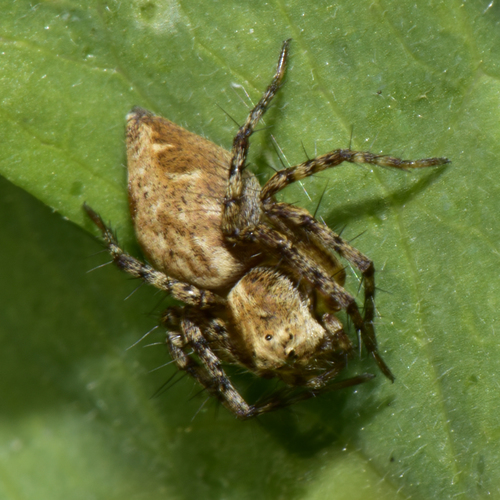
Close Relative (c) Harley Hosford, some rights reserved (CC BY), uploaded by Harley Hosford · cc-by
Help improve the field guideSomething wrong?
Checking your Fauna account…Report a name, category, or profile issue for review.