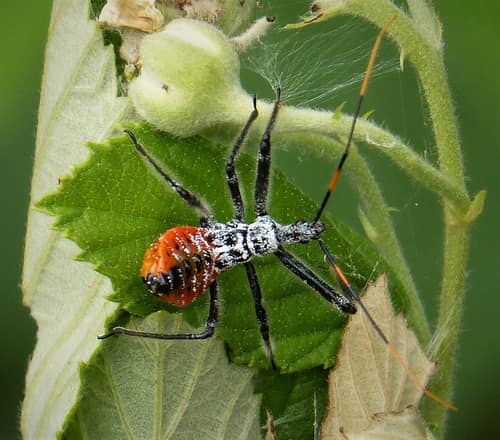
Ringed assassin bugs are patient ambush predators that stalk shrubs and low tree branches, waiting motionless for unsuspecting caterpillars, beetles, and aphids to wander within striking range. Adults overwinter beneath loose tree bark or leaf litter, emerging on warm spring afternoons to mate and deposit clusters of barrel-shaped eggs onto twigs. In garden ecosystems, they serve as formidable biological control agents, impaling soft-bodied pests with a sharp rostrum and liquefying their prey with digestive enzymes.
HabitatsDeciduous woodlands, forest borders, old fields, gardens
Life spanAround 1 year
Classification
OrderHemiptera
FamilyReduviidae
GenusPselliopus
SpeciesPselliopus cinctus
Range & activity
Range data is not available yet.
Safe observation
Interaction riskLow
Low
Moderate
High
Very high
Why interaction risk is low
Delivers a painful defensive puncture if roughly handled; observe closely without touching.
Why it is dangerous
Injects digestive salivary enzymes through a rigid proboscis when squeezed, producing immediate, sharp pain resembling a wasp sting with localized swelling.
How to recognize a risky encounter
Look for alternating dark and yellow rings along every leg segment and a segmented, curved beak folded under the head.
What to do
Do not squeeze or trap against bare skin; use a container or paper slip to move them indoors or outdoors safely.
Responsible observation
Garden Observation: Watch them quietly on sunny leaves, where they hunt aphids and pest larvae without damaging plants.
Safe Relocation: Coax individuals onto a stiff leaf or twig rather than picking them up with bare fingers.

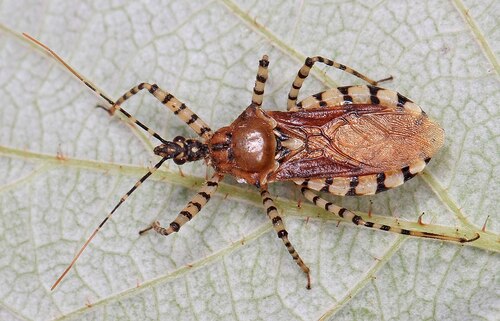
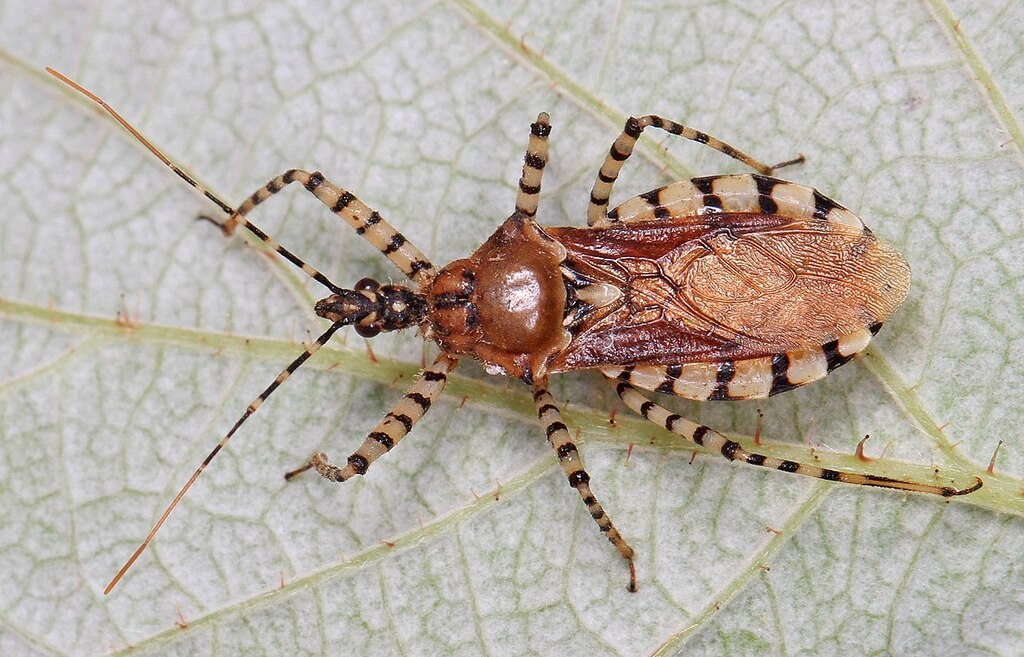
 Image unavailable