
Insect
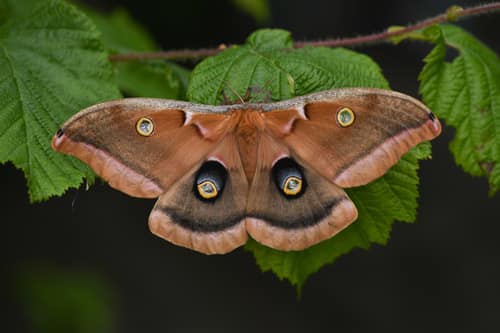
Polyphemus Moth
Antheraea polyphemusAlso known as American Silk Moth
Polyphemus moths emerge from silk cocoons without functional mouthparts, living only a few days entirely on energy stored during their caterpillar stage. When threatened by birds, adults flash the dramatic purplish eyespots on their hindwings in a sudden threat display that mimics the gaze of a large predator. Bright green caterpillars click their mandibles together and regurgitate plant fluids when disturbed by potential threats.
NocturnalLarge MothSilk Moth

—observations
—countries
—peak records
Least ConcernConservation statusIUCN Red List categoriesLCNTVUENCREWEXLeast ConcernRed List categories, explained →
Diet & preyOak leaves, Birch leaves, Maple leaves
Predators
- Bats
- Birds
- Rodents
ThreatsLight pollution, habitat loss, and introduced parasitic flies
HabitatsDeciduous forests, oak woodlands, suburban gardens, and parks
Life spanAdults live 4–7 days; full life cycle takes 1 year
Classification
- OrderLepidoptera
- FamilySaturniidae
- GenusAntheraea
- SpeciesAntheraea polyphemus
Range data is not available yet.
Interaction riskLow
- Low
- Moderate
- High
- Very high
- Why interaction risk is low
- Safe to observe at a normal distance.
Responsible observation
- Nighttime Viewing: Look around porch lights or illuminated walls late at night in late spring and early summer.
- Gentle Observation: Avoid touching the delicate wing scales if an adult lands on you or nearby surfaces.
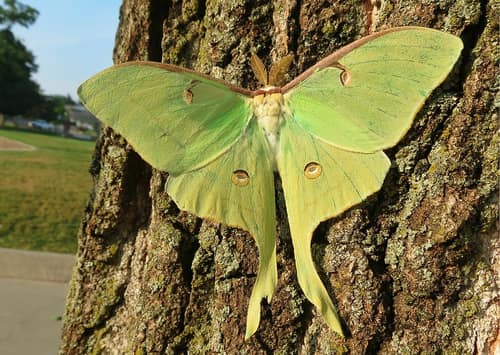
Close Relative "Lovely luna moth at the Neosho National Fish Hatchery" by U.S. Fish and Wildlife Service - Midwest Region is licensed under CC BY 2.0. To view a copy of this license, visit https://creativecommons.org/licenses/by/2.0/. · cc-by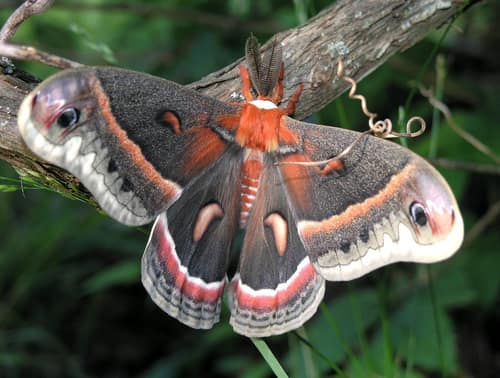
Close Relative "Cecropia Moth (Hyalophora cecropia)" by Slomoz is licensed under CC BY-SA 2.0. To view a copy of this license, visit https://creativecommons.org/licenses/by-sa/2.0/. · cc-by-sa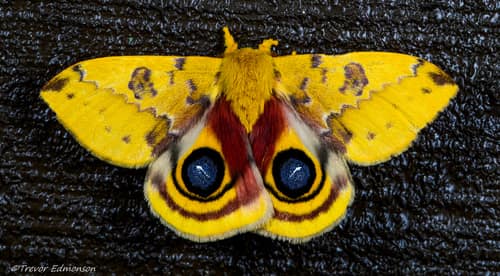
Close Relative (c) Trevor Edmonson, some rights reserved (CC BY), uploaded by Trevor Edmonson · cc-by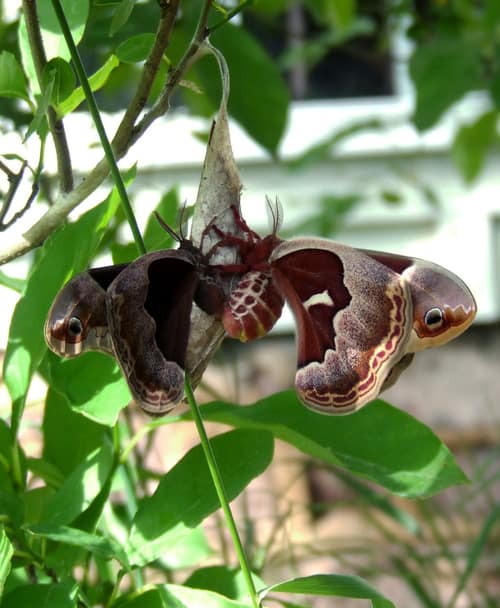
Close Relative (c) Dave Bonta, some rights reserved (CC BY-SA) · cc-by-sa
Keep collecting in Fauna
Found in Collections
Species set
Moonlight Marvels
Polyphemus Moth is found in this collection. Identify it in Fauna to fill this slot and continue your progress.
—/7
Help improve the field guideSomething wrong?
Checking your Fauna account…Report a name, category, or profile issue for review.