
Insect
Cecropia Moth
Hyalophora cecropiaAlso known as Robin Moth, Giant Silk Moth
Cecropia moths emerge from dense silk cocoons in late spring, relying on large, feathery antennae to track airborne pheromones released by receptive females miles away. Adults possess vestigial mouthparts and lack a digestive tract, living solely on stored lipids accumulated during their caterpillar stage. Over several summer weeks, the massive green caterpillars browse quietly through deciduous canopies before spinning spindle-shaped cocoons that overwinter anchored to tree twigs.
NocturnalColorfulSilk Moth
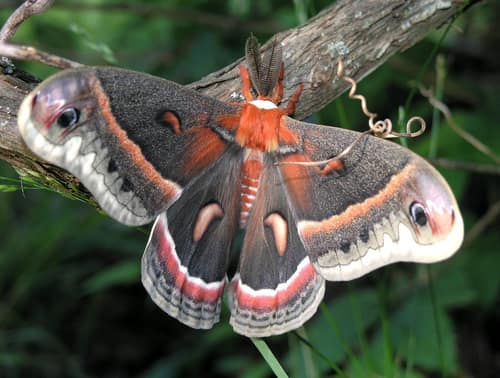
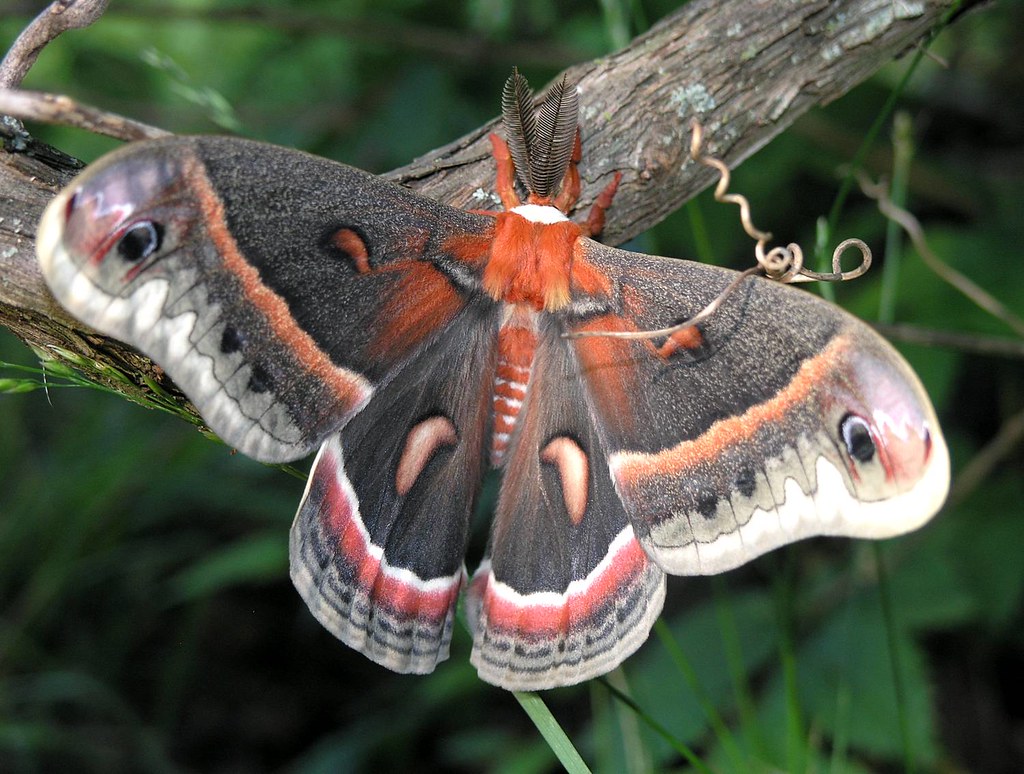
—observations
—countries
—peak records
Not EvaluatedConservation statusIUCN Red List categoriesLCNTVUENCREWEXNot Evaluated — not placed on the risk ladderRed List categories, explained →
Diet & preySugar maple foliage, Black cherry foliage, Paper birch foliage
Predators
- Big brown bat
- Blue jay
- Tachinid fly
ThreatsIntroduced parasitoid flies, artificial light pollution, pesticide use, and habitat fragmentation
HabitatsDeciduous forests, forest edges, suburban woodlands, and brushy pastures
Life span7–14 days as adult; roughly 1 year total lifecycle
Classification
- OrderLepidoptera
- FamilySaturniidae
- GenusHyalophora
- SpeciesHyalophora cecropia
Range data is not available yet.
Interaction riskLow
- Low
- Moderate
- High
- Very high
- Why interaction risk is low
- Harmless to humans; safe to observe from any distance.
Responsible observation
- Attracting with lights: Check outdoor porch lights or set up an illuminated white sheet on warm, humid June nights.
- Handling protocol: Avoid handling adults directly, as touching the wings rubs off delicate scales essential for flight.
- Spotting cocoons: Scan bare branches of maple and cherry trees in winter for large, woody-looking silk pods.
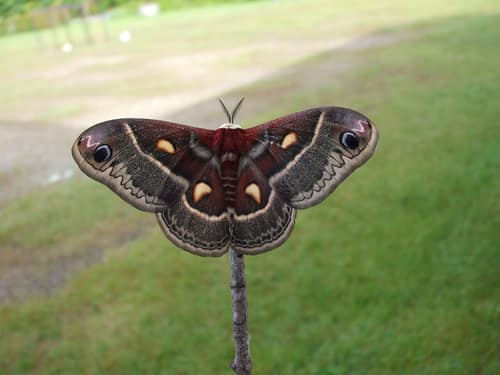
Same Genus Lavaltrois / CC BY-SA 3.0 · cc-by-sa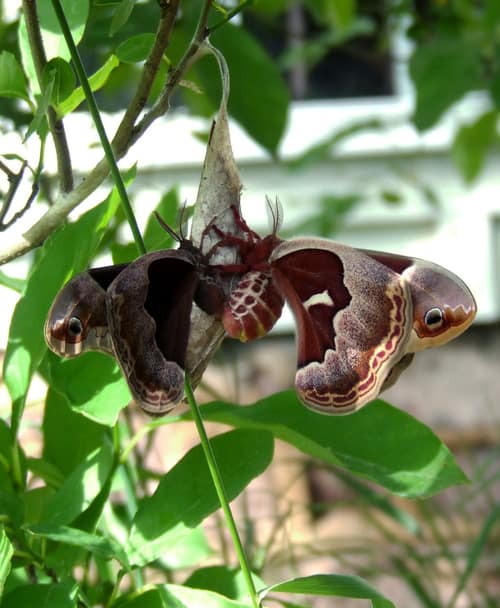
Same Family (c) Dave Bonta, some rights reserved (CC BY-SA) · cc-by-sa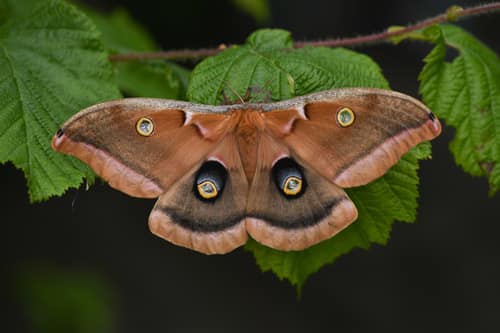
Same Family (c) Trevor Van Loon, some rights reserved (CC BY), uploaded by Trevor Van Loon · cc-by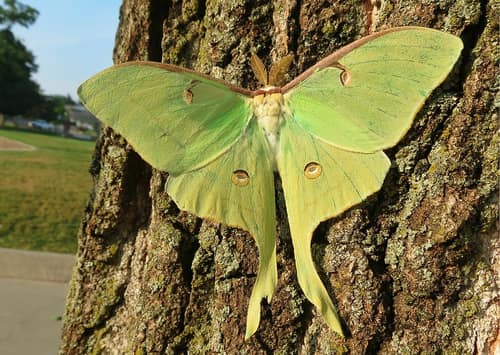
Same Family "Lovely luna moth at the Neosho National Fish Hatchery" by U.S. Fish and Wildlife Service - Midwest Region is licensed under CC BY 2.0. To view a copy of this license, visit https://creativecommons.org/licenses/by/2.0/. · cc-by
Keep collecting in Fauna
Found in Collections
Species set
Moonlight Marvels
Cecropia Moth is found in this collection. Identify it in Fauna to fill this slot and continue your progress.
—/7
Help improve the field guideSomething wrong?
Checking your Fauna account…Report a name, category, or profile issue for review.