
Insect · GBIF taxon 1864021
Rustic Sphinx
Manduca rusticaAlso known as Rustic Sphinx Moth, Rustic Hornworm
Rustic sphinx moths hover with rapid wingbeats before deep-throated flowers at dusk, unraveling remarkably long proboscises to sip nectar. Their stout caterpillars sport diagonal white stripes edged in purple and a granulated posterior horn while chewing through the foliage of ash, bignonia, and beautyberry. Adults blend seamlessly into tree bark thanks to an intricate mosaic of dark brown, white, and black scales, accented by vibrant yellow spots down the abdomen.
NocturnalPollinatorHawkmoth
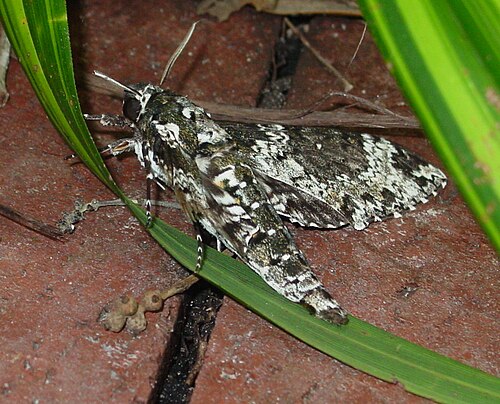
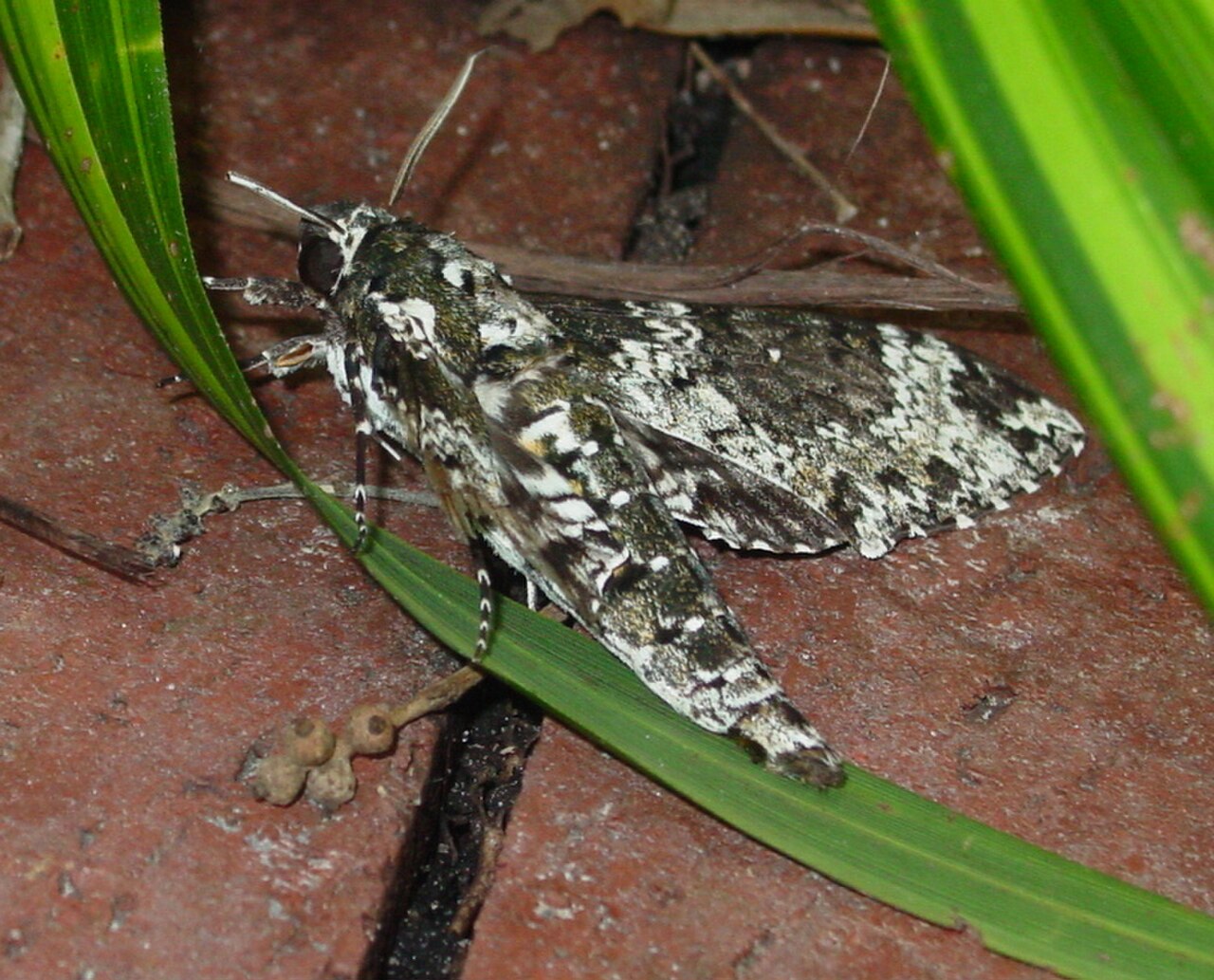
—observations
—countries
—peak records
Not EvaluatedConservation statusIUCN Red List categoriesLCNTVUENCREWEXNot Evaluated — not placed on the risk ladderRed List categories, explained →
Diet & prey
- Flower nectar
- Ash foliage
- Beautyberry foliage
Predators
- Insectivorous bats
- Songbirds
- Braconid wasps
ThreatsArtificial night lighting, pesticide spraying, and habitat clearance
HabitatsWoodland edges, mixed forests, riverbanks, and suburban gardens
Life span1–2 months as adults; up to 1 year including pupal overwintering
Size / weightNot available
Classification
- OrderLepidoptera
- FamilySphingidae
- GenusManduca
- SpeciesManduca rustica
Range data is not available yet.
Interaction riskLow
- Low
- Moderate
- High
- Very high
- Why interaction risk is low
- Safe to observe at a normal distance.
Responsible observation
- Light Attraction: Hang an illuminated white sheet near tree lines after dark to lure resting adults.
- Garden Planting: Cultivate tubular, nocturnal flowers such as moonflower and petunias to draw foraging moths.
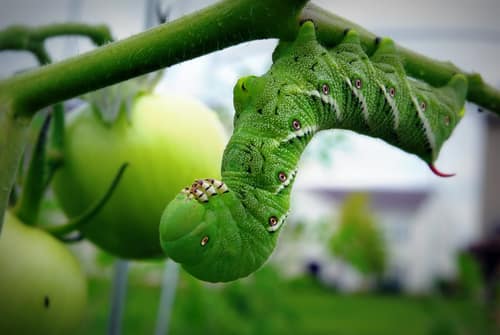
Same Genus "Tobacco Hornworm Caterpillar" by cbede is licensed under CC BY 2.0. To view a copy of this license, visit https://creativecommons.org/licenses/by/2.0/. · cc-by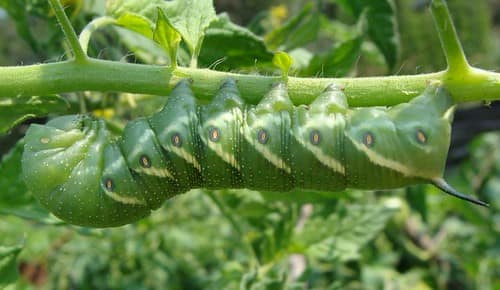
Same Genus "Tomato Hornworm" by Hillbraith is marked with Public Domain Mark 1.0. To view the terms, visit https://creativecommons.org/publicdomain/mark/1.0/. · cc0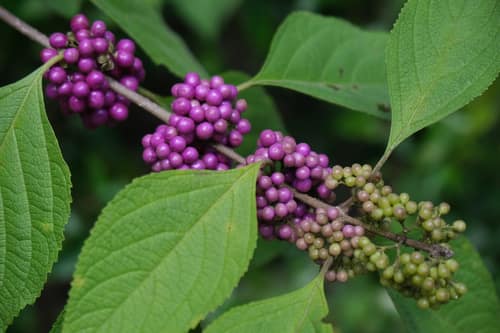
Host Plant (c) Alex Abair, some rights reserved (CC BY), uploaded by Alex Abair · cc-by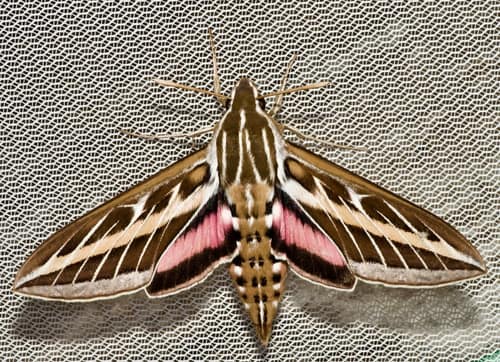
Same Family (c) Michelle W. (鍾偉瑋), some rights reserved (CC BY), uploaded by Michelle W. (鍾偉瑋) · cc-by
Keep collecting in Fauna
Found in Collections
Species set
Moonlight Marvels
Rustic Sphinx is found in this collection. Identify it in Fauna to fill this slot and continue your progress.
—/7
Help improve the field guideSomething wrong?
Checking your Fauna account…Report a name, category, or profile issue for review.