Also known as Oleander Moth, Oleander Caterpillar Moth
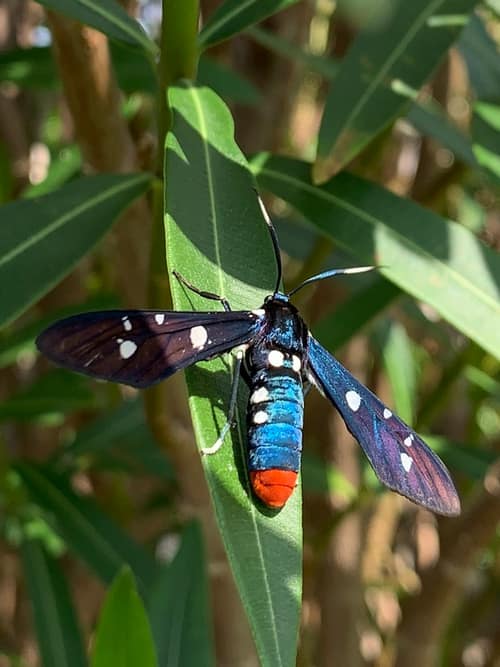
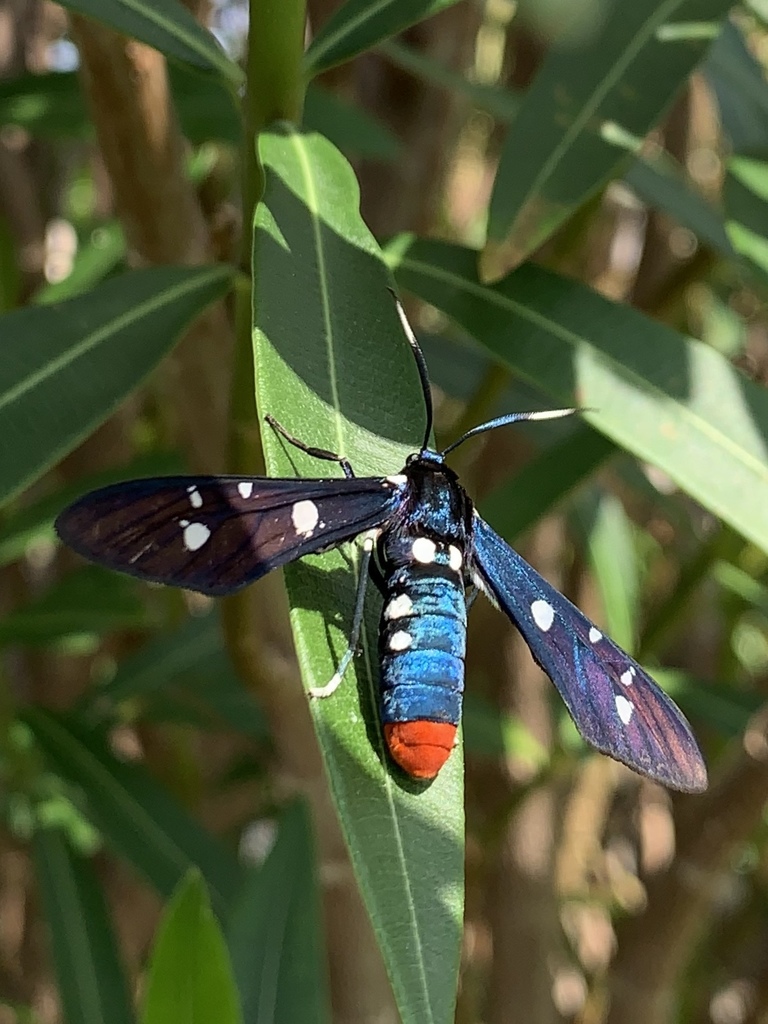
Polka-dot wasp moths flash iridescent blue-black wings dotted with stark white spots, mimicking stinging sphecid wasps to deter visual predators during broad daylight. Caterpillars feed voraciously on toxic oleander leaves, sequestering potent cardiac glycosides that render both larvae and adults noxious to birds and small mammals. Females broadcast acoustic courtship signals using specialized abdominal tymbal organs to attract mates across warm garden shrubbery.
Sequesters lethal cardiac glycosides from oleander host plants; toxic if ingested by pets or humans.
Why it is dangerous
Both caterpillars and adult moths store oleandrin and other cardiac glycosides, which disrupt vertebrate heart function and cause severe vomiting or death if swallowed by pets.
How to recognize a risky encounter
Adults display metallic blue bodies with white spots and bright red tail tips, while larvae are fiery orange with prominent black hair tufts.
What to do
Never allow dogs or cats to mouth caterpillars or moths, and wash hands promptly after accidental physical contact.
Responsible observation
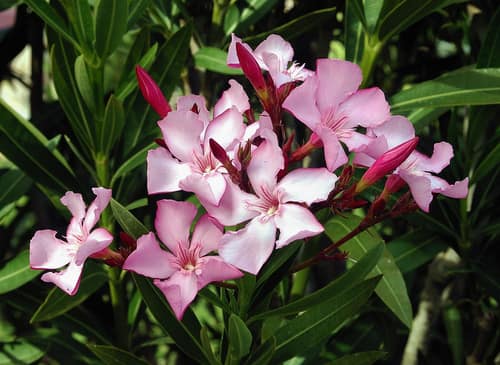
Spotting Foliage: Search oleander bushes for skeletonized leaves and bright orange caterpillars clustered on fresh shoots.
Observation Times: Watch sunny garden patches in midmorning when adult moths actively visit flowers for nectar.
Garden Care: Hand-pick caterpillars while wearing gloves instead of spraying insecticides if protecting landscape shrubs.